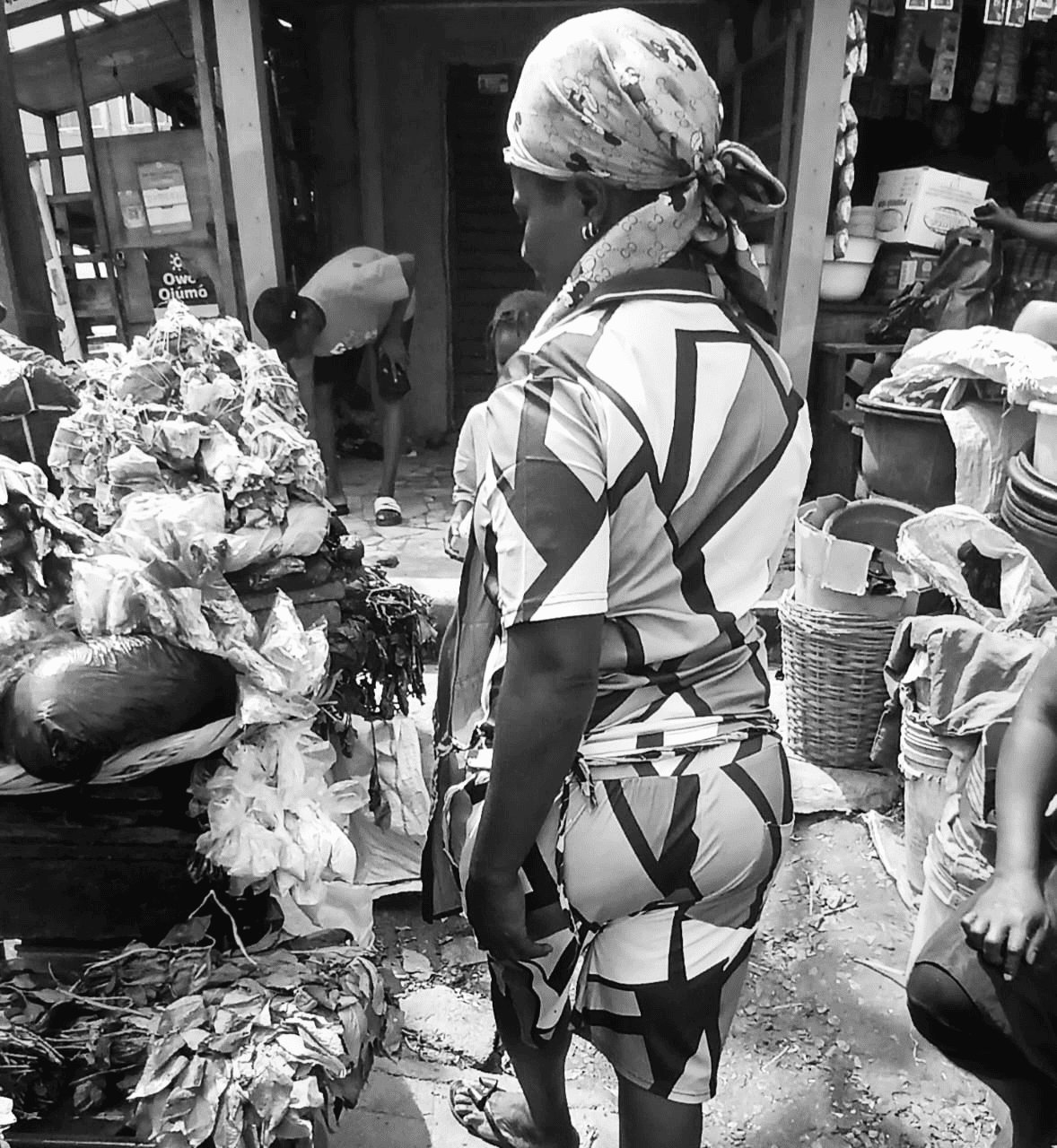
I sell vegetables and ingredients used for cooking soup. I have been in the business for about eight years. I sell items like ugu, waterleaf, pepper, onions, tomatoes, okra, and other everyday ingredients.
It is not a business that makes you rich overnight. You wake up early, go to the market to buy your goods, transport them to your selling point and spend the whole day trying to make enough money to return home with something.
What makes it harder now is the number of payments attached to running a small business.
People sometimes think that because we sell vegetables and food ingredients, we make easy money. They do not see what happens before the first customer arrives. Prices from wholesalers keep changing. Transportation costs money. Spoilage takes away part of your stock. Then there are levies and other charges.
I started noticing the taxation problem becoming more serious after I had established my stall. Different representatives began coming around with different demands. You pay because you do not want trouble.
I have lost count of the different payments I make within a year. Some are daily or weekly market-related levies. Some payments arise unexpectedly.
The problem is not necessarily that every levy is too expensive on its own. The problem is that when you add everything together, it becomes a serious burden.
Imagine making a profit of a few thousand naira from selling vegetables in a day and then having different people come to collect money from that same small profit.
There are days when I calculate my sales and realise that I have worked from morning until evening, but what remains after expenses is very little.
I have also experienced situations where different collectors demanded payments that sounded similar. When you ask why you are paying again, the answer is usually that they are not the same.
Nobody wants to argue with anyone in the middle of the market. You have customers waiting, vegetables that can spoil and other traders watching. That fear is part of the problem.
Small traders need government, but we also need protection from arbitrary collections.
The pressure affects my prices. If I sell below my cost, I will eventually close down.
What I want is not an exemption from paying taxes. I want the system to be simple. The government should provide one clear bill showing what a small trader like me is expected to pay. It should state the amount, the agency responsible, and the period covered and most importantly, who is collecting, unlike what it is presently: agbero and all these touts bump into you and ask for a fee. Once I pay, nobody else should come and demand the same thing under another name.
We are not economists. We are small traders trying to survive.
If I know that I owe ₦10,000, I will plan for it. What scares me is not knowing whether another person will arrive tomorrow asking for ₦5,000 or ₦10,000 for another levy.
We just do not want our businesses to become places where everybody comes to collect money.
Every naira matters when you are running a small business. Every levy takes something from the profit that I would have used to feed my family, pay my workers, or put back into the business.
That is why multiple taxation is not just a government policy issue for me. It is something I experience every day at my stall.

As narrated by: Chioma Grace (Lagos).
This snippet is published as part of the series, The Art of Taxing Poverty.
Discover more from Chronycles
Subscribe to get the latest posts sent to your email.

Published by