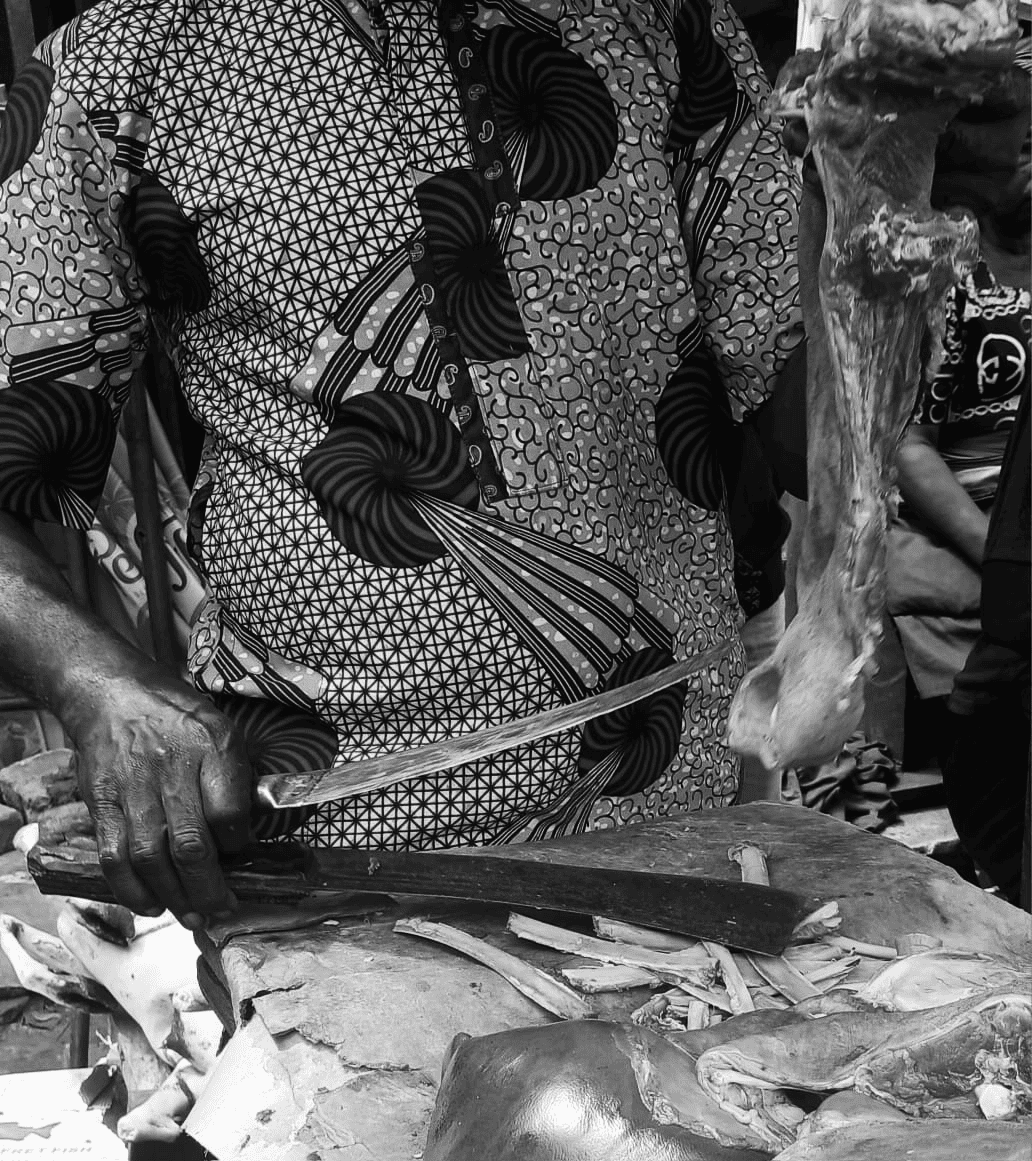
I have been selling meat at Ketu market for more than four years.
I came to Lagos hoping that if I worked hard enough, I would be able to build something for myself and take care of my family. But these days, one of the biggest challenges is no longer finding customers. It is finding enough money to keep the business running after paying the various levies imposed by different people and agencies.
I started experiencing the problem gradually. Sometimes you do not know exactly how many payments you are expected to make.
One person comes and tells you that you have to pay a levy. Before you finish paying that one, another person arrives with another demand. At the end of the month, I sometimes ask myself where all the money has gone.
For my business, I deal with several payments throughout the year. The most frustrating part is when two different people appear to be collecting money for almost the same thing.
There have been occasions when I have paid a levy and later been approached by another person who says the previous payment does not cover what he is asking for. When you ask questions, you are told that they are different individuals, and that implies different payments.
But as a small businessman, what I see is money leaving my pocket.
I cannot say that every payment I make is illegal. That would not be fair. But I also cannot say that I understand every charge. There are times when I have asked to see the official schedule or documentation explaining what I am paying for. Sometimes I get an answer; sometimes I am simply told to pay because everybody in the market is paying.
When sales are poor, those payments become even more painful because they do not necessarily reduce just because customers are no longer buying as much meat.
There are times when you ask about payments that are not properly documented. Most of these requests are verbal. They may tell you, “This is what you have to pay,” and if you ask for a receipt, they may become irritated.
For a small trader, refusing can create another problem.
You do not want your shop or stall sealed. You do not want someone to stop you from selling for the day. You also do not want to be treated as if you are deliberately refusing to obey. So, many of us simply pay.
The effect on my business has been serious. When I calculate how much I spend buying meat, transporting the meat, keeping the shop clean and paying all sorts of levies amounting to over 10,000 per month, there is not much left as profit.
Sometimes I increase my prices to cover the additional costs. But customers also complain because they have their own problems. If I increase the price of meat too much, they buy less. If I keep the price low, my profit disappears. It becomes a difficult choice.
That is why I believe the government needs to look at the burden on small businesses.
I am not saying traders should not pay taxes. We should. What we need is clarity. The government should tell us exactly what we are supposed to pay, how much we are supposed to pay, who is authorised to collect it, and how often we should pay.
Sometimes I think about moving my business somewhere else, but Lagos is where my customers are. I have spent years building the business here. Relocating is not as simple as packing my knives and table and leaving.
For now, every time someone approaches my stall with a new demand, the first thing that comes to my mind is not how much meat I have sold that day. It is how much of the little profit I have left will disappear before I get home.

As narrated by: Ibrahim Musa (Ketu, Lagos).
This snippet is published as part of the series, The Art of Taxing Poverty.
Discover more from Chronycles
Subscribe to get the latest posts sent to your email.

Published by