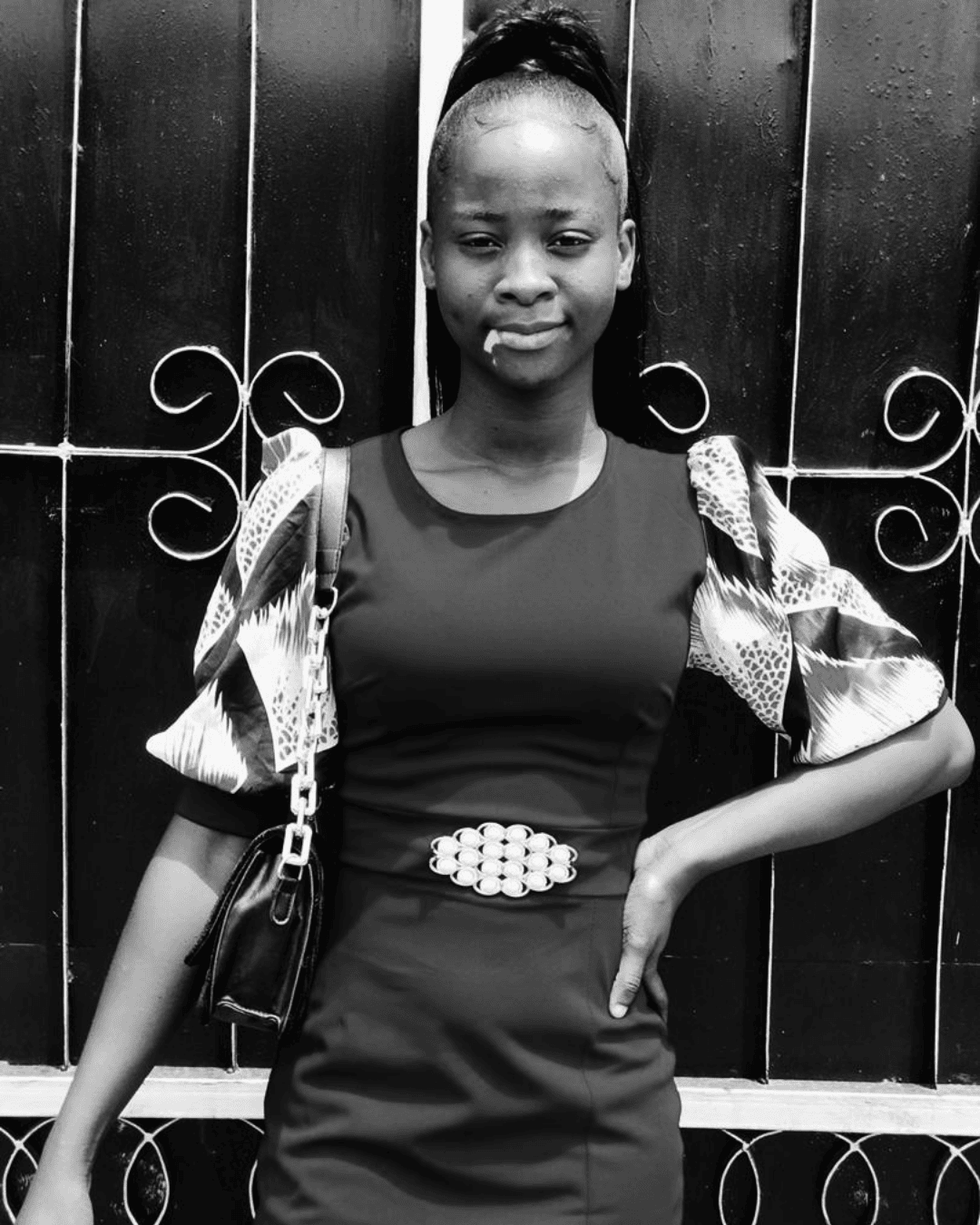
My vitiligo journey started in the last quarter of 2019, on my lower lip. I wasn’t so concerned because I thought I was going to have a pink lip (that was a big deal for me then). Remembering this now makes me laugh because I had no idea what was coming. I didn’t visit any doctor then, but the following year, a friend who knew a nurse confirmed it was vitiligo.
I had mixed feelings. I was scared and hopeless, but right now, I feel so much love for myself.
I looked down on myself every single day when it started. I felt like I didn’t deserve any love. I almost hated myself because suddenly seeing changes on my face, which made people look at me differently, wasn’t something I wished for.
I had both orthodox and traditional treatment then, but what I noticed was that the more I used it, the more the vitiligo increased on my lip. So I just stopped it.
One thing that came through for me was the people around me; they were so supportive. So, vitiligo didn’t put any strain on my relationship with people I already knew. I had a supportive partner too, and vitiligo didn’t affect our relationship.
I was an introvert before it started, but afterwards I became more introverted because I just wanted to be indoors. I didn’t want anybody to see my face and ask what happened to my lips.
I don’t have any experience of discrimination, or maybe I didn’t notice it, but I remember an incident when one woman passed by my side one time like that, and she said in Yoruba, “What happened to this one’s mouth?”
Sunburn is something common with those of us living with vitiligo, but I didn’t experience it early. When it started, it wasn’t much because I rarely experienced itching on the affected lip whenever I exposed it to the sun.
All I can say now is that you need to feel worthy of every good thing that comes to you, love yourself without doubt, and speak good words into your life.
Go out, breathe, live, do the exact things you will do if you don’t have vitiligo on your body, eat good food, talk to people when they talk to you, speak about vitiligo to educate people when you have the opportunity (it makes you feel better), and don’t look down on yourself.
To every other person out there, if you can’t be someone’s peace, do not be their pain.
As narrated by: Busayo Amubieya (Ibadan, Oyo).
Originally from Ondo state. Studied Leisure and Tourism Management at the Federal Polytechnic Ede, Osun.
This snippet is published as part of the series, The Complex Reality of Vitiligo.
Discover more from Chronycles
Subscribe to get the latest posts sent to your email.

Published by