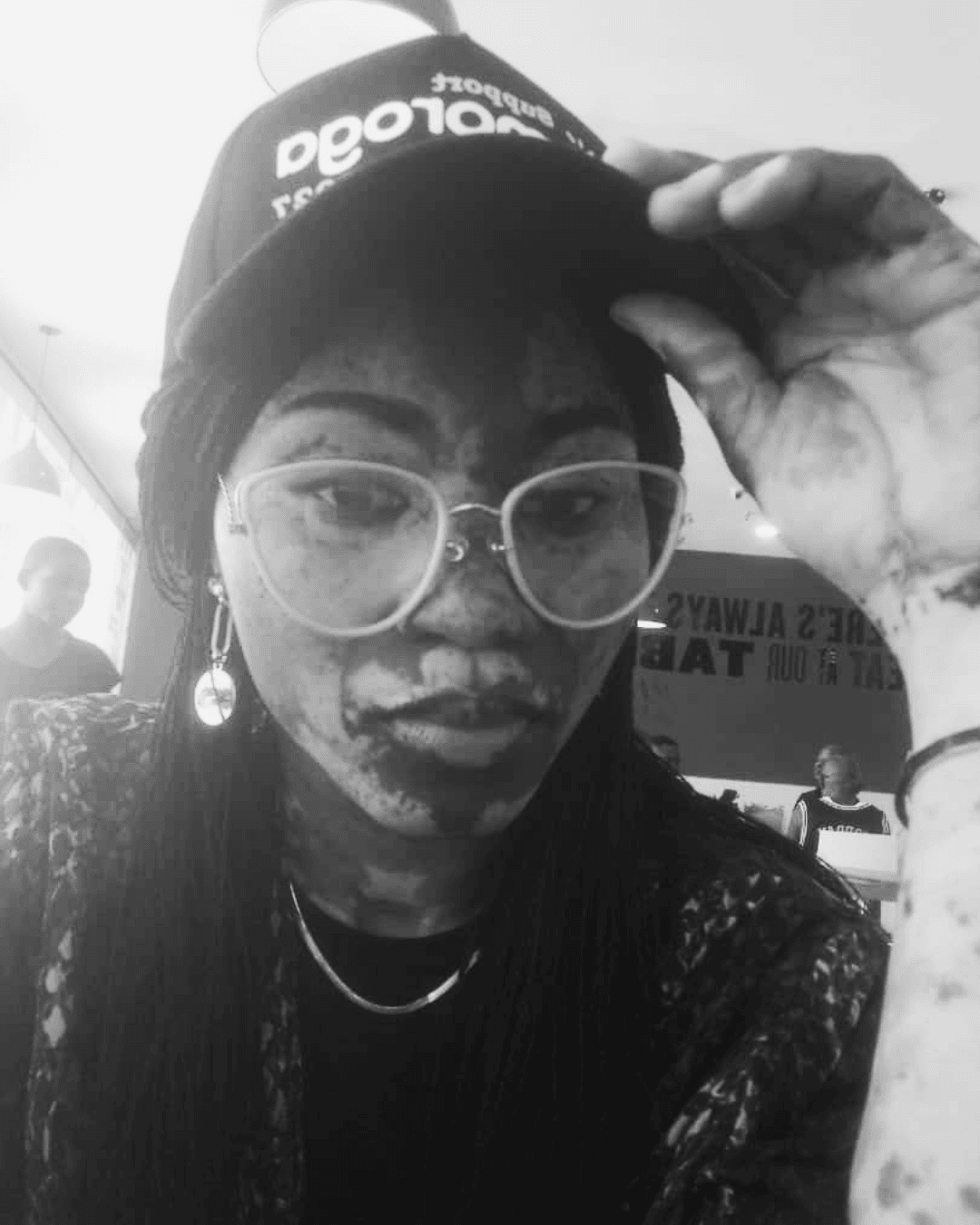
The white patch appeared on March 22, 2024. I wasn’t thinking about my skin that day. I could barely swallow, talk, or eat because of a severe sore throat. I reached for the usual medication and hoped it would pass.
Days later, the sore throat pain eased, but my skin kept changing. On the third day, I spotted small white patches on my left arm. I didn’t think much of it at the time. It didn’t seem serious.
Then weeks passed, and the patches spread to my second arm. That’s when the worry set in. I started seeking medical attention, trying to figure out what kind of disease I was dealing with.
A doctor said it was vitiligo. When he explained it fully – that there was no guaranteed cure – disappointment hit me hard. I felt despair and began to reject myself.
Facing it came with unexpected challenges. My self-esteem dropped fast. I started turning down outings, limiting where I went and who I saw. Some days it felt like social segregation.
The first thing I changed was my habits. Lagos heat didn’t matter anymore — long sleeves and trousers became my uniform, even in March. I’d check my sleeves before leaving the house, tug them down if they rode up. I told myself it was for sun protection. The truth was I didn’t want people to see, and I couldn’t risk the sun either.
The sun became another challenge I had to face. I learned quickly that exposing myself to it made me weak and drained for hours afterwards. What used to be a quick walk or waiting outside now feels hectic. I started planning my day around shade and saying no to anything that meant being out too long under the sun.
Outings got smaller. I started saying no to events I used to love, like weddings and quick meetups after work. It wasn’t that I couldn’t go. It was that I didn’t know how to explain. “What happened to your arm?” is a question that sounds small until you’ve answered it 20 times in a week.
I started saying no to events I used to love, like weddings and quick meetups after work.
When I’m on a path and someone notices my skin, I see it immediately. The surprise in their eyes, the way some turn to the other side like I might be contagious. It stings every time.
But not everyone reacts that way. Some people try to soften it with kind words: “Sorry, but you have beautiful skin. I wish I were like you.” “Don’t think about it, you’ll heal.” And the older people I meet often pull me aside with advice: herbs, oils, local treatments they swear worked for someone they know. I know they mean well.
I can’t forget a day at the bus stop. A woman walked past, saw me, hissed, and muttered something ugly under her breath. I held it together until I got home. Then I cried.
It hasn’t been easy. There are things I still can’t bring myself to do. The hardest part wasn’t the stares or the comments. It was the way I started seeing myself. I’d catch my reflection and pause, like I was looking at someone I didn’t recognise.
My courage showed up in small choices like stepping out without pulling my sleeves down, answering “what happened?” without apologising, looking in the mirror and staying there for a few seconds longer. I’m still learning, still becoming. But I’m no longer waiting to be “fixed” before I live.

As narrated by: Rofiat Aderonke Adedokun (Ogun, Nigeria).
This snippet is published as part of the series, The Complex Reality of Vitiligo.
Discover more from Chronycles
Subscribe to get the latest posts sent to your email.


Published by