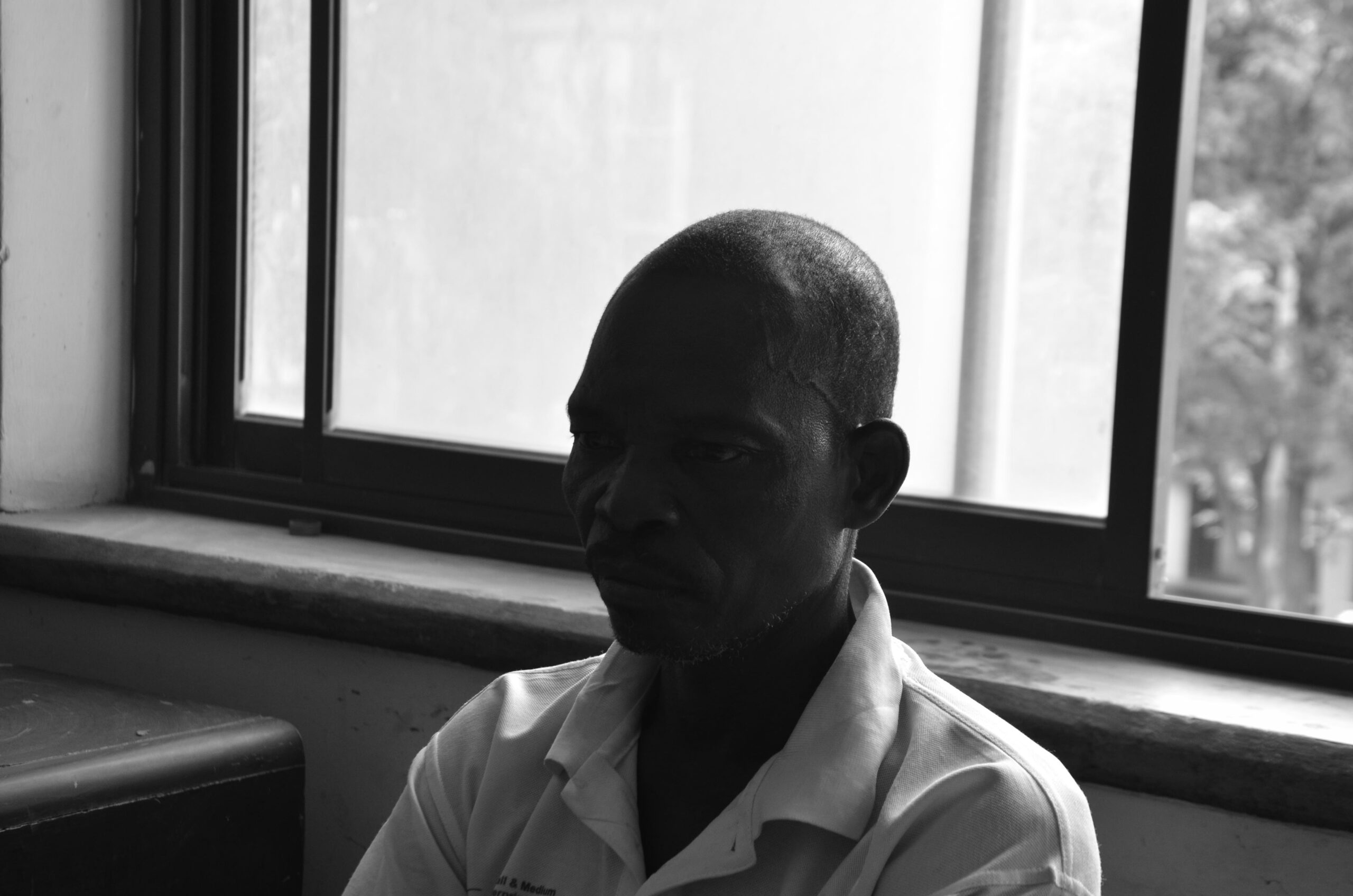
I’m an indigene of this state, and for fourteen years I have been coming to this secretariat every single day—weekdays and weekends. In 2012, they didn’t even pay me. I remember the first few months after I started, there was no pay at all. I worked mornings, guarding these properties and the empty offices, and at night I would go back home hungry and tired, trusting that they would come through. After three long months, they finally started paying me. At first, it was only 10,000 naira a month, the same as all the other security guards like me, the casual workers. Last year, they raised it to 20,000 naira. Twenty thousand to feed my whole family.
I come here every day, even on weekends, because I have no other work. When I was younger, I used to do labourer work—helping build houses, carrying bricks on my head under the hot sun. But now I am fifty years old. My hands are getting old and my back always aches at the slightest strain. The doctor told me I should rest more, but how can I? If I stop working, who will protect these properties? Who will feed my family? So I stand at my post. When it is morning shift, I come in. The night guards do the midnight shift. This is all I know how to do now.
I am a family man. A big one. I have one wife, nine children, and four grandchildren. We all live together in our small house on the outskirts of Yola. Every one of them depends on me. There’s my oldest son, who finished secondary school, but we can’t afford higher education. He helps me whenever he can, taking up odd jobs to send a little money home. My daughters help too by selling small tuwo at the market. One of them is married and now a mother herself. But some of my children are still young: going to primary school, running around the courtyard. The smallest grandchild is Isaac. I worry inside of me. Can I feed them all next month? Can I pay for the next school term?
The monthly twenty thousand naira they are paying me is barely enough to cover our needs. So we do what many families around here do: we turn to our little maize farm. Every few weeks, when I can scrape together a few thousand naira from this salary, I take it to buy a bag of maize. The rest of the money goes to my wife, Amina. She wakes up early most days to grind some of that maize with a machine into fine flour. From that, she makes tuwo that people here sell by the roadside. With the money she makes, we buy salt, pepper, maybe a little meat if the price isn’t too high. What I don’t spend goes into making sure the next bag of maize is bought. This is how we feed all of us.


Some days, I wonder how a man like me with nine children and grandchildren can stand so long with only one steady income. My wife and I have nine mouths to feed every day. Every naira is budgeted down to the last kobo. But I never complain too loudly. They never complain, either. At least this salary, however small, still keeps us alive and keeps hunger away. God has given me the health and strength to work, and for that I am grateful. I tell myself there’s no point in regret. We still have food today, thanks to this job and my wife’s maize, and God’s mercy.
For me, what they told me when I first came was that sooner or later, they’d come and make me permanent. So I stayed here. This is how I stay here waiting, and there’s nothing I can say again. I’ve never applied for any government work aside from this security man that I am doing here in the secretariat, because even here, it’s my secondary school certificate that I brought to get the work. Since I’m always here, what work can I do?
In the end, I try not to regret. I will remain here. I have become used to this place. Even if I become a permanent staff member one day, I’ll probably retire soon after, but that’s not a failure. If it happens, I will be thankful. Until then, I have no choice but to wait.

As narrated by: Adamu Ibrahim (Jimeta, Nigeria).
This snippet is published as part of the series, The Casual Workers of Adamawa.
Discover more from Chronycles
Subscribe to get the latest posts sent to your email.

Published by