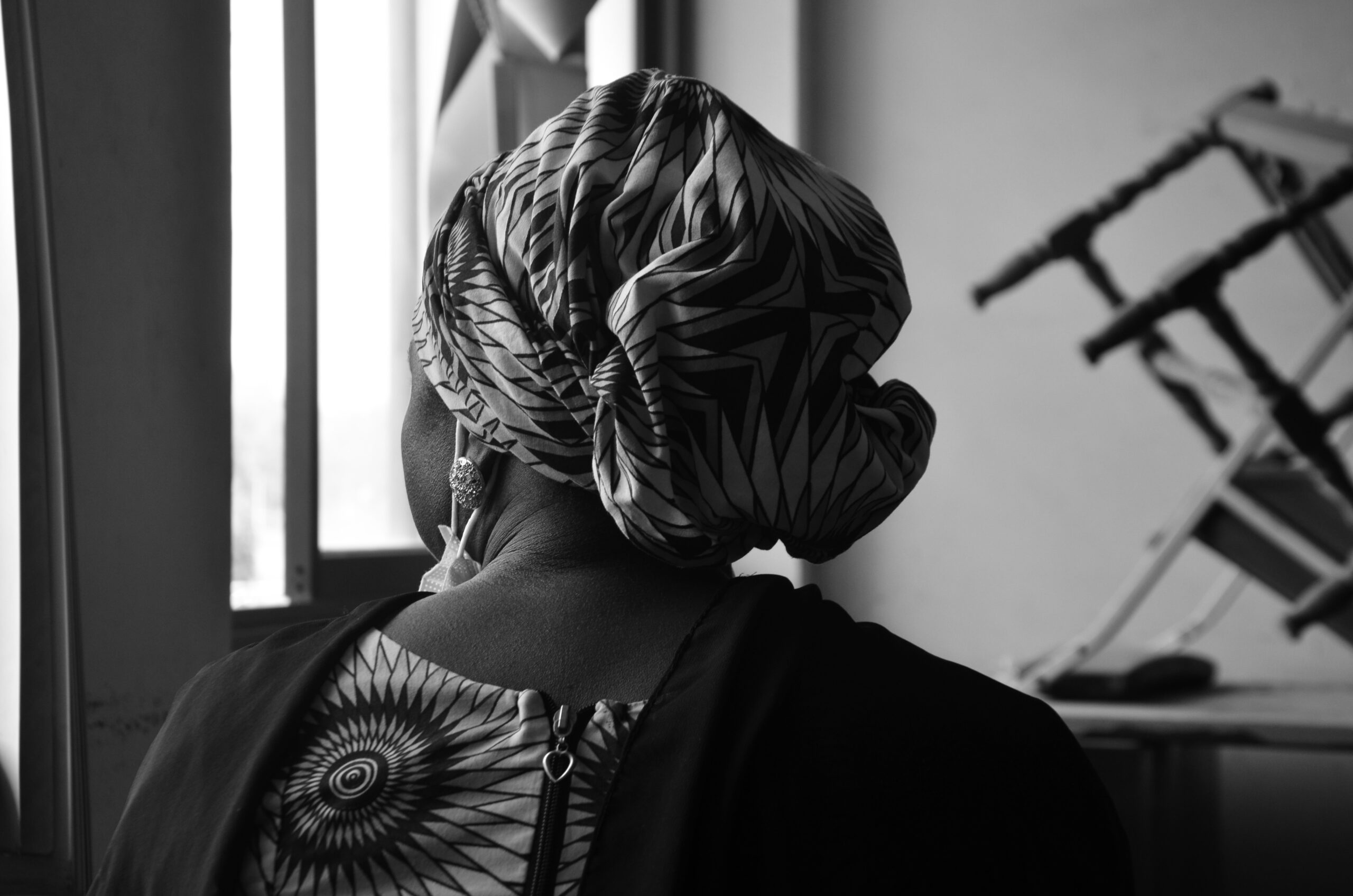
Every time, I wake up before sunrise, before the city is fully awake, and I begin my shift with a broom in my hand or with a stack of files under my arm. I have thought of leaving this place many times, but the promise from years back still keeps me here.
Ten years ago, under this same building, in May 2015, I was promised job security by the people who employed me. I was told that after six months, I would become a full staff member. Now, at 43, I’m still a casual worker, earning just ₦20,000 a month. Even as the promise faded, I kept showing up, stubbornly hoping that one day someone would finally call my name as more than just a volunteer.
I am originally from Adamawa State, and this city has been my home all my life. In 2002, I got married at 20, and by 2015, I had already spent years helping raise four children that my husband and I took in from the family, even though we had none of our own. On the day I was hired, I was told they needed two delegation staff. I was one, and a young man was the other. He lasted a few weeks before he said he couldn’t cope and left. I had no intention of quitting. I have always told myself I have a passion for this work.
From the first day I started as a casual worker, my role was never defined. It means I can be called upon to do anything. Some days I might be under the cleaning department, mopping the floors and washing the windows. The next day, I might be in the registry department, filing papers. The week after, I might be sent on errands as a messenger, running copies to different offices. Every day was different, depending on what the department needed. No shift was set in stone. If they found nothing for me to do, they still called me the next day. The only guarantee I had was to be there before anyone else and leave after the building emptied.
For years, I have been surviving on the little they pay me. From 2015 until last year, my salary was just ₦10,000 per month. That was seven long years on essentially ₦500 a day. In 2022, they finally doubled it to ₦20,000, but even that barely felt like something to rely on. Some of the permanent staff would sometimes stop me to ask, “How much do they pay you that you’re doing all this work?” The truth is, I just love what I do. Also, waking up every morning and knowing that you at least have a place to go and work.


During the coronavirus lockdown in 2020, I was the confidential secretary to the High Commissioner, unofficially essential. When every other place was told to shut down, I was still told to come in. Other people stayed home, but I had to report every day. I was not even permanent, but there I was, putting on my mask and coming to work every day. They insisted I had to come because someone needed to be in that office.
The cost of coming to work every day is the source of my biggest debt. I live on Numa Road, and a daily round-trip on two buses costs me about ₦1,000. That’s almost all my salary gone even before the end of the month. For ₦20,000 a month, I literally spend almost all of it just by going to work. Before you know it, there is almost nothing left for anything else. No matter how empty my pocket can be, they expect me to come to work every day. If a permanent staff member misses a day of work, it is as if no one bats an eye. They call in giving several excuses—sick, taking leave, or even skipping a week without explanation. But for a daily worker like me, there are no such luxuries. If I miss even one day, someone will call me. “Where were you yesterday? Did you forget to come?” They remind us there is no room for negotiation. That is the cause of my frustration. When I took this job, I came here to build a life, but now, it feels like I’m building someone else’s life with nothing to show for my own.
I leave the ministry at 5 PM and return home to become a mother. My husband is a police officer and a good man who does all he can, but his salary is small, too. We have no children biologically, but we have four under our roof — little ones from our extended family. They all go to a private school because we believe in giving them a quality education, even if it costs us dearly. “Mama, we need new notebooks,” they never stop asking, or “Mama, I lost my uniform, can you help?” I have to smile and say yes, even when my purse is empty.
Our survival depends on our hard work outside the office. Every Saturday on weekends before dawn, I’m out in a small field with my husband when he’s not on duty planting maize and beans. It takes hours of bending, digging, and sweating under the hot sun. We hire no one because we have no money for such labour; we do it with our bare hands. Whatever we raise on that patch of land is what feeds my family through some months.
At age 43, why am I still doing this job? If I spend another 30 or 35 years in this system, I will retire at 78 — too late to enjoy anything. I have allowed myself to believe in that six-month promise for too long. If a better job came along, even outside the government, I would take it in a heartbeat. If someone offered me ₦50,000 as a guard or assistant somewhere else, I’d leave this place with no regrets. The truth is, I’m working for my family, not out of love for cleaning.
I don’t often talk about the difficulties of my work with others. Even with my husband, I handle most of it quietly. I hide the truth from our children. They think I work in some office dealing with “important things.” Each morning when they call out, “Mama, have a good day at work!” I just smile and say, “Thank you, I will,” as if the praise fits. Inside, I feel the ache of a lie. They deserve to know I’m just scraping by. But how can I break their faith in me? Would it make me feel better, or just break their hearts? This is the life that I am living. For now, all they have to know is that mummy will always be there for them.

As narrated by: Victoria Hamal (Jimeta, Nigeria).
This snippet is published as part of the series, The Casual Workers of Adamawa.
Discover more from Chronycles
Subscribe to get the latest posts sent to your email.

Published by