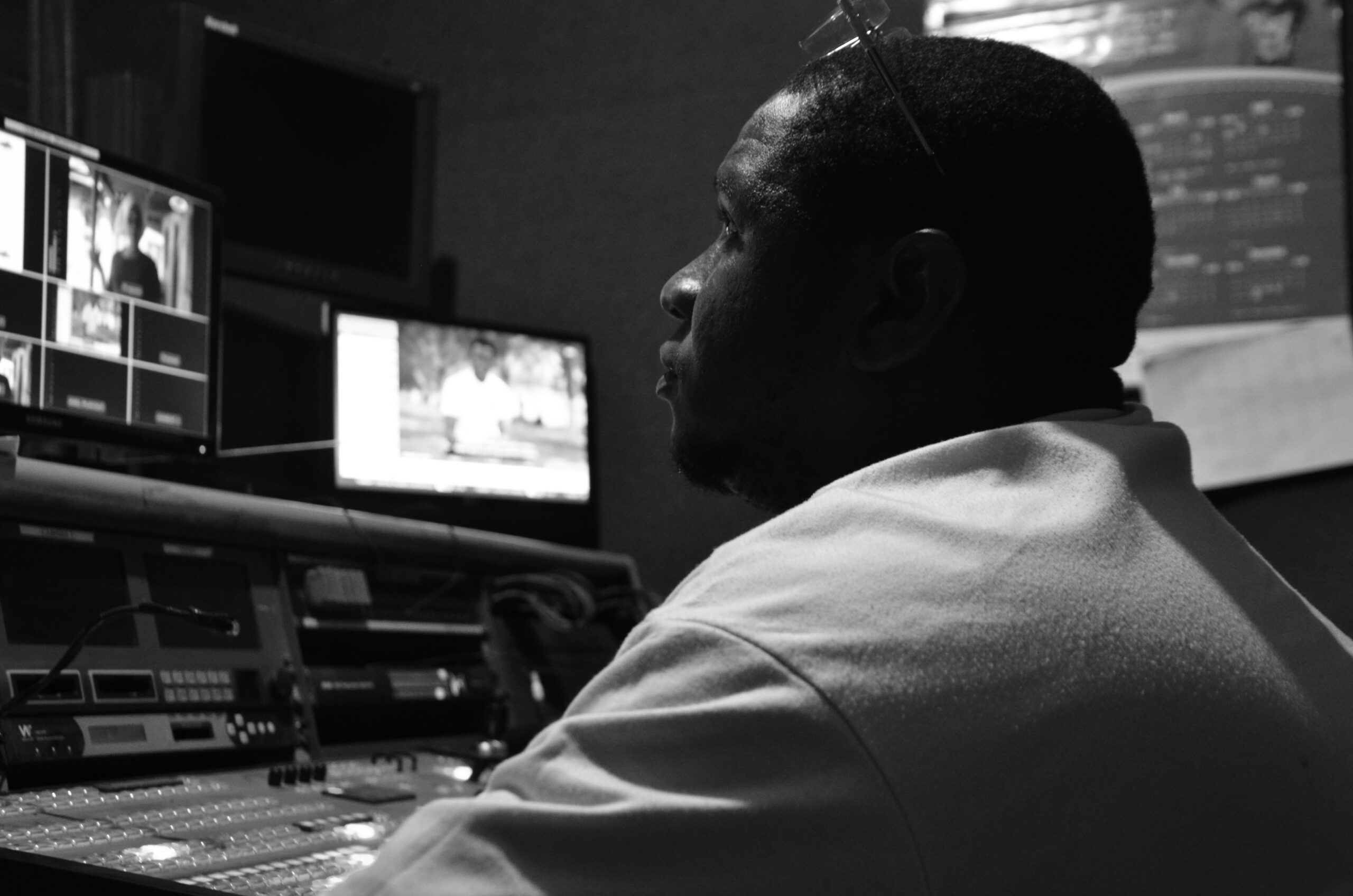
I have worked at Adamawa Television Corporation since 2015. I was a fresh-faced 23-year-old from Yola North, Adamawa – an indigene with big dreams and a burning desire to enter broadcasting. I never imagined I would still be crouching in the doorway eight years after I first walked in as a volunteer. But here I am.
I went to Adamawa State Polytechnic for a diploma in Mass Communication from 2013 to 2015 because, even as a boy, journalism was always my dream. I remembered when I was in JSS1, one of my subject teachers told me about speaking on the radio, about television, about being the voice that stretched across a market and into people’s homes. I wanted that, so I studied and saved what little I could. Then one of the staff at ATV, who I called my oga, told me they needed a few hands in the station. I agreed because I was desperate for experience and a break. I didn’t know then that volunteering was just a package word for unpaid, and that this path would become a web of unending exploitation. I stepped into ATV’s old compound as a volunteer in the editor’s suite.
For five long years, I received nothing – no pay, no allowances, nothing at all. They told me I would learn. They told me the experience was payment. At first, I believed them because hope is the only currency a poor man can always afford. I started as an editor. I learned to cut video on their editing suite, I learned how to operate the cameras during news broadcasts, and even how to manage transmission in the studio.
There are three classes of workers at our station: volunteers, artists (that’s what they call casual workers), and permanent staff. As a volunteer, I was basically invisible, working only for the experience. The “artists” are technically employed by the station, so they get a tiny paycheck—5,000; 10,000; 12,000; 15,000, but they aren’t truly on the payroll. The government, or the union, doesn’t even acknowledge that they exist. Only the station knows about them. And then there are the lucky few “permanent” staff – the director of news, a handful of heads of department – maybe 10 or 12 people, out of over 100.
After five years of unpaid shifts, the station made me an artist. They started paying me 12,000 naira a month. From 2020 through 2026, I have been paid the same twelve thousand naira. The amount has not changed, but food costs more and transportation. My transport alone to come to work is now more than the money they give me for the whole month.
Whenever I tried to speak to the management about the increase, they kept feeding me the same lines. “We have no budget to increase pay.” It’s a line they’ve been feeding us since I came on. They keep justifying it with the money the government sends to run the station. The official story is that running costs are tight; if they had to raise my salary, maybe the news vans wouldn’t run, or the studio cameras would stay off. I’ve heard it so many times. “No money. Look at our maintenance bills,” they say all the time. And so we live in this terrible joke: I have a job, and I can’t afford it.
My family is also suffering from it. I’m now a husband and a father. My son is two years old and already learning to count because he is now going to school. And there’s also my wife, who would also expect me to come home with some extra cash. I have parents, too, who still ask me for small kindnesses. I am supposed to be the centre that keeps the family from drifting. Twelve thousand does not cover a month’s food. It does not pay a quarter of our demands.


Many times I’ve cursed this system. I have sacrificed so much. I paid for my National Diploma in Mass Communication from Adamawa Polytechnic myself, studying from 2013 to 2015, all because of this job, thinking that when I graduated, the work would be worth it. Instead, I am still sitting here in 2026 and still struggling. I’m 34 now, and still basically the same person carrying cameras and microphones for nothing. I have sacrificed a lot for this station.
Getting a permanent job in Nigeria often boils down to connections or cash. Over and over, I’ve gone to the board to apply for a proper staff position. Each time, I’m told different kinds of stories. “Bring someone to recommend you, or… you know.” They don’t say it openly, but they mean you need a connection. It’s the Nigerian reality. If you don’t know the right person, you’re nobody. I’ve seen less qualified people get hired simply because they had fathers or friends who could grease the wheels. Three weeks ago, the ministry gave out new employment, but I wasn’t on the list. I saw people who had no prior experience with this work we do here coming to collect and sign their appointment letter. But people like me and like the rest of us don’t get to be on the list even though we already have years of experience.
My colleagues tell me there are dozens of casuals just like me at ATV – maybe eighty-five or more, by our count. Permanent staff? Not more than twenty. I believe the government knows we are here, too. After all, the funding they send to ATV, that running cost is supposed to cover us, the artists. If they give money, there must be people working. But we never see them officially. We are not on the payroll, not on any union list. It is like we are living a lie. To survive, I took up freelancing on the side. By going out to shoot weddings, seminars, and even documentaries for anyone who pays. I have bought a second-hand camera. I also have a laptop I bought from a colleague with a microphone from my small savings.
Many of the people we started together have left. Some could not keep their families fed. Some were offered a slightly better wage elsewhere, and they took it. I have seen some of my friends, with whom I started, leaving for better offers elsewhere. I know of one who is now working for Al Jazeera. There are about two other colleagues now working with TVC News, NTA and co. I can’t blame them for leaving. When they go, new volunteers arrive with the same bright eyes, and they feed them the same line of promise like I was.


As narrated by: Salisu Abdullahi Rabiu (Girei, Nigeria).
This snippet is published as part of the series, The Casual Workers of Adamawa.
Discover more from Chronycles
Subscribe to get the latest posts sent to your email.

Published by