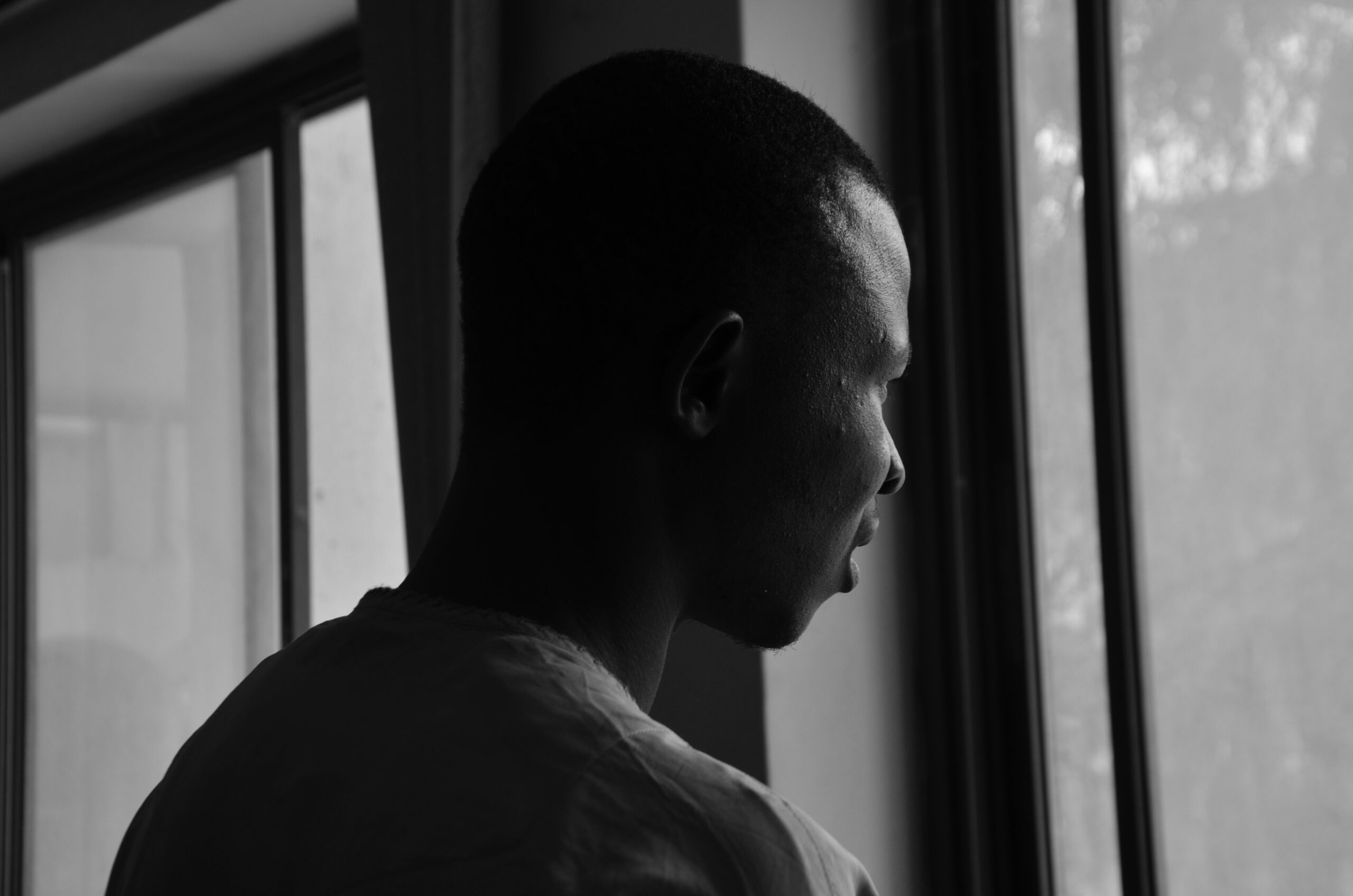
I was born in 1990. I’m 35 years old now and married with three young children. I finished my diploma studies in 2023, but first, I managed to get a training certificate in computers in 2010, then a diploma in 2023. For many years now, I’ve been working here at the Federal Ministry of Labour & Productivity as a computer operator.
I still remember the day the then-acting permanent secretary hired me in September 2012. I smiled like he was delivering good news to me. He told me it would be just six months. Six months of learning and hard work, after which I would be brought into the system as a permanent staffer. But now, thirteen years later, I am still seated at that same desk, still waiting. The clock has turned over more than a hundred such six-month promises, and I remain a “daily-paid” worker on ₦20,000 a month. In 2024, the law raised Nigeria’s minimum wage to ₦70,000, which is more than triple what I make, but the loopholes are everywhere. Because I work with a contract that is temporary, I get none of that. I still live on less than half of the old ₦30,000 rate.
From the day I was hired back in 2012, I was told this was only the beginning. I recall being told: do six months, show your skill, and you’ll be a permanent staff member. Even in the rules they quoted—Section 7 of the Labour Act says no one is supposed to be casual for more than three months without a formal letter. But six months passed, then six years, and I only got the same promise. Followed by twelve years, fourteen years, and I keep counting.
They started by paying me 10,000 naira—this was between 2012 and 2015, three years after my appointment. By 2015, they added 5,000 to make it 15,000 naira. Then, a few years later, it became ₦20,000 when the federal government gave the new minimum wage to others in 2024, but only in the official payroll, to permanent staff. They “added ₦5,000” for us casuals to make it ₦20,000. But not every ministry, it’s only our ministry. Up till now, some ministries are still paying their casual workers 10,000 naira.
I really can’t say how my family and I are surviving on 20,000 naira, because how do you survive on twenty thousand? It is just a miracle. Every month, before the first of the month even begins, I send all my salary into the community savings we call adache (like a rotating fund). We each contribute what we can; then each member takes a turn receiving the pool. It’s not really income; it’s desperation pooled together. I put in the entire ₦20,000, and the night before rent is due, I might borrow a little back for that. This adache has been my lifeline for more than five years now. Without it, there is no way I could ever gather ₦100,000 for rent. By faith we do it. When the money comes back to me, I take just enough to buy some foodstuff and pay my children’s school fees, while we use the rest to pay the landlord. There will be nothing left after, not even transport fare to come to the office. I trek on foot to come here, because I don’t have money for a bike and other things. I’m just trekking. Trekking to come to work, trekking to go back home. That is how I live and survive.
My children are in school. My wife had started doing business before but had to stop because of a lack of funds. You know, as a man, I’m the one who was supposed to give her the capital, but what am I earning? We’re barely surviving; how will I give her a capital? Then, she was frying akara. But now, because of a lack of capital, she’s staying at home doing nothing. I feel that every day a man’s supposed to provide for his family. I can only continue to apologise with empty pockets. I can not give her what I do not have. My children and wife are old enough to know that I am trying.
Hope! It is what is still keeping me in this work, not because I love the work I do. I should not pretend. I am not the only one trapped in this. I have tried applying for a permanent staff position. The first recruitment took place in 2015. That was the first time I can say I did it during the time of former governor, Senator Muhammad Umar Bindow. Now again, we have been screened for adoption by Governor Umaru Fintri. They called us in, asked us our names and tested our skills. We put our honest years on the table. We were told the names would be sent. We were told we would be the first to be considered for employment. The governor gave everybody a chance to apply. I included in my application that I was a daily pay worker, because as a daily pay worker, you have the experience.


Being a daily pay worker here, like me, means you can be called upon to do anything. As I am, I’m not only working as a computer operator. I’m also doing office work, which is like admin work. I’m doing planning work, statistics and accounting. What I’m doing here in the ministry is more than my salary. Sometimes, I do consultations too and other things. Many of us here, it’s not only what we have been appointed to do that we are doing. Some of us are cleaners and also do messenger work in the office because of a lack of staff.
My hope clings to my work, but I am not happy with the work any more. As a daily wage worker, I am doing too much work. It feels like I’m wasting my time and the future of my children because living on 20,000, it’s not easy. I have tried to leave this job, but, you know, as somebody who has spent 13 years working in one place, I also have a passion to do this work. It is not easy to leave it and just go. It’s more than that. If I quit now, those thirteen years go down the drain. If someday I am formally appointed and then retire, at least there’s a guarantee that I will get a pension for these years. But as it stands, if I leave, the National Pension Commission (PENCOM) doesn’t count casual years toward anything – no pension, no insurance – it’s as if I never existed. I do not want to stand before my children one day and say, “I wasted my youth here with nothing to show for it.”
Coping as a father and as a husband at the same time is so hard with this job. This is not the life I was praying for. My prayer now has changed. I prayed that just before the end of this year or any time now, I want to become a permanent worker. This is my prayer. Staying in this job affects my children’s educational life. Staying in this job affects my marriage.
And if I don’t eventually get a permanent appointment, I am leaving this job.
As narrated by: Dadi Daniel (Jimeta, Nigeria).
This snippet is published as part of the series, The Casual Workers of Adamawa.

Published by