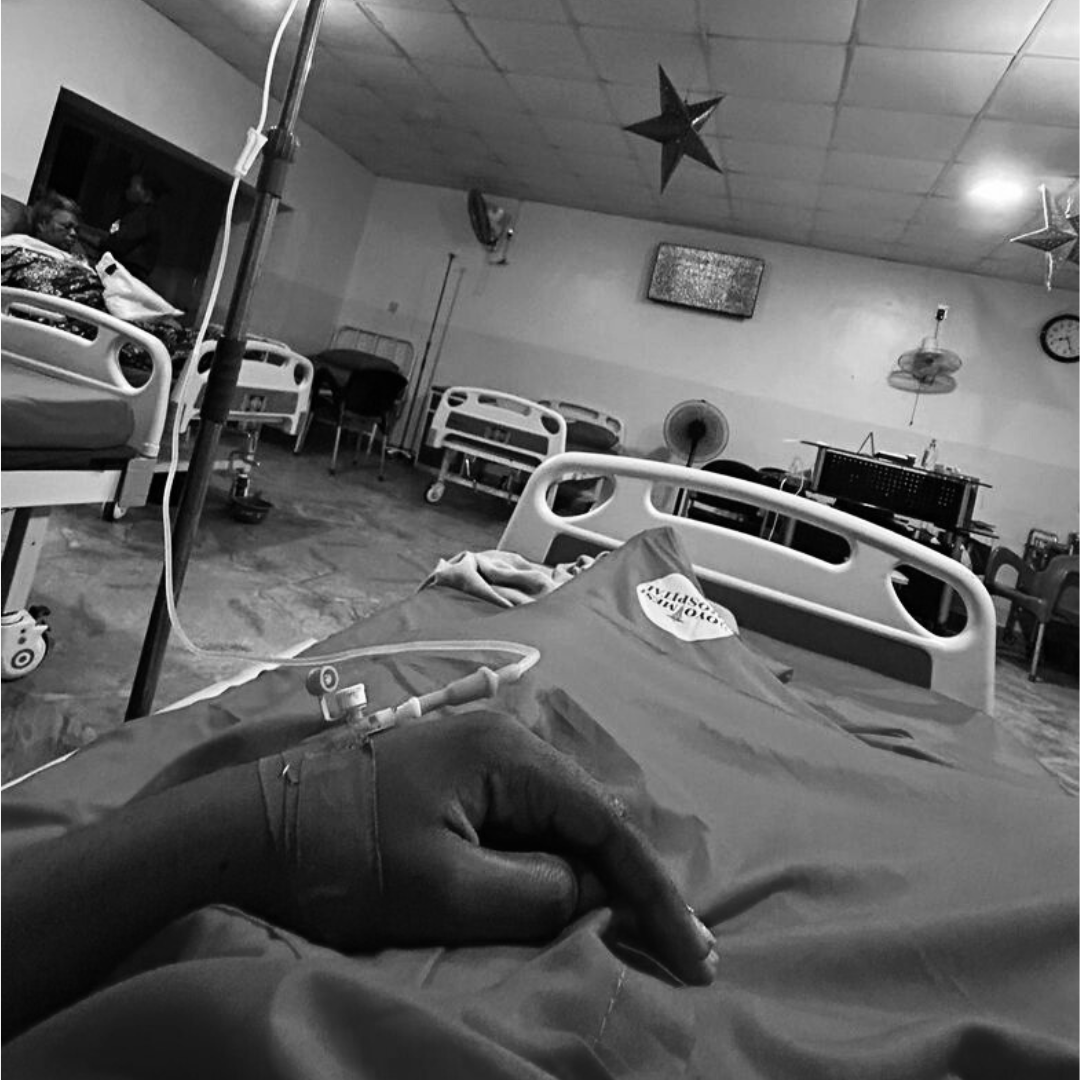
The first time I went to Jaja, the school clinic, amidst a flare-up, throbbing lower abdomen, back ache, and a whole body collapsing on itself, I expected help. But I was told to get Felvin, the popular menstrual cramp drug, as it was just normal cramps.
That phrase – it is just cramps – has followed me for most of my life. I was 13 when I was first diagnosed with endometriosis, a condition where tissue similar to the lining of the uterus grows outside it. What started as something I had to be wary of while on my period grew to become one that haunted me even when I wasn’t bleeding.
I am a 300-level Civil and Environmental Engineering student at the University of Ibadan. I am the social director of my department. I used to be a basketball player, but I stopped because I’m easily fatigued. I like design and visual arts.
Living with endometriosis is awful. I absolutely hate it. Endometriosis affects my feeding, weight, skin, and mood. For the mood, it is not just hormonal mood swings. It deeply affects how I feel every day. Even after a huge success, I often feel unmotivated.
I have missed classes almost throughout my stay in school because my medical appointments coincide with days of classes, and because of flare-ups. Even for classes I am able to attend, the chairs are too hard. I missed a Physics test in 100 level because of a medical appointment. I notified the lecturer in charge, but I didn’t hear back. Since then, I have tried not to miss another.
My relationship with people has been okay. Most people don’t know about my health. The ones who do express empathy. Others have been indifferent; they don’t help, but they don’t worsen it. I’ve never asked the university for help. But I wish they would provide ramps for people with wheelchairs in all buildings, and softer chairs for students. We spend over two hours in class; it’s the least they could do.
As narrated by: Odiaka Ngozi (Ibadan, Nigeria).
This snippet is published as part of the series, Beyond What You See.

Published by