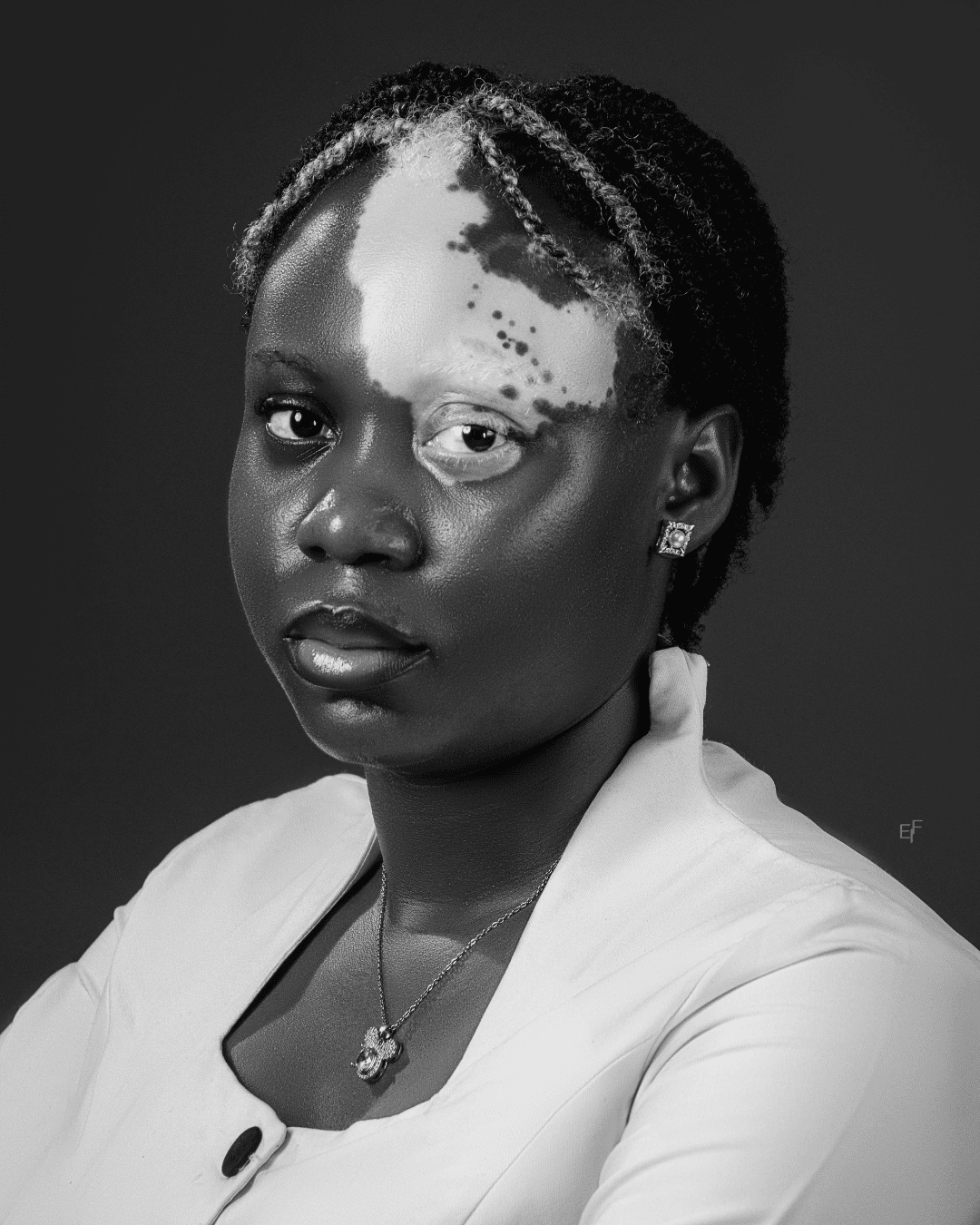
I was officially diagnosed with vitiligo in December 2024. Two months before then, I noticed a strange change on my scalp. At first, I thought my hairstylist had scrubbed my scalp too hard because I have very sensitive skin. It looked like a small injury, so I didn’t pay much attention to it.
Then, in November, shortly after my birthday photoshoot, I noticed changes on my face. It started looking like eczema, and honestly, I was upset. I blamed my makeup artist and convinced myself that maybe her tools had not been properly sterilised. I thought it was some kind of skin reaction that would eventually go away.
Instead, the patch grew larger.
It wasn’t yet bright white, but it was noticeable enough to worry me. I kept asking myself, “What exactly is happening to me?”
I spoke to different people. Some said it was vitiligo. Others said it was just an allergic reaction. The truth was that I had never even heard of vitiligo before then, so I had no idea what to believe.
I tried to get an appointment with a dermatologist at UCH, but I was told they were fully booked for the year. That period was frustrating because I desperately wanted answers.
Eventually, I found a private dermatology clinic in Ibadan, where I met my doctor, Dr Bello. She has been an incredible part of my journey. She listened, explained things patiently, and officially diagnosed me with vitiligo.
Treatment started immediately, and at first, there were encouraging signs of repigmentation. For a while, it felt like things were getting better. Then life happened.
The emotional stress I was dealing with took its toll, and I lost my relationship. It was one of the hardest parts of everything I was going through. I was already trying to process what was happening to my skin, and then emotionally, I was breaking in another direction. That stress affected me deeply, and I noticed the vitiligo began to spread faster.
That experience broke me in ways I can’t fully explain, but it also opened my eyes. It taught me that people may leave when things change on the outside, but the right people will always see you beyond your appearance.
Like many people living with vitiligo, I began to realise how much emotional stress can affect the condition. There were days I was constantly checking the mirror, wondering if there was a new patch somewhere. There were days I felt frustrated, confused, and tired of trying to understand why my body was changing. What made it even harder was dealing with people’s reactions. Some people stared. Some asked questions. Some gave unsolicited advice. Others tried to attach spiritual meanings to it.
I wish people, including my parents, knew that vitiligo is a medical condition. It is not contagious or transmissible. You cannot contract it from someone. It is also not a spiritual problem. Nobody offended God. Nobody is being punished. Nobody’s village people are after them.
You cannot contract it from someone. It is also not a spiritual problem. Nobody offended God.
Vitiligo can happen to anyone. Black people have it. White people have it. People from different countries and backgrounds have it.
Sometimes, instead of asking insensitive questions or making assumptions, people simply need to be kind and willing to learn.
Vitiligo brought out a strength I never knew I had. It made me ask questions, research, and want to understand my body better. It also made me more compassionate towards people living with visible differences, including people with albinism and other skin conditions. Most importantly, it taught me that confidence is something you build from within. When you stop tying your worth to your appearance, you begin to see yourself differently.
If you’ve just been diagnosed with vitiligo, I know you’re probably scared. You may feel confused, angry, or overwhelmed. Those feelings are normal. Permit yourself to process them. You may be wondering what people will say, whether the patches will spread, or if your life will ever feel normal again.
I want you to know that vitiligo is not the end of your story. One day, you’ll realise that it has not taken anything away from you. If anything, it has added another layer to your story.
Take your time. Cry if you need to. Ask questions. Learn about the condition. Give yourself grace. But please don’t stop living.
Vitiligo has not taken away your beauty. It has not taken away your value. It has not taken away your identity. In fact, one thing I’ve come to appreciate is that vitiligo makes you unique. It makes you memorable. It reminds you that there is no one else in the world exactly like you.
As narrated by: Blessing Oduola (Ogun, Nigeria).
This snippet is published as part of the series, The Complex Reality of Vitiligo.
Discover more from Chronycles
Subscribe to get the latest posts sent to your email.


Published by