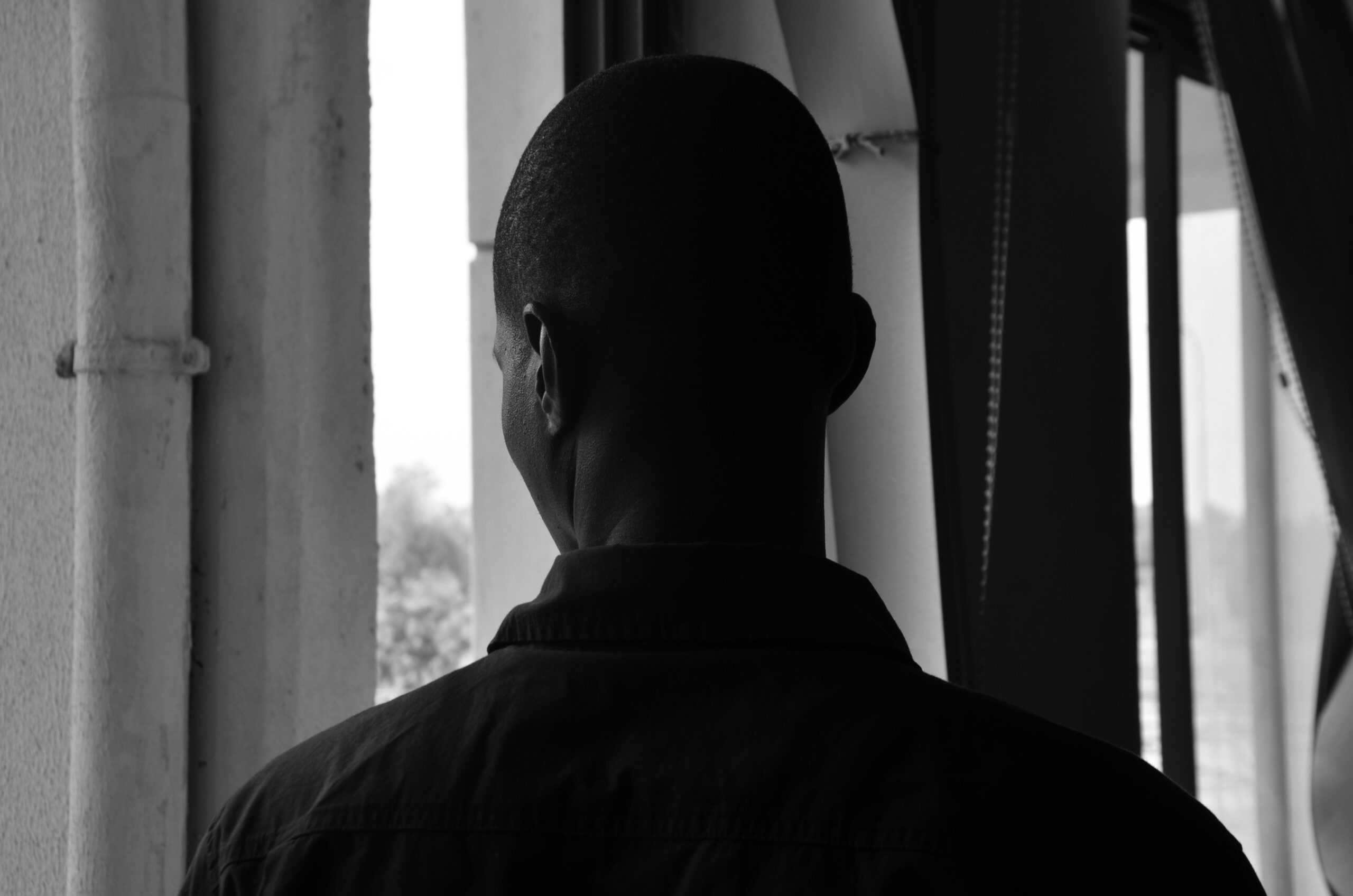
For thirteen years, I have asked myself over and over again how that one year became thirteen years. My uncle, Sanni, told me back then to work here for one year and by the following year, they would make me a permanent staff member. One year, just one year, he said. I left my phone-repair table in the market because of that promise.
I am thirty-two. I am married, have one wife, and three children. I started in April 2013 as a daily-rated cleaner at the Ministry of Finance and Budget. At first, I swept; you can call me a cleaner. Then the work grew. I joined the assistance registry. I received letters, mail in the secret and open registry; I dispatched mail to other ministries. For about ten, eleven years, I have carried files and letters across the offices of this state. That is how we run it. That is what I do.
Before joining the ministry in 2013, I had a life which I later abandoned. I repaired phones in the market. I started the business when phones first began to come to Adamawa around 2007. I liked the work. Customers come, bring their phones, I repair what I can, and I collect my money. If the day was good, I could make more than twenty thousand naira. Not every day, though, but sometimes. That money is how I used to feed my family. Everything changed after my uncle introduced me to this work here. He told me I could do both — work in the ministry from Monday to Friday and repair phones on Saturdays and Sundays, or even after work on some evenings. He said by the following year, I would be permanent. I believed him, so I tried it.
In the beginning, I tried to keep the two jobs, but it started becoming impossible because of the work stress. I used to walk from Demsawu to the state secretariat, which takes one hour and seventeen minutes every day. I have to be at work before any other staff, so I can open offices with my colleagues, mop, sweep, and clean. I will not leave until four or five in the afternoon. You cannot leave when the office is not organised. Then I walked back the same hour and seventeen minutes to my house. That’s a lot of stress on its own. It takes your body slowly. Over time, the hours here swallowed the time I used to spend at the phone bench. After the long day, there is no way I can run to the market. By evening, I am already tired and the customers are already going home too. Slowly, my phone repair business diminished and died. I had to make a decision. I stopped because I thought I was trading it for something better.
For many years, I have been paid ten thousand naira a month. Ten thousand. After a long while, they increased it to twenty thousand. It felt like progress, but that did not change anything much. What can twenty thousand naira a month do? Twenty thousand is still very small when you have a wife and three children to feed, rent to pay, and school fees to pay. If one private school charges ten thousand, how do you put three children there? You cannot. So my children go to government schools. We manage how we can.
I am not always happy with the way people see me. Not in a bad way, but in a way that does not reflect me. People see me at the secretariat and they think I must be earning seventy thousand or more. They say it like they know. Sometimes I laugh it off and tell myself, “You don’t know what is going on.” They don’t know that this job I do is casual, and that there is no pension, no benefits, no break, nothing, nothing. I have a diploma in ICT. If I become a permanent employee or get a permanent job, I want it to be in line with what I have learned. I do not want to be doing a cleaner job forever.
My wife is at home. She is not working, but I’m managing to raise some funds to give her as a capital to start a business in the house. Like those people who manufacture charcoal in Daruma and used to sell it in the house. Yeah, charcoal, that’s what she said she wants to be doing. I am trying to gather what I can from the small side job that I do. It is small, but it is something. I have to do something by force, because working as a casual worker, you must learn to do something extra, whether you like it or not.
I regret leaving the phone repair business. I have many regrets, I cannot lie. The kind of regret I mean is the lies and promises I was told over the years — that I would be made a permanent staff member the following year, when I just started. Because of that promise, I stopped the business. I gave up a job that sometimes brought twenty thousand in a single good day for a wage of ten, then twenty thousand a month. I am still trying to learn to live with those choices. I feel the weight every single day.


“I gave up a job that sometimes brought twenty thousand in a single good day for a wage of ten, then twenty thousand a month. I am still trying to learn to live with those choices.“
I am tired. I tell myself I will leave this work sooner or later, but I have spent many years here. But then I measure what I have given and what the family needs, and I say maybe a little more patience. Maybe next year. That is how a life like this goes — a series of maybes and hopes and small efforts to keep the house standing.
I have thought about going back to the phone repair business, but then I will say, where is the time? I must be here at seven in the morning and not leave until in the evening. There is no time to go and repair phones. Even if I tried, the parts and the market have moved. The customers have found others. And besides, even if I start again, who will feed my family in the small time it takes to build it back? So I stayed. This work holds me because it is regular, even if it is small.
Really, for now, I don’t have any plan or any hope, apart from this government. All my hope is on this government — Governor Fintri. I am sure of one thing. If this government goes, I’m sure this thing will not work for me the way I have planned and I might actually go with this government. This is the only government that puts us casual workers at heart. The governor shows that he wants to employ us, but some circumstances and obstacles have made it difficult for him. He’s trying. But this government administration will soon be done, and if before then I can’t get permanent employment, I don’t think I can stay anymore.
At least if I am made a permanent staff member, I will be entitled to the minimum wage of 70,000 naira.
As narrated by: Nurudeen Ismail (Jimeta, Nigeria).
This snippet is published as part of the series, The Casual Workers of Adamawa.

Published by