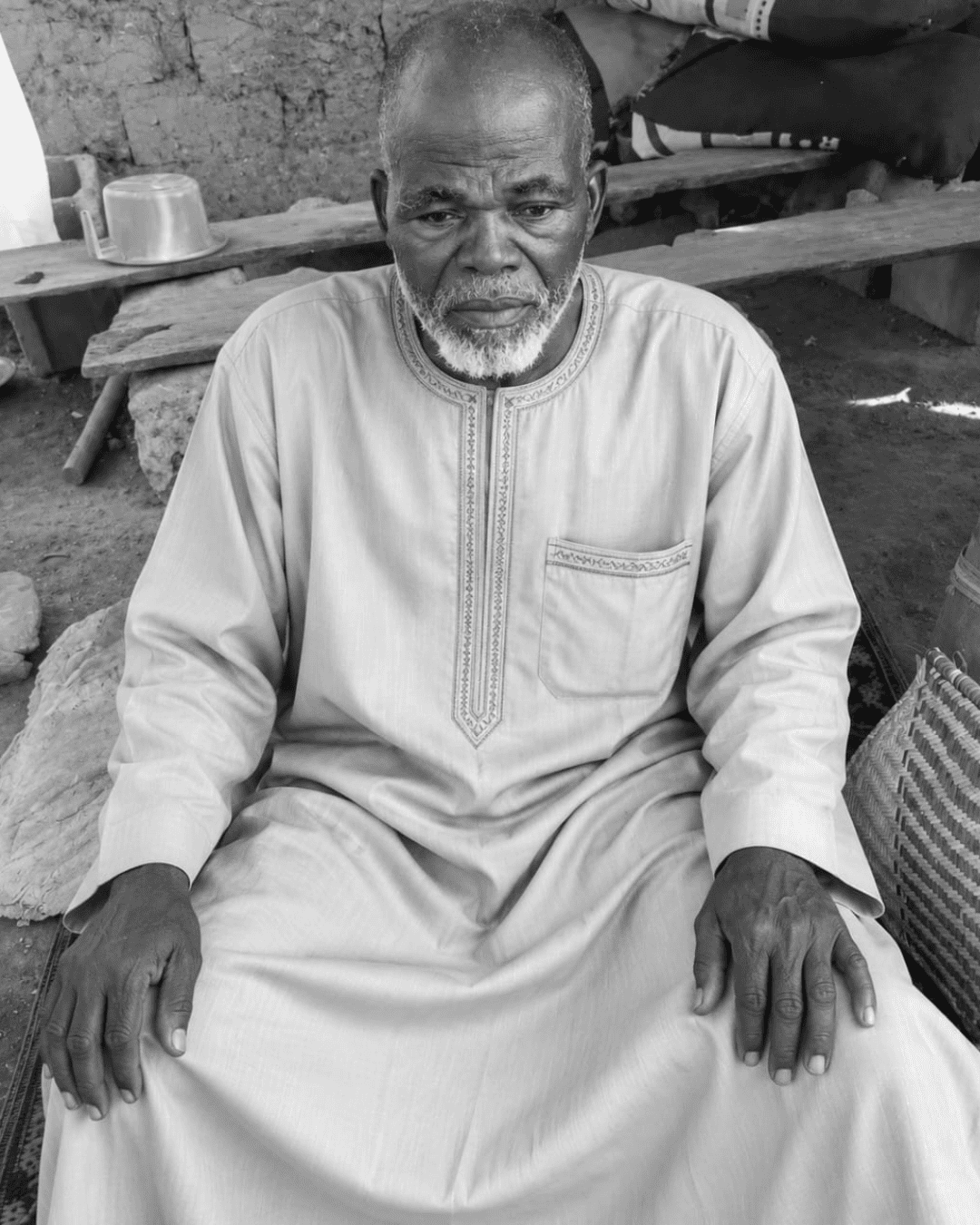
I was initially in Mai Galma and Makakari, rearing our cattle, when A.A. Yari was Governor.
One day, my Fulani colleagues came and met me with a kolanut as an invitation to gang up, saying we have been suffering and a lot has been done to us without justice. I replied by asking what type of invitation it was. They responded that I should give my cattle to go and encroach on the Hausa people’s farmlands and we would get guns and go with them.
“If you cannot go, then allocate one of your children and your cattle. We will send the cattle to eat all the crops of the Hausa people.” I said to them that I am not going and my two sons, Buba and Uma, cannot be a part of it. If, for instance, the government responded, what would happen? They assured me that nothing would happen. Still, I insisted that I could not be part of it.
In a few days, guns were brought to the community. All my neighbours collected; it was only me and one Mallam Ummaru in Sunka Community who refused to be part of the plans. I think about four of us refused and stopped our children from being part of it.
Instantly, they said if we didn’t cooperate, we would regret it and we said we’d rather regret it than give our children. I insisted that I could not steal and none of my children would do so.
A few days after, they rustled all our cattle and left us with only four small cattle and the other Ummaru left with only sheep. We gradually realised that we could not continue to live in the community and we left for somewhere very close to Bagega.
We started living peacefully. But one day, Yan Sakai was formed in the name of patrolling and they started slaughtering Fulani people with no discrimination or investigation.
One of my sons was slaughtered by them. They accused him of being part of the perpetrators of crime. I was really devastated and stigmatised because they said they would kill any Fulani. We that didn’t join the other Fulanis in crime, how will we do? I was even saying that this issue can trigger us to join our colleagues and later I said it is not their fault. It is the fault of our fellow Fulani colleagues who started the atrocities. We decided to leave that place again and come to Anka town.
But even in Anka, the issue of kidnapping escalated and people were being abducted on a daily basis. One day, even my remaining cattle were stolen and I was left with only two sheep. It became very tense because if you went to a farm, Yansakai could slaughter you and we were just managing the situation.
One night, bandits invaded Anka town and immediately in the morning, community members started protesting. They set all our rooms and shelters ablaze and stole our foodstuff, accusing us of conniving with bandits in the forest. We became stranded for two days. We had not eaten anything and were very hungry. We left for somewhere behind the riverside, my colleagues, Riskuwa and Atai, and I.
After we settled there, some Fulani colleagues started coming to the place to settle and I said, wallahi, I will leave the place because, since you see Fulani becoming many in the place, something will happen. We left and moved to Kwara.
One day, we woke up to a massive killing of Fulanis in the community, and we were crying and saying that we didn’t even know where to go now. And if we knew this was the situation we would encounter, we would have joined the bandits.
The worst situation is that I lost all my cattle and everywhere we go, we are considered bandits, and you might be slaughtered.
Wallahi, there was a time that I spent three days without eating anything. I recently came back from the farm, and I don’t even have something to eat. Life is becoming very hard for us. Yansakai is targeting us to kill and security agencies extort money from us.
Now I am left with nothing. Currently, leaving is not guaranteed and we are just managing the situation. Wallahi, we have seen a lot, my son was killed by the Fulani just because he refused to be part of them. And at the same time, the other one was slaughtered by the Yansakai, accusing him of being a bandit.
Wallahi, I lost everything in my life. My two children were killed and I have a daughter who was set ablaze at home with her daughter in her back. Both the mother, the daughter and the foodstuff were burned to ashes. In this life, we only consider these things as coming from God and we have nothing to do about it.
Wallahi, currently I don’t have anything to eat. I am stigmatised, and wallahi, in my life, for once I have never touched anybody’s property. I’ve not, even once, stolen a single slipper belonging to someone else. The most painful thing is that you don’t touch anyone’s property or anything, but people still consider us criminals. And it is the same criminality we declined the invite to join.
The biggest pain and wound in my heart is from the losses I suffered. Wallahi, for now I don’t fear death more than living this miserable life. I am not a criminal, but people look at us like criminals and everywhere you go, your life is in danger.
Our Fulani colleagues don’t pity us and here, too, the same thing, people hate us. So, I don’t see the importance of being honest at all. My worst and most painful experience is when my daughter was set ablaze with her small girl child on her back.
I lost my two sons. I had over 190 cattle then, but today I am stranded with nothing. I don’t think there is anything worse than this.
Wallah, I don’t even want to keep discussing this issue.
{Cries continuously.}

As narrated by: Mali Hali Majo (Mai Galma, Maru, Zamfara).
This snippet is published as part of the series, What We Lost to the Bandits.
Discover more from Chronycles
Subscribe to get the latest posts sent to your email.

Published by