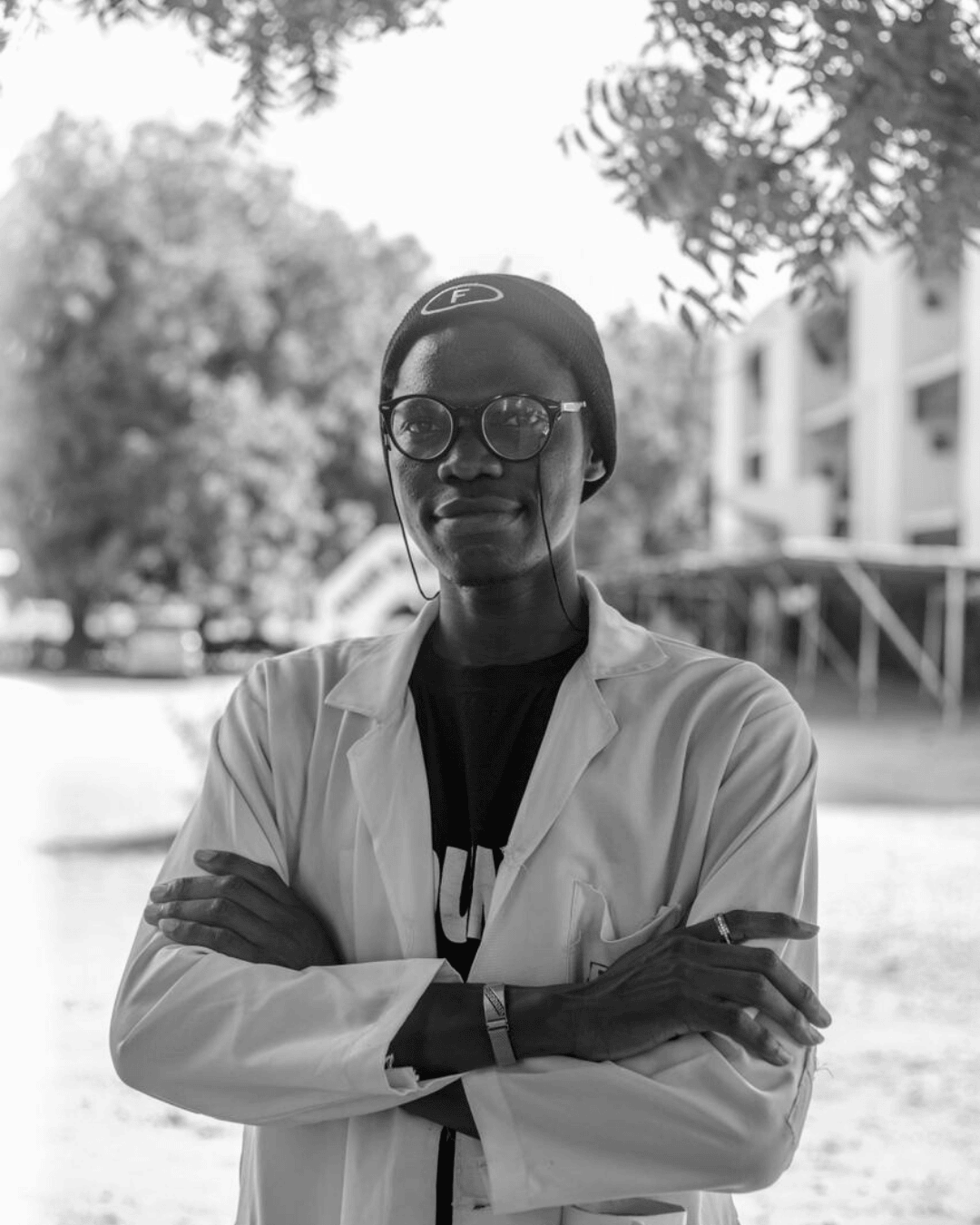
The first thing that greets me at the entrance of the Accident & Emergency Department of my university’s teaching hospital is the stench. It felt familiar; putrefying. The cleaners are yet to carry out their next round of mopping and it is obvious. I contort my nose and walk away to the mini mart a few blocks away to get water. I am in my second internal medicine posting and currently rotating in the Endocrinology Unit. We are on call tonight and we have three main goals: attend to all patients, keep the place running, and not die in the process. That third goal is very important; it is the most important because this place wouldn’t mind unaliving a person if one is not careful. The time is 4:30 PM and I’m already exhausted. I know, I know, I sound like every medical personnel in the world right now.
*
Medical education here is divided into three phases. The first phase is one year of basic sciences, the second phase is two years of preclinical sciences, and the third phase is three years of clinicals. I am currently in the third phase.
When I was in my first year of medical school, all I knew was bliss. It was just one year of basic sciences that was a notch more advanced than what a person should have done in secondary school. I sailed through seamlessly. In my second and third years, it was a totally different ball game. The second year was so chaotic for me that I considered dropping out a few months in. I was thrown into the vast waters of medicine and it was a sink-or-swim situation. I struggled with classes and was fighting for my sanity in practicals. The anatomy dissections did not look like what was in the textbooks and every day seemed like an unending war cycle. When I finally got the hang of how medical school worked towards the end of my second year, it was beyond relieving. I’d go on to have a smooth sailing in my third year, too, and that was how I made it to where I am today.
The clinical years of being a medical student are the most important. Those three years shape one into the kind of doctor one will become. They are the years of moulding, and everything a practising medical doctor does took root during this period. It is why I am most interested in this phase of my education. I want to be a decent doctor; the kind of doctor Nigerians are incapable of dragging across social media on Obasanjo’s internet. Beyond the goal of saving lives–and I mean this in its truest form–I want to be a force to reckon with in this field.
In clinicals here in my school, it is an integrated approach. We have classes from 8 AM to 10 AM, then clinical activities from 10 AM to 4 PM. For most students, the day ends here. However, if a unit is on Ward call or Accident & Emergency call, members of that unit–students and doctors–will be stationed within the hospital from 4:30 PM to 12 AM. It is crazy. Draining and bizarre things happen during these calls. Every unit is on these calls twice per week, and our week runs from Monday to Sunday, with no free day. The whole internal medicine is fragmented into five units and each unit is just as bad and stressful as the other. Anyway, I have digressed so much from the story; I feel the backstory is quite important, though. Let us continue from the first paragraph.
*
It is a Monday evening and we have had one torturous round today. I think the endocrinology unit is under a serious spell, because tell me, why do we have more than 70 admissions? Diabetes and its million complications form a huge chunk of our cases. We have patients suffering from thyrotoxicosis, hormonal imbalance manifestations, infertility, erectile dysfunction, and a couple of cancer patients. My legs ache from walking all the corners of this teaching hospital and when it is 3 PM, the consultants tell us to go rest and prepare for a call.
When my Unit Rep announces that our call has been shifted to 5:30 PM, I reply with okay on the WhatsApp group. I am already standing in front of the A/E building before I see the message. I cannot go back home and return in two hours since I do not live in the school hostel. The hospital is crowded as always, and I squeeze my way between the horde of patients strewn at the entrance of the building. Everyone wants to force their way in, but the three hefty security men prevent them. If you are not in scrubs, a lab coat or with an approved ID, they will refuse you entry. I wondered if these people thought there was a magic healing procedure going on within the wards.
The inside is no different. The nursing station is a beehive with a heap of patient files and half-functioning medical equipment. It will take the grace of God for one to find a blood pressure machine that doesn’t need its batteries changed. I hate how pulse oximeters are a luxury and the consultants wear them around their neck like a badge. Let me not bore you about the rare appearance of a good stethoscope; tourniquets don’t exist here when we can always use a torn latex glove. The medicine we study and practise here is fascinating, yet strange. The three senior nurses on seat are scribbling like their salaries depend on it; indeed, it does. I think they are more concerned with documentation than the actual nursing service. Two student nurses push a trolley with several transparent labelled containers filled with drugs from one bedpost to another; I watch as they do their job–dish out drugs, take vitals or give an injection–mechanically.
All the beds are occupied with chronically ill patients and the wards smell like a child’s vomit. Each patient’s caregiver sits on a plastic chair beside the bed; their eyes reciting a cacophony of prayers. Once in a while, someone whom I assume is the patient’s relative will come around and pray or bring food or offer emotional support. The ward is dimly lit and hot and putrid. There is no electricity and the solar power setup can only power the bulbs. And with the air conditioning units nonfunctional, everywhere feels like hell with insufficient window spaces.
The house officer walks in briskly with a couple of test results and starts to document. The porters are nowhere to be found, so she had to trek to the laboratories to retrieve patients’ test results. Several beads of sweat trickle down her face, almost soaking her facemask. I am the only student available, so I move around with her as we attend to the patients according to the files with me. I help her set up intravenous lines, draw blood for newer tests, write newer prescriptions, and do basic systemic examinations.
Two junior registrars come in hours later and split the ward into two – one of them goes upstairs and takes me with him, while the other one continues to cover the ground floor with the HO. I do not like it here, but I need the wealth of knowledge and experience. I need all the medical skills I can get and the qualifications to practise.
I still have two more years to spend in the system, and I already dream of Japa.
As narrated by: Ololade Edun (Sokoto, Nigeria).
This memoir is published as part of the series, Surviving Medical School.
Discover more from Chronycles
Subscribe to get the latest posts sent to your email.
Published by