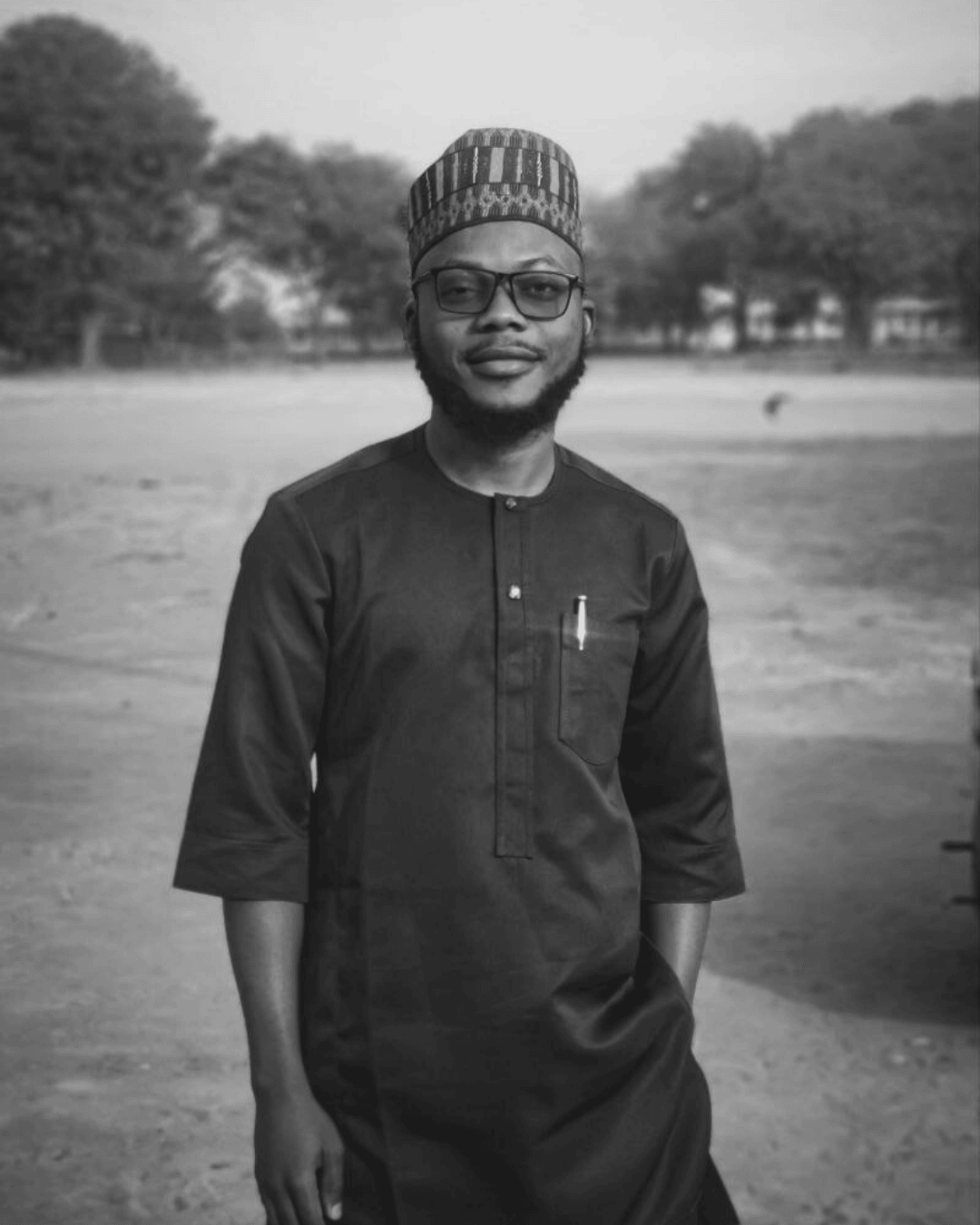
My new roommate tells me he’s surprised I watch movies. Worse, that I watch TV series. He, a third-year physiology student, thinks I, a final year medical student, have better things to do than watching detectives chase thieves, armed robbers, drug pushers, rapists, corrupt politicians, and serial killers, or bingeing on spies inventing new terms to deodorise sabotage and assassinations in the name of defending democracy, or even thrillers that thrill themselves into a frenzy.
“Don’t you have exams to write?” he asks.
I have exams. I wrote one two Saturdays ago. It was a clinical exam. I woke in the morning, brushed my teeth, took my bath, put on my clothes, and rushed to the clinic with plenty of notes in my head and zero calories in my stomach. I don’t eat before exams. It gives me post-prandial somnolence—that drudgery that kicks in after a meal. That’s the body slowing you down to speed up your metabolism. But it also makes me sluggish.
In medical school, we are supposed to have our stuff at the spinal level, ready to go in seconds. Think before you answer, and you’ll find that you won’t have enough time to answer at all. So, you must keep your stuff at the level of your spine, so it can ascend to the brain the second your eyes register a question. That’s what they say, at least.
Eating before exams makes my stuff sink to my feet. It makes me walk like I have lead in my legs, juggling them with a belly too chaotic to let me find the peace I need to face the exams.
A calm mind helps me deal with the storm of medical school. I study in two to four weeks what other students learn in a 12-week semester. The lessons come in boring slides loaded with volatile information. I read them multiple times so I can understand and retain them to do well in the exams.
But my exams are not just clinical exams—I write essays and multiple-choice questions. The essays are the “answer all” type, usually in 45 minutes to one hour. We answer every question because, like the questions, different patients will come to meet us when we become doctors. We can’t choose who to accept (answer) or reject (not answer).
The MCQs that read like “None of the following is not … except.” The options, I hear, are meant to test our speed, decision-making, and attention to detail. With less than a minute to answer each question, we must read the questions—not minding whether they are a line or five—understand them, and select the correct from an assembly of options meant to confuse. If they are not to confuse candidates, why include haemostasis in a question testing you on homeostasis?
While at that, don’t forget that pyloric stenosis causes:
- hypochloremic, hypokalemic metabolic alkalosis, not
- hyperchloremic, hypokalemic metabolic alkalosis, or
- hypochloremic, hypokalemic metabolic acidosis, or
- hypochloremic, hyperkalemic metabolic alkalosis.
Suppose you miss the differences or struggle to recall the correct clinical presentation of pyloric stenosis and choose an incorrect answer. In that case, you may receive a negative score: 0.25 if the question has four options, or 0.5 if the question asks for a true or false answer. You are safer not choosing an option than guessing a wrong one. Guessing is a sin here. Medical school punishes you with negative marks, so you don’t graduate to kill your patients with guesses. I guess, anyway.
Clinical exams are quite different. I pray before clinical exams, just like I pray before essays and MCQs. My prayers for clinical exams, however, are different. They start like this, “Oh God, let my patient cooperate.” The patient may be an actual patient or a simulator. What can I do without a cooperative patient? Who will answer my questions promptly, or give me hints that I am asking a JAMB question? I need my patient to cooperate so I can demonstrate my clinical skills—history taking and examination—on time and without drama, before the bell rings and forces me to move to the next station (clinical exams are often in stations; history and examination carry the higher scores).
After the simulator, I pray for a favourable examiner. The examiner I met in my previous clinical exam nearly slapped the candidate ahead of me. He actually slapped the candidate’s hand and, if not for the fear of Twitter hashtags and TikTok trends, would have landed another slap on the boy’s face. Gen Z ways have their uses after all. I swallowed my spit and prayed again, “Oh Lord, grant me a favourable examiner.” I am now in my final year, so it’s safe to say God answered my prayers.
I did not arrive here in the final lap of medical school, reading only Clinically Oriented Anatomy, The Developing Human, Harper’s Biochemistry, or Ganong’s Review of Medical Physiology. I watched Strike Back as much as I watched Ninja Nerds YouTube channel for illustrated teaching of medical concepts. My watchlist features Shogun, Red Eye, Elementary, Fringe, Cross, and The Day of the Jackal. I binged on Blacklist before I got tired of Raymond Reddington.
I spent enough time with two episodes of Game of Thrones to realise that I am better off reading George R.R. Martin’s book than watching video adaptations of his works. Tom Cruise made me watch Mission Impossible and Top Gun: Maverick. Mention your favourite series, and I probably have watched it or heard of it, provided they are not Jenifa’s Diaries, anime, Bollywood pantomimes, or those occasionally-interesting, perpetually-frustrating, and ultimately-forgettable movies and series by a crop of beardless boys and cute fangirls shouting aigoo and orabeoni. Anything else, I’m game.
Do I have better things to do with my time than watching movies and series? Definitely. I have exams to pass. I have materials to read, exam outlines to prepare, clinics to attend, and sleep to get. I have madrasah to attend, hadith to read and revise, Qur’an verses to memorise, recitals to perfect, and Arabic grammar to smooth. I have essays and freelance articles to write.
I have books to read, too. Non-medical books. I am 46 pages into Arundhati Roy’s Mother Mary Comes to Me. Ms Roy writes the best sentences. Or maybe it’s Elif Shafak. Or Orhan Pamuk. Maybe it’s all of them. I have promised myself not to read Khaled Hosseini ever again. A Thousand Splendid Suns gave me a thousand sordid nightmares. I will pitch my tent now with Abubakar Adam Ibrahim’s books, Sidney Sheldon’s thrillers, or any of the classic books gathering dust on my shelf.
Atul Gawande and Paul Offit have enough nonfiction to last me a few months. When I want to perspire to aspire, I would read the self-help newsletters of Mark Manson and James Clear, or the mesmerising prose of Malcolm Gladwell, Morgan Housel, and Adam Grant. Or I may get real with the long-form features on HumAngle, Science, The Atlantic, and Substack.
If I were a top student in medical school or a class scholar, I, too, would have scholarships to apply for. But I am not. Maybe that’s because I watch movies.
This memoir is published as part of the series, Surviving Medical School.
Discover more from Chronycles
Subscribe to get the latest posts sent to your email.
Published by