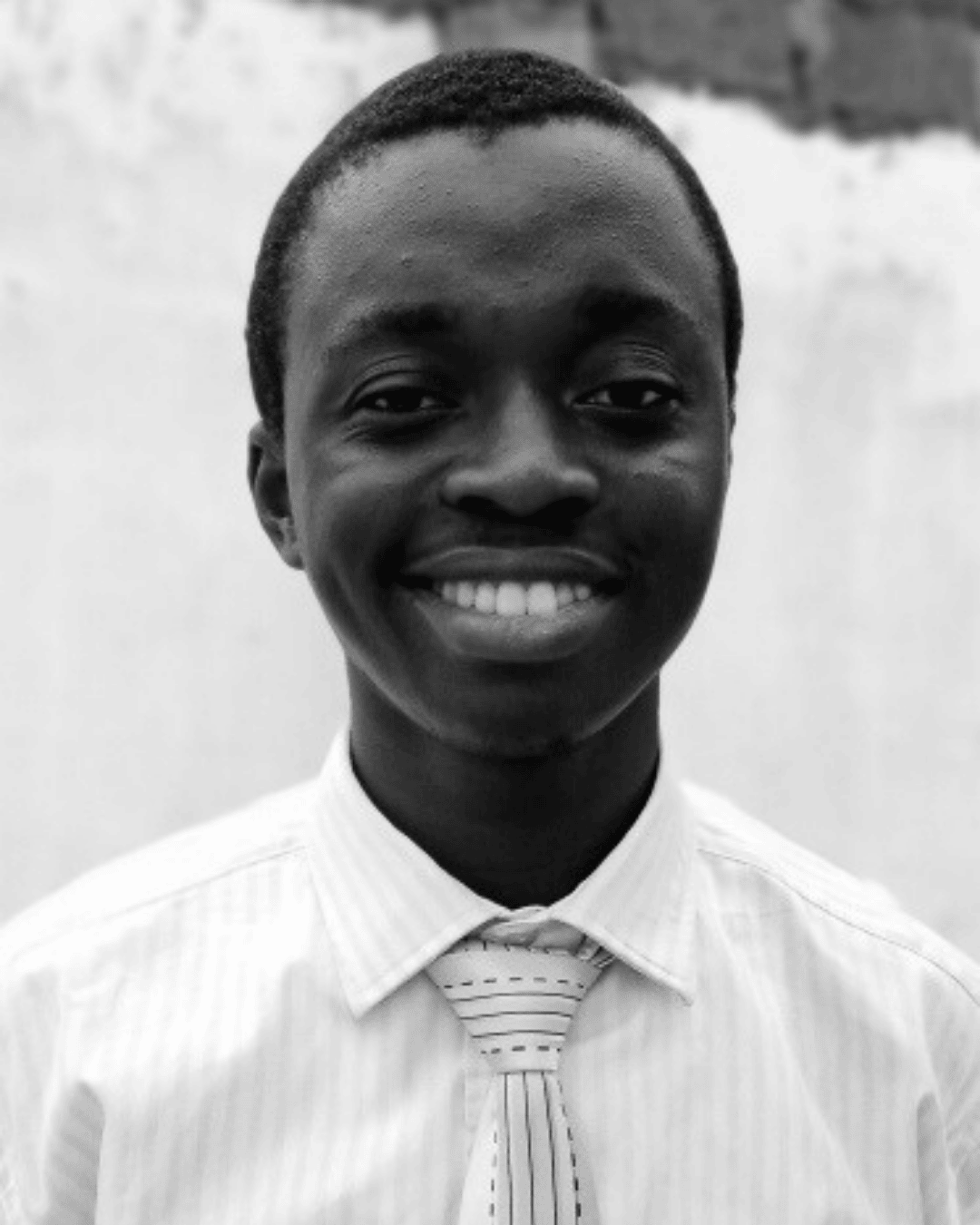
“I’m not sure how, but one thing I know for sure — this boy is a born dullard.”
“What do you mean!? My son is not a dullard and will never be one!”
That was a heated exchange between a teacher and a mother, with a six-year-old boy standing quietly between them, head bowed. That boy had struggled with every subject in Basic 1, and the frustrated teacher had finally concluded he wasn’t cut out for academics. But the boy’s parents never gave up on him, and with patience, support, and consistent training, that same boy went from being tagged a dullard to gaining admission into medical school. Yes, medical school.
My quest to medical school began in 2015 after graduating as the best student in my secondary school. I dreamed of becoming a doctor, to heal, to inspire, and brighten lives. I passed the UTME multiple times, averaging scores over 250, but in Nigeria, that’s not usually enough. I spent five long years battling the admission system, from post-UTME to competitive selection processes, before getting a spot to study medicine.
During those years, my determined strive for medicine or nothing sparked reactions among my neighbours and peers. People had opinions. Plenty of them. Some encouraged me. Others mocked me for being “too choosy.” “He should just pick another course!” “He’s wasting his time!” But I cared less and I stayed focused. I saw myself as Ben Carson in Gifted Hands, walking toward my destiny. Medicine is my El Dorado.
And then it came. One Thursday afternoon, the message I had waited and prayed for over five years finally arrived: “Congratulations! You have been offered provisional admission to study medicine.” The dullard would become a doctor. I jumped up and screamed for joy. I thought it would be smooth paving and endless adventures. What I didn’t know was that the road ahead was paved with fear, doubt, exhaustion, and a daily battle for survival.
100 Level: The Sweet Beginning
My first year in medical school was a walk in the park. Coming from A-levels and a prior year studying Microbiology, I aced my courses, bagging 80s, giving tutorials to my peers, and finishing 100 level with a 4.90 CGPA. I told myself, “I’ll ace medical school! This is where I belong, just Biology and me.” But the dullard of old was quietly making a return, not because I was lazy, but because medical school humbles even the best, and shuts up the chatterboxes.
To describe my journey, I’ll borrow from medicine itself (I hope non-medics understand): There’s a wave on the electrocardiogram (a wave from the heart) called the QRS complex. The Q dips low, R peaks high, and S drops back before returning to baseline. That’s exactly how my academic journey has been: from being called a dullard, to peaking high up to 100 level, to dropping again in early medical school (200 level), to returning to baseline, and finding my terrain. In short, medical school sent me back to factory reset.
200 Level: The Shock
My second year, the first preclinical stage, broke and rebuilt me. I studied hard, sometimes too hard. I read ahead of the class, made detailed notes, and attended lectures religiously. But the volume was unending. I forgot as fast as I read. My first posting in medical school was a turbulent one, as I rumbled through the new and unfamiliar volume of coursework in a new system. Medical school runs on postings, as other degrees run on semesters. I read everything and valiantly forgot almost everything despite sleepless nights.
Then came my first end-of-posting exam. Physiology results came out and I had 56.6. The last time I had a 50+ was during my terminal “dullard” years, about 18 years ago! I was shattered. I couldn’t even call home. For two weeks, I avoided my books. A senior noticed and smiled: “Don’t worry. I had 40-something in that same posting.” It didn’t comfort me much then. I was so down and disappointed. I asked myself, “What really happened?”
I learnt from seniors and colleagues who scored higher than I did that medical school is not all about reading everything, but more about reading the right thing for the right exam, and at the right time. Medical school rewards strategy, not just effort. No one gives you marks for how many pages you read. That’s when I began to unlearn perfectionism and learn smartness.
300 level: Rising Again
Medical school is a gathering of the best of the best, yet even among geniuses, there is hierarchy. The scoreboard humbles everyone. Some of my classmates — I call them the “outliers” — always seem ahead. I used to wonder: “Do they have two heads?” But they don’t. They just had systems that worked for them, and are smart enough to stick to their strong points. I learned to stop comparing and focus more on my growth, not grades. I learned that my journey is valid even when my scores are average, as long as I am improving. The scoreboard pasted on the walls every semester is a reminder. By my final preclinical year (300 Level), my scores rose. I even earned my first 70s. I embraced my reality, stayed consistent, and began to live beyond grades.
400 Level: The Clinical Reality
Clinicals start for medical students in 400 level up till 600 level, and this is a whole new world. In the clinical arm, you are viewed as though you know almost everything, and you are treated more as a postgraduate student, a new terrain that I again find unfamiliar and have to adapt to. The workload increased. Pathology and pharmacology were voluminous. I will now have to meet real patients in junior postings in medicine and surgery, attend ward rounds, and even present cases during clinical rotations. Pathology was fun, but whether fun or gruelling, you must pass everything as a medical student.
My adaptation was not easy. I have many topics to read per week; my scores dropped. My first pharmacology end-of-posting exam? I had 49.9 (anything below 50 is a FAIL). I sought help from seniors and colleagues doing better than me. They shared their tips with me and that changed everything. I followed their advice while preparing for my first professional MBBS exam (the final exam in 400 level). I scored 64 in Pharmacology.
The Whole Picture
Medical school is a haven for learning, development, and opportunities, although it is not the smooth road I imagined. It’s a mix of pain and purpose, struggle and strength. But it’s also an arena of endless opportunities — volunteering, research, writing, innovation, technology — all waiting for those who look beyond the scoreboard and the exam. The medical degree will give you the opportunity to impact the world in various facets. Try to participate and develop more in any of these areas to make your medical school experience more adventurous.
The Dullard is Still Standing
In medical school, I have missed answers to questions. I have struggled to clerk patients well. I get scolded by my superiors for not doing well. I am still stony dull to percussion (I feel overwhelmed when asked questions by my superiors) and I still struggle with exams. But I am much better than the boy who was devastated by a score of 56.6 in physiology in 200 level.
I started as a dullard, I rose to excellence, I fell, I failed, I learned, and I am still learning. I am a QRS complex. I don’t stay at the S-wave. I always return to the line, ready to rise again. This journey has been one of breaking and rebuilding, losing and learning, doubting and believing. There were days I wanted to quit, days I lost interest, days I questioned my place. But here I am, still showing up. Because one thing is certain: this dullard will be a doctor.
As narrated by: Aliu Aliu Olawale (Ilorin, Nigeria).
This memoir is published as part of the series, Surviving Medical School.
Discover more from Chronycles
Subscribe to get the latest posts sent to your email.


Published by