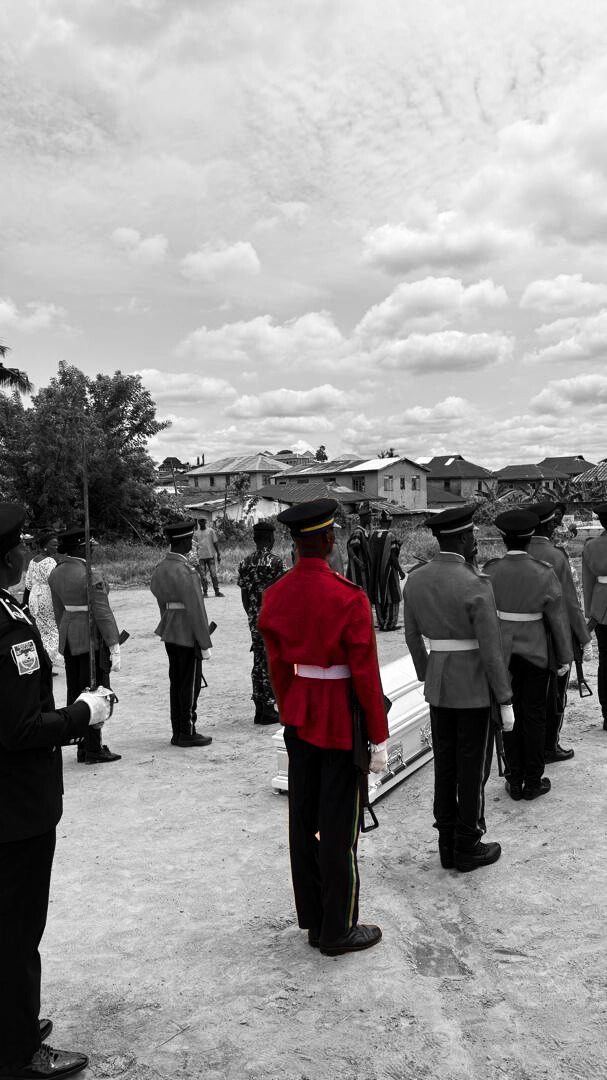
When my grandfather, a retired assistant commissioner of police, died in Ondo Town in 2025, his burial became my lesson in ritual. In the Ondo Kingdom and the general Yoruba ethos, death is not merely an end but a transition, a passage from the realm of the living to join the ancestors in ọ̀run (the spiritual heaven).
Because my grandfather lived to a ripe old age with children and grandchildren, his was considered a “good death,” one that Yoruba people believe earns a blissful welcome among the ancestors. According to custom, he deserved full funeral rites so that his soul could travel safely and perhaps even reincarnate to bless the family in a new life. This cosmological outlook shaped everything that followed in the days after his passing.
Traditionally, when an elderly person dies in Ondo, the death isn’t hidden in hushed tones; it is announced with music and movement. In times past, messengers would dance through the town to publicly herald the loss and to affirm that the departed elder was “going home” in glory. I imagined how, a generation ago, news of my grandfather’s death might have been carried by drummers winding through dusty streets and neighbours emerging to join the mourning dance. In our case, the announcement was more subdued; phone calls, newspaper announcements, social media broadcasts, and a notice to the Anglican church, which my grandfather identified with. Yet the echoes of that old ritual persisted. We still felt compelled to gather communally, to let the town know a patriarch had returned to his ancestors. An underlying belief was at work, that death may leave a human empty and breathless, but it sets them on a journey to the spirit world, a journey we the living must ritually support.
As preparations began, I saw how Ondo funeral customs carefully bridge the material and spiritual and the modern and traditional.
“Baba Mìsìnkú” and “Ìyá Mìsìnkú”: Pillars of the Ceremony
Every complex ceremony needs its guides. In our family, these guides took shape as the Baba Mìsìnkú and Ìyá Mìsìnkú, which literally mean “Father of the Burial” and “Mother of the Burial.” These titles, bestowed informally by the elders, fell to two figures who steered the traditional proceedings. My grandfather’s cousin from his paternal side, whom we grandchildren call Baba Agba, naturally assumed the role of Baba Mìsìnkú. Stoic and grey-bearded, he became the go-to authority on what must be done. From the moment of death, it was he who consulted with the children on the burial date and ensured that the proper rituals were not neglected. Likewise, my grandfather’s maternal cousin, a matronly woman with a booming voice, was recognised as Ìyá Mìsìnkú. She represented my late great-grandmother’s lineage (the maternal side of the family) and took charge of duties reserved for the women and the maternal relations.
It’s an Ondo custom that each side of a person’s family tree has a stake in their final rites, and harmony between them is paramount. The Baba Misìnkú and Ìyá Misìnkú acted as emissaries of that harmony, ensuring that no segment of the family was left out of the rites. I watched these two move in tandem, balancing responsibilities between families.
Throughout the eight days of burial rites, these two figures were everywhere, advising, problem-solving, and performing rites. It was Baba Mìsìnkú who libated bitter kola and gin for the ancestors, murmuring prayers under his breath. And it was Ìyá Mìsìnkú who led the women in the dirge songs at midnight during the aisun (wake). They also rallied my mother and the other daughters of the deceased to prepare the customary burial feast, including thirty wraps of pounded yam and a keg of undiluted palm wine, which my eldest aunt presented as part of the funeral offerings. By the time we laid Grandpa to rest, it became clear to me how crucial these Baba and Ìyá Mìsìnkú roles were. They functioned like two hands joined together – one masculine, one feminine; both representing the two lineages that gave him life. Through their cooperation, the funeral was both a family affair and a culturally ordered event. They kept the balance between mourning and celebration, between age-old custom and the necessities of a modern funeral. And in doing so, they embodied the reality that an Ondo funeral is not an impersonal ceremony run by external funeral directors but a family-anchored ritual guided by those with the deepest personal connections to the deceased.

Rituals of Passage: Procession, Aisun, Àkàrà Òkú and Sacrifice
Across the eight days that we honoured my grandfather, certain rituals stood out as the heart of the funeral rites. Each carried layers of symbolism and meaning. As the first grandchild, I experienced many of them up close, sometimes with wide-eyed surprise, sometimes with muted understanding as elders explained their significance.
Perhaps the most outwardly visible of the funeral rites was the series of family processions that took place. We began by retrieving my grandfather from the mortuary and bringing him home. The scene was a vivid spectacle of tradition meeting modernity. There was a loud announcement of the gangan, which led the procession from the mortuary; elders and family members followed respectfully in a convoy behind the hearse, careful not to precede it, a deeply entrenched taboo intended to honour the departed and perhaps to protect the living. Halfway through our journey, tradition intervened, as we shifted from cars to walking, allowing the community and the neighbourhood to witness and partake in our family’s loss and honour.
A framed portrait of my grandfather, smiling in his police uniform, was hoisted high by one of my cousins. The pallbearers were carrying the coffin on their shoulders at this point in the procession.
We walked in a long line, with relatives dressed in matching funeral aso-ebi. We moved through the dusty, tarred road, past the Anglican church, and past the marketplace, where traders paused in respect. We weren’t dancing, but there was a gentle sway in our steps as the music played. It was a striking sight. Our relatives from the city and abroad, who had flown in for the funeral, joined the line, looking a bit unsure at first. But soon they, too, found a rhythm. As we walked, townspeople came out of their homes to greet us or fall in step for a few yards, offering condolences. I walked near the front, just behind the drummers, carrying a small Yoruba carved bowl with kola nuts to give to any elder we met on the way. The procession wove through places significant to my grandfather’s life; the front of the old police barracks where he once worked, the courtyard of the Osemawe’s palace where he had paid respects to the king in his lifetime, and finally looping back home. With each stop or greeting, it felt as though we were sharing his memory with the community one last time and also symbolically escorting his spirit around to take stock of the world he was leaving behind. Then we took him home for the last time.
Another poignant rite was the aìsùn, the traditional wake-keeping vigil. In Yoruba, aìsùn literally means “not sleeping,” and on the evening after he was brought home from the mortuary and laid in state, none of the widows in the family slept. They sang sombre orin arò (dirges) in call-and-response, their voices sometimes cracking with emotion and sometimes rising powerfully together. They chanted his oríkì – praising his lineage, recounting his deeds in lyrical Yoruba. Their voices rose and fell in a familiar cadence, calling his spirit to attention. Tears welled in my eyes, but this was not solely grief; it was an honour song.
As I listened to old family members sing, I sensed they were not just lamenting his death; they were escorting him spiritually, making sure the gates of heaven heard about Baba’s character and accomplishments. Death is dreaded, but it is also deeply communal in our culture. Everyone present became part of the rite sending him off, bound by shared beliefs about life, death, and continuity, and bound also by memories shared with him. There was drumming too, a single talking drum beating a soft, steady rhythm as if to keep the heartbeat of the night going. This aìsùn ogun (war vigil, as some called it) felt like a final battle to escort my grandfather’s spirit onwards. In Ondo tradition, when an elder passes after a life well-lived, there is sorrow, yes, but also a celebratory reverence.
In the middle of that night, as tradition dictates, my grandfather’s surviving wife, whom we call Mama, was quietly led outside by Ìyá Mìsìnkú and a few aunts to perform a secret ritual bath. They took her to the backyard, where a large clay pot of water infused with leaves had been prepared. Though I could only catch a glimpse from afar, I knew what was happening. She was cleansing herself to sever the spiritual bond with her late husband’s spirit. In Ondo belief, a widow must do this so that her husband’s spirit will not linger and trouble her. The ritual bath, taken at midnight, is meant to protect her from the hovering spirit of her husband and any malevolent forces that could follow his death. Afterwards, Mama emerged with water glistening on her skin in the moonlight. The other women wrapped her in a fresh white cloth. It was a profound moment as if she was being reborn as an individual after decades of being one half of a pair.
Another ritual that stands out in memory is the making of àkàrà òkú, literally “bean cakes for the dead.” On the third and seventh days after the burial, the aroma of frying beans wafted through our compound from morning until midday. Yoruba custom holds that akara is a favoured food of the spirits, and there’s even a saying I heard often as a child: “Akara ni ounjẹ oku” – bean cake is the food of the dead. Traditionally, they are prepared and shared to honour the departed and feed all who come to mourn. We fried hundreds of them. Children carried trays of fresh akara around to neighbours’ houses and passersby, offering them in Grandpa’s name. The act of distributing akara was accompanied by these quiet invocations, asking Grandpa to protect us even as he enjoys eternal rest. From an anthropological perspective, I learnt that some people view this custom as a means of seeking the deceased’s blessings and protection in exchange for the offering. For me, it felt like a sweet, tangible connection to him—a last meal shared between the living and the dead, across the thin veil that now separated us.
No traditional Ondo funeral would be complete without an animal sacrifice, and ours was no exception. Early on the day of the burial, before the church service, a he-goat was brought into the courtyard. It was a robust animal with curving horns – a tribute from my eldest uncle in line with custom. Among the Ondo, the first son of the deceased is expected to present a goat that will be offered as a sacrifice at the spot where the corpse receives its last rites. I wasn’t prepared for how visceral this ritual would be. They led the goat to the front of my grandfather’s house and with quick efficiency, a local butcher recited a short incantation and slaughtered it. I flinched as I saw the flash of the knife and heard the goat’s final bleat. The blood was caught in a bowl and spread onto the steps that led to the living room. After the ritual, the goat’s body was later prepared into an abundant pepper soup for family and guests. I remember nibbling on a piece of goat meat that evening and feeling a strange mix of sorrow and solace, as if that flavour held some sacred significance. We had, in a literal sense, broken bread (well, meat) in honour of the dead.

New Traditions: Christianity, Urban Life, and the Diaspora Influence
While our family strove to honour the old ways, we were also very much the people of the 21st century, and that reality influenced the funeral in noticeable ways. The interplay of traditional Ondo rites with Christian practices, urban sensibilities, and diaspora innovations created a unique tapestry of farewell events. This funeral was as much a reflection of my grandfather’s identity – half traditional chief’s son, half cosmopolitan police officer who retired as an assistant commissioner of police – as it was a mirror of Nigeria’s evolving culture.
First, the influence of Christianity was impossible to miss. My grandfather had been a devout Anglican, and so a full church funeral service was organised at St. Mary’s Cathedral in Ondo Town, much like any Christian burial. In addition to the traditional all-night dirge we had at home, we had a Christian wake service with hymns, Bible readings, and tributes. We sang “Abide With Me” and “Oyigiyigi Ọlọrun Wa”, our voices echoing in the rafters. A priest gave a brief sermon about the hope of resurrection and eternal life. The next morning, the hearse arrived at the cathedral, draped not in traditional cloth but in a Nigerian police flag (an honour from his police service years) and a pall with a giant cross. There was also a 21-gun salute in his honour. An Anglican bishop officiated the burial service. We had all the solemn rituals of the church: incense, scripture, and at the graveside, the bishop’s intonation of “dust to dust, ashes to ashes” as he tossed sand even before the first son did his part. In many ways, I realised that the Christian rites have now become entwined with our traditional ones, often coexisting with them.
Christianity and Islam have indeed heavily influenced Yoruba funeral customs over the years. This influence meant Bible verses on funeral posters, a gospel band at the reception, and the general framing of the event as a “celebration of life” in the Christian sense, confident that Grandpa’s soul was with Jesus. Yet, interestingly, not every traditional element was forsaken. My family managed to balance both; we held the church’s holy communion in the morning and poured libation for the ancestors in the afternoon. If some saw a contradiction in that, no one said so out loud. This duality is common now. I noticed that during the night vigil at home, my grandmother’s prayer group from church was present. They sang Christian choruses for a couple of hours (“Onise Iyanu”, ironically a lively tune for a funeral), effectively merging into the aìsùn. Then later, those same church women quietly stepped aside when the traditional drummers took over. There was a silent understanding that both the Bible and the talking drum have roles here. As one of my uncles remarked, “We’ll pray for his soul, but we’ll also drum him to the gates of heaven.” This synthesis of faiths is a reality in many Yoruba families today, a careful choreography so that neither the church members nor the ancestral custodians feel shortchanged.
Urbanisation also shaped the funeral in practical ways. One major change was that we did not bury my grandfather inside the house. Traditionally, an Ondo elder might be interred in the inner room of his home, literally laying him to rest where he lived. But modern law and sensibilities discourage that. Instead, we buried him in the Anglican church’s cemetery. The move was a concession to public health and urban regulations (and to grandchildren like myself who admittedly feel a bit unnerved about sleeping in a house with a corpse beneath the floor). Many families now opt for burial in cemeteries or at least in an open compound, rather than the ancient practice of under-the-floor burials. Another sign of urban influence was the time compression of the rites. In a truly traditional setting, funerals might be delayed for weeks or months, and the ceremonies stretched out leisurely. But in our case, because of jobs and travel schedules, we completed everything in about a week. We couldn’t afford to have people idle much longer. So we creatively combined events; the day of burial doubled as the final day of celebration in some respects; the church wake doubled as a community introduction. In a village, people might stay around the compound singing every night until the final celebration; here, many relatives returned to work in Lagos or Abuja after the weekend and only came back on the eighth day for the last party.
The presence of family members from abroad and the use of technology added a whole new dimension that our ancestors could never have imagined. I had uncles, aunts and cousins flying in from Brazil, the UK, and the US; they brought with them their own expectations and contributions. One cousin arrived with a drone camera and an idea to live-stream parts of the funeral to other relatives overseas who couldn’t attend. During the procession, I looked up, and there was a little drone buzzing overhead, whirring as it captured aerial footage of us in our procession’s finery. Some elders glanced at it in bemusement and one joked, asking if it was a witch in the sky. But for the younger generation, it felt natural to livestream the funeral on YouTube and read real-time comments from friends and colleagues around the world. In a way, the drone and the live stream extended our community globally. It wasn’t so different from the old practice of drumming through town to announce a person’s death, except now the town square was digital and the drumming was a notification ping. I realised that this, too, was part of honouring my grandfather’s legacy, how he had children and grandchildren on various continents. Thanks to technology, everyone could participate in giving him a send-off.
Diaspora influence was also evident in the cultural mix at the funeral events. The DJ at the final reception deftly alternated between traditional Yoruba jújú music and foreign tunes like Frank Sinatra (which one UK-born cousin requested in memory of Grandpa’s love for old jazz). Our menu featured not just pounded yam and soups but also “continental” dishes. There was a table with jollof rice and even a tray of lasagna that my UK-based aunt had insisted on making for the benefit of guests unused to swallows. At one point, a group of my diaspora cousins tried to do the traditional Ondo igbèré dance, swinging their arms and circling as the drummers played, but soon they incorporated a bit of salsa step into it, turning it into a joyful fusion. The local elders chuckled but didn’t disapprove; the spirit was right, and that’s what mattered. In conversation, I heard some of the younger ones marvel at the customs: “This eight-day thing, it’s like a marathon,” my cousin said, exhausted but impressed. Another confessed she had never witnessed a goat sacrifice before, except in movies. These moments of cultural rediscovery were precious, a way to reconnect with one’s roots.
Through it all, I noticed that some core Yoruba values held firm. Despite modernisation, there was a strong sense that the funeral was not a private affair but a communal one. Neighbours still poured in to help without needing formal invitations and people still offered material support. In the old days, this communal spirit was anchored by purely traditional beliefs. Today, that spirit persists, perhaps because of a mix of empathy, religion, and cultural expectation. Whether one came as a church member, a coworker from the city, or a cousin from abroad, all were determined to “do right” by the deceased.

Continuity and Change: Between Ancestors and Algorithms
Over the course of those days, I often found myself straddling two worlds, the ancient and the modern, and reflecting on the tensions and harmony between continuity and adaptation in our culture. As the ceremonies wound down and relatives began to depart, I felt a deep appreciation for how much had endured and how much had evolved in Ondo funeral practices.
On one hand, continuity was palpable. Many rituals we performed were essentially the same as those our forebears would have performed centuries ago in the Ondo Kingdom. The cosmological significance behind them remained intact, which was in ensuring the deceased’s smooth passage to ancestorhood, safeguarding the living from spiritual harm, and reaffirming the bonds of family and community. As I watched my little cousin toddle around during the eighth-day festivities wearing a tiny fila cap and chanting “Babatunde”, I realised that the next generation was quietly inheriting the culture. He hadn’t understood death yet, but he was absorbing the songs, the dances, and the idea that when someone dies, we honour them in special ways.
The Yoruba belief that “the community of the living, the dead, and the unborn are interwoven” felt vividly true. Our living family had come together, invoked the ancestors, and even considered the yet-unborn (when we prayed that Grandpa might return as a grandchild someday). There was a spiritual continuity in that cycle that none of our modern trappings had erased. In fact, we explicitly upheld certain traditions because of their profound meaning. For example, on the morning of the ninth day, per custom, the extended family held a meeting to take inventory of Grandpa’s belongings and plan their distribution. This practice has always been about unity and fairness, to prevent conflict and ensure everyone receives a keepsake or share of inheritance. Even in an era of formal wills and lawyers, we carried on with the familial sharing ritual. It turned into a storytelling session, reminiscing about each item (I got some of his vinyl records and books). The old ways have a remarkable resilience, finding space even in contemporary life.

I also think about which aspects of tradition we chose to discard. There were a few. In some parts of Yorubaland, there’s a practice of breaking the personal plates or cups of the deceased at their graves, symbolising that they won’t need them anymore. We didn’t do that. Instead, we kept Grandpa’s favourite coffee mug as a memento. That seems trivial, but it’s a sign of how personal sentimentality sometimes wins over ritual symbolism in modern times. For instance, in the past, certain deaths, such as those that were untimely or shameful, would not receive full rites. These days, almost everyone gets some ceremony because families feel obligated socially, and often religion has equalised it (every soul deserves prayers). I contemplate how fortunate we were to have Grandpa’s death celebrated. But even if it hadn’t been, I suspect we’d still find a way to memorialise him, bucking some of the harsher old rules.
Throughout the process, I felt the greatest cultural tension when reflecting on my role and emotions. While I was proud to observe and participate in these customs, my contemporary worldview was also tugging at me. For instance, I struggled with the animal sacrifice. Part of me had been educated to see it as archaic or cruel. Yet in the moment, it felt gravely important and I accepted it. Similarly, while serving guests, I overheard someone mumble, “All this for a funeral… couldn’t we have just donated to charity in his name?” I understood her point. Funerals are costly and time-consuming. But I also realised that the value of these elaborate rites isn’t in any material gain; it’s in the social and spiritual capital they build. By pouring effort and resources into the funeral, we sent a message that this life mattered, that our family stood together, and that we honoured those who came before us. That’s something no quick modern memorial could as powerfully convey.
As the first grandchild, I found myself reflecting on my future and that of our traditions. Will my siblings, cousins, and I continue to uphold these traditions with the same steadfastness when our parents pass away? We have lived across cities and continents; some of us barely speak our language fluently. Yet, going through this experience cemented in me a resolve not to let these customs die. They may transform; perhaps my grandchildren will be lighting LED candles instead of oil lamps at vigils, or using a virtual reality tribute instead of a photo board. Who knows? But I hope the essence remains, in coming together, invoking both God and ancestors, crying and dancing in the same week, feeding all who come, and remembering that we are a continuum.
In the final hours of the eighth day’s celebration, I stepped aside and surveyed the scene. I could see my uncles sitting in a circle sipping palm wine and recounting funny stories of Grandpa’s youth, the little children chasing each other around the compound, and on the veranda, a group of aunties sorting through cooler after cooler of leftover food to send home with guests. It struck me that this tableau could almost be from any era in our history—switch the plastic coolers for clay pots, the lawn chairs for mats, and it could be 1925 instead of 2025. Despite all the adaptations, the drone overhead, the smartphone buzzing with WhatsApp condolences in my hand, and the blend of gospel and talking drums in the background, the essence of the event remained unchanged. Death brought us together, tradition kept us together.
One of the elders, slightly tipsy, started singing a well-known Yoruba funeral song: “Igi oko dori kodo ododo mi n se ewebe oja.” We all gradually joined in. I found myself harmonising in a low tone, the words rolling off my tongue more naturally than I expected. In that moment, I felt a bridge between my ancestors and me. I was part of the chain, not a broken link. And perhaps the greatest success of the funeral was that it reaffirmed our identity and continuity. In the delicate dance between preserving our heritage and embracing the new, we managed to do both, a cultural two-step that I suspect will keep evolving, but always with the same underlying rhythm of respect, community, and remembrance.
–
For my grandpa.


Author

Discover more from Chronycles
Subscribe to get the latest posts sent to your email.

Published by