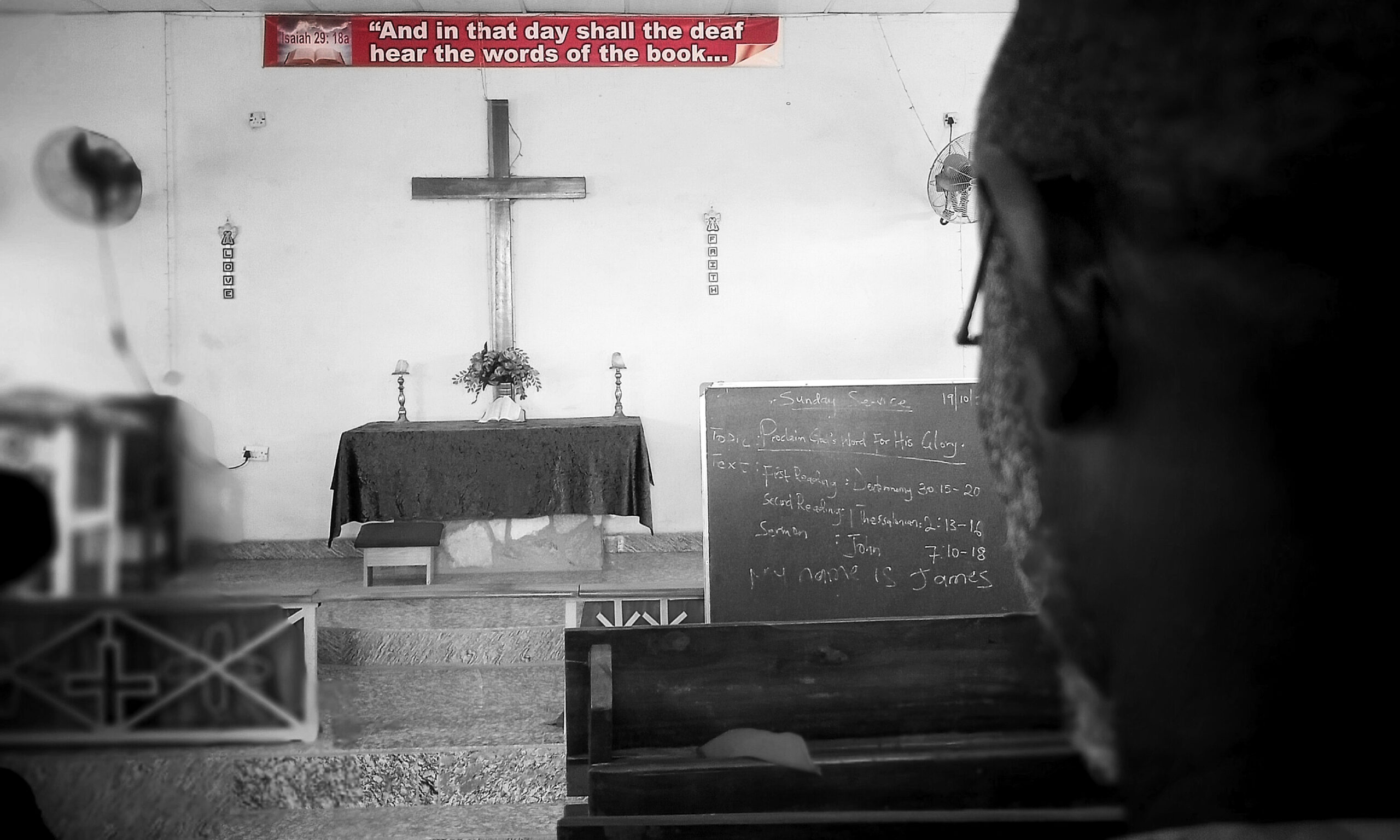
“In our own congregation, some people will be on their phone or distracted. But here, everyone’s eyes are fixed on the service. They don’t miss a thing.”
Inside the chapel, above the preacher’s head, hung a red rectangular banner with the words, “And on that day shall the deaf hear the words of the book … Isaiah 29:18.” Adjacent to the preacher stood a small chalkboard facing the congregation. It announced the topic of the day’s sermon, Healing a woman on the Sabbath, along with references from the Bible.
The congregation sat in pews. Built in a stadium-style, the rows descend towards the altar so that everyone can see the preacher signing. There was silence, no ebb or flow of hymns, just a chorus of hands and sudden bursts of konga drums. Hitting the drums served as a visual signal guiding the congregation into the next line of action: whether it was to kneel, stand or come out for offertory or communion. A sight to behold, the service went on for hours.
This is the Lutheran church for the deaf at Saint Monica Cathedral in Jimeta, Nigeria, where people gather to worship using sign languages. Here, the gospel is delivered in sight rather than sound.

When the Danish Lutheran family paid a courtesy visit to the Lutheran Church of Christ in Nigeria (LCCN), a major denomination founded by Danish missionaries in 1913, they noticed deaf worshippers in Yola were simply watching the services without understanding them. So, they returned home to raise funds to help build a church suited for this community.
“That is how the church started growing, little by little,” said Reverend Babangida Joseph, vicar of Saint Monica Cathedral and a pastor in Adamawa since 1982. When he arrived, the deaf ministry was already established. He learned its origin from the people who built it.
Around 2010, LCCN established a dedicated Deaf Centre under the Jimeta Cathedral. The journey began with Reverend Ruth Ulea, who lost her hearing at a very young age. Reverend Ruth was ordained in 2013 when the growing sanctuary needed its own pastor, making her the first deaf pastor in the LCCN. Ever since her ordination and under her leadership, the sanctuary has transformed beyond just a chapel where the deaf community come to worship, but also into a place to learn and grow.
Every Sunday, in accordance with the Lutheran liturgy but delivered visually, Reverend Ruth will mount the pulpit and lead the sermons. Prayers and Bible readings are all performed in shared gestures.
“It’s very inspiring,” Reverend Babangida said. “In our own congregation, some people will be on their phone or distracted. But here, everyone’s eyes are fixed on the service. They don’t miss a thing.”


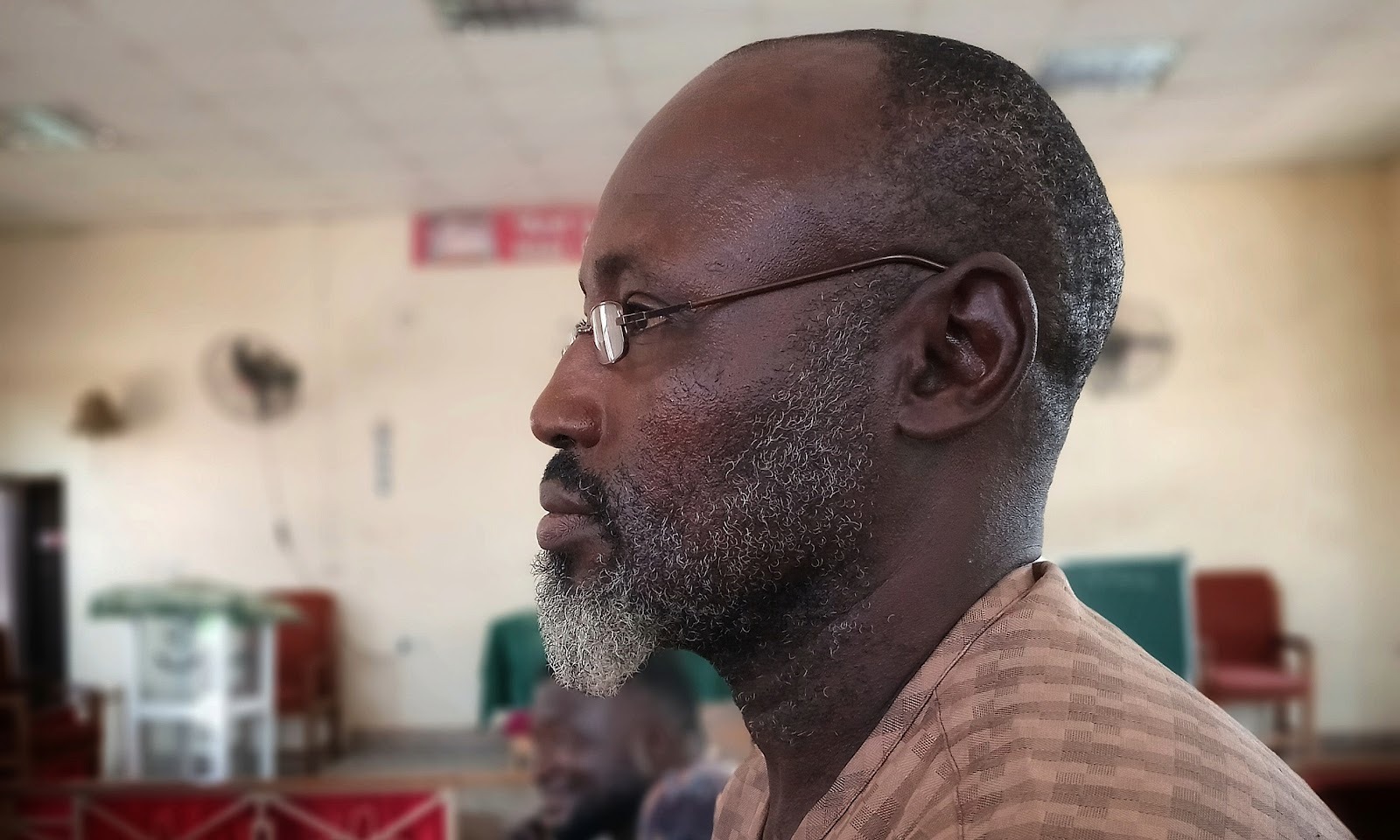
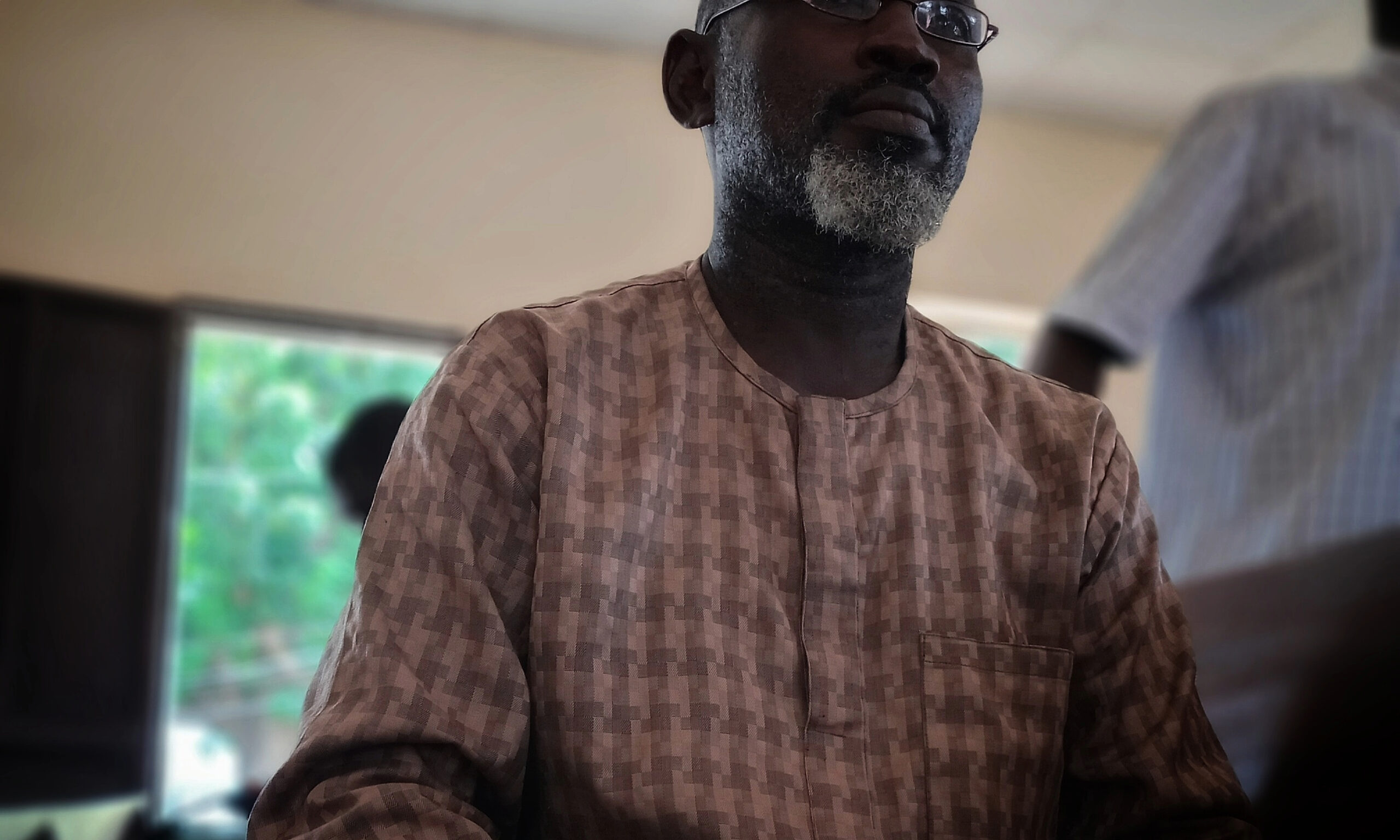
Today, the preacher standing in front of the congregation wasn’t Rev. Ruth. It was a man wearing native attire: Eugenia Abraham Lucas.
In his preaching, he urged the members to approach life with a boldness inspired by confidence in Christ. By embodying the spirit of boldness, he told the congregation, they could step on snakes without getting hurt. Even in danger, God would always protect them.
Lucas was not born deaf. He lost his hearing at the age of five. “I remember that I was hearing normally. In 1979, one day, I just lost my hearing. I slept and woke up in the morning, and I could not hear anything.”
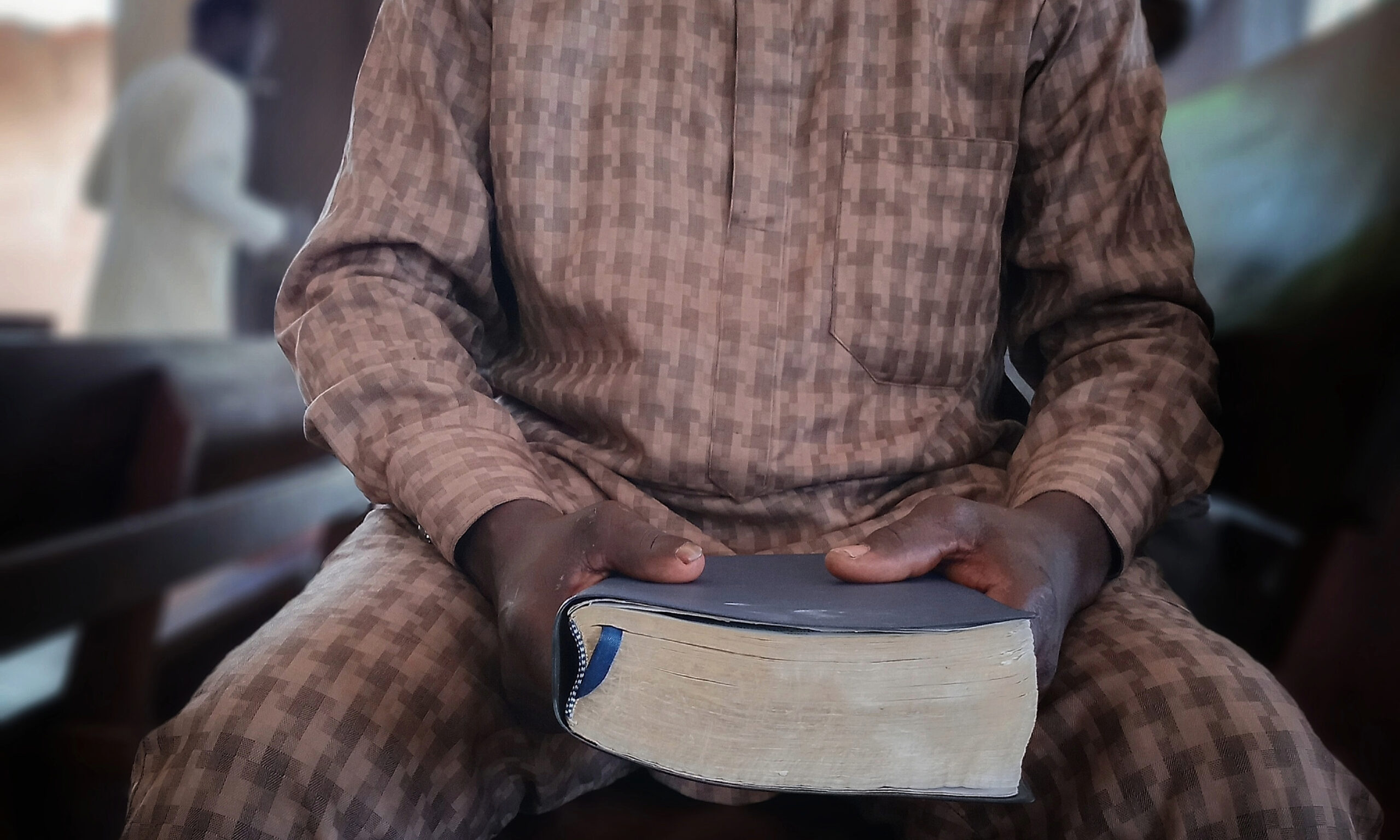
He became a preacher after he joined Saint Monica in 2018. Reverend Ruth, who noticed him, encouraged him to start preaching in the chapel because of how she was inspired by the way he read the Bible. But before becoming a preacher at Saint Monica, Lucas had been worshipping in other churches. He could see, but he could not hear what the pastor was saying. However, here, he understands the gospel through the sermons. He reads his Bible and shares what he learns so others can benefit.
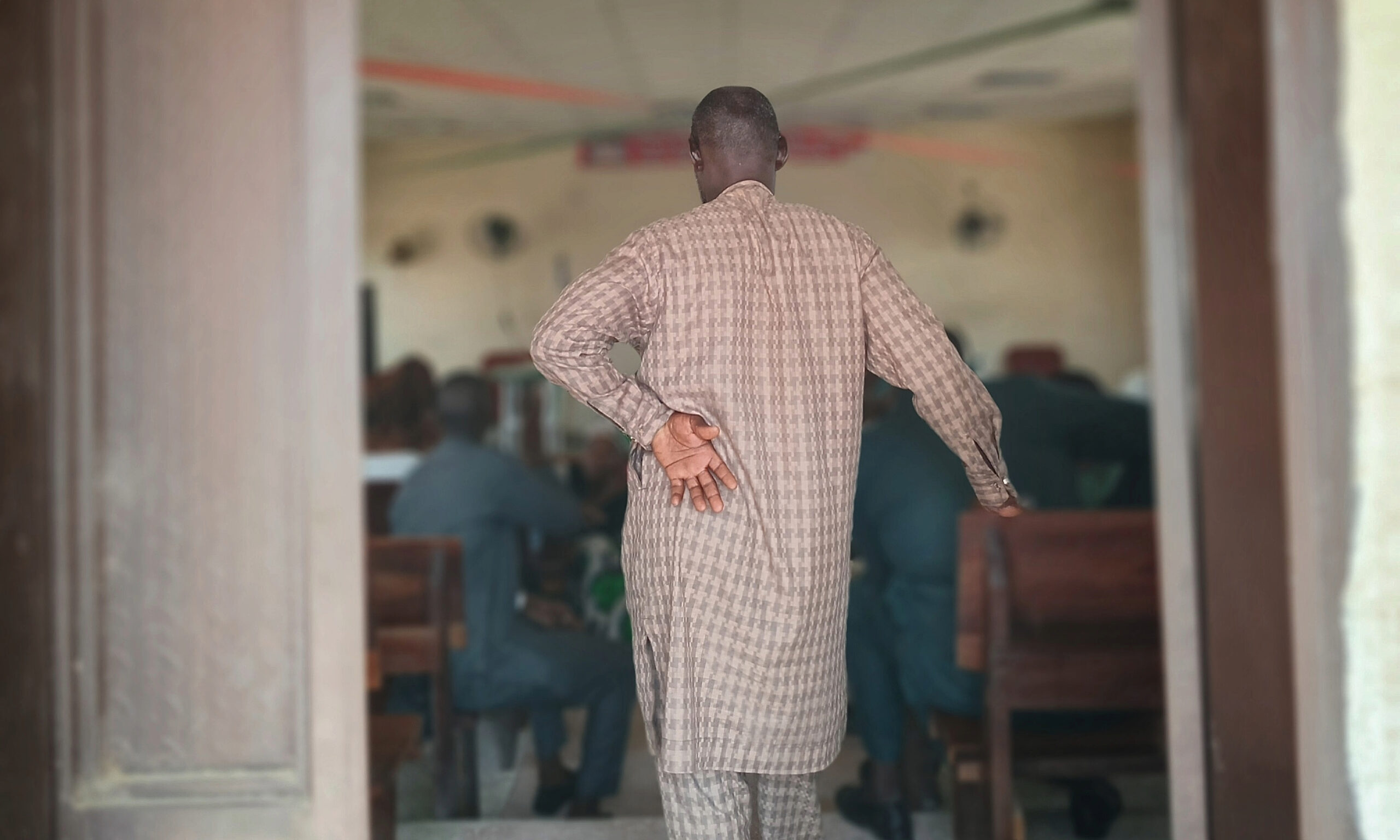
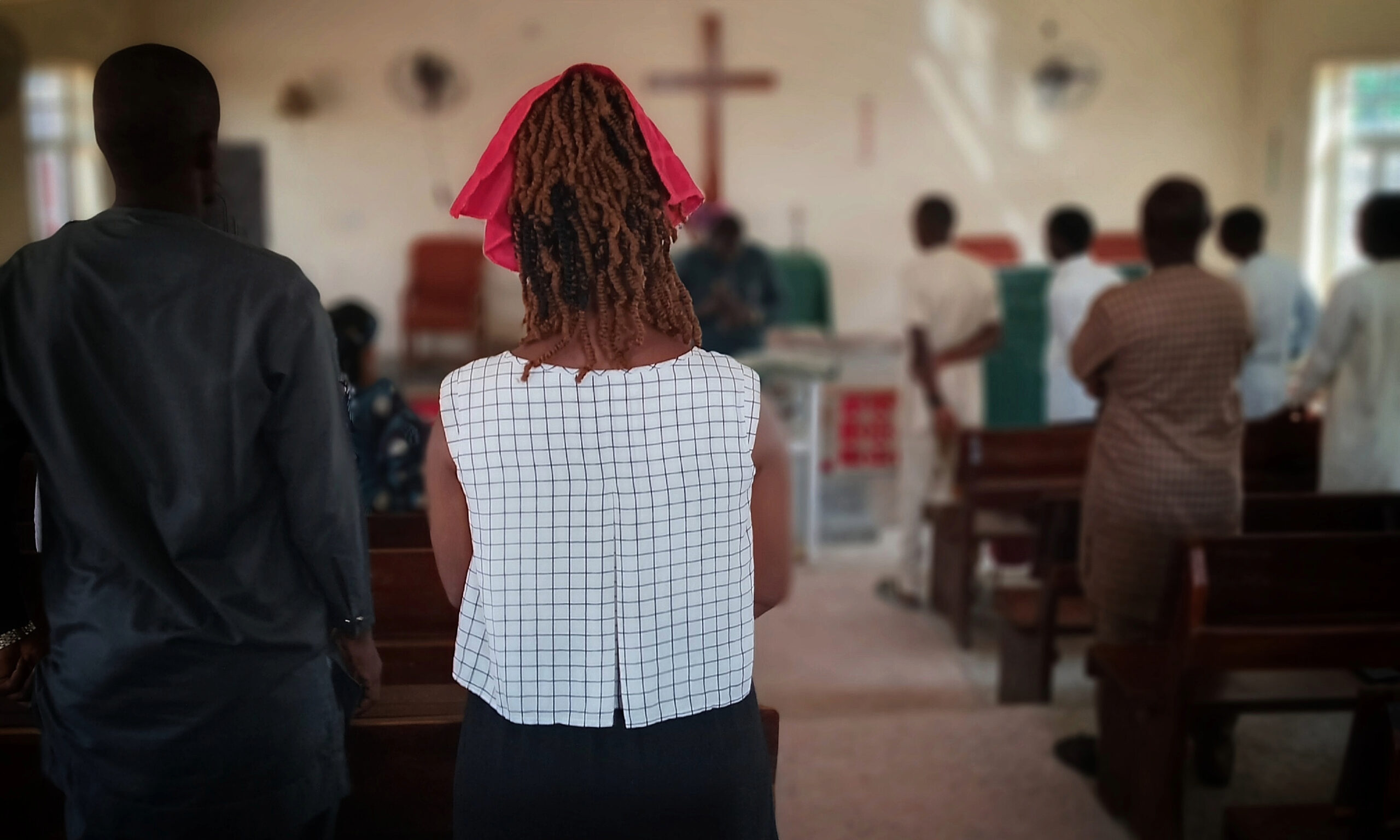
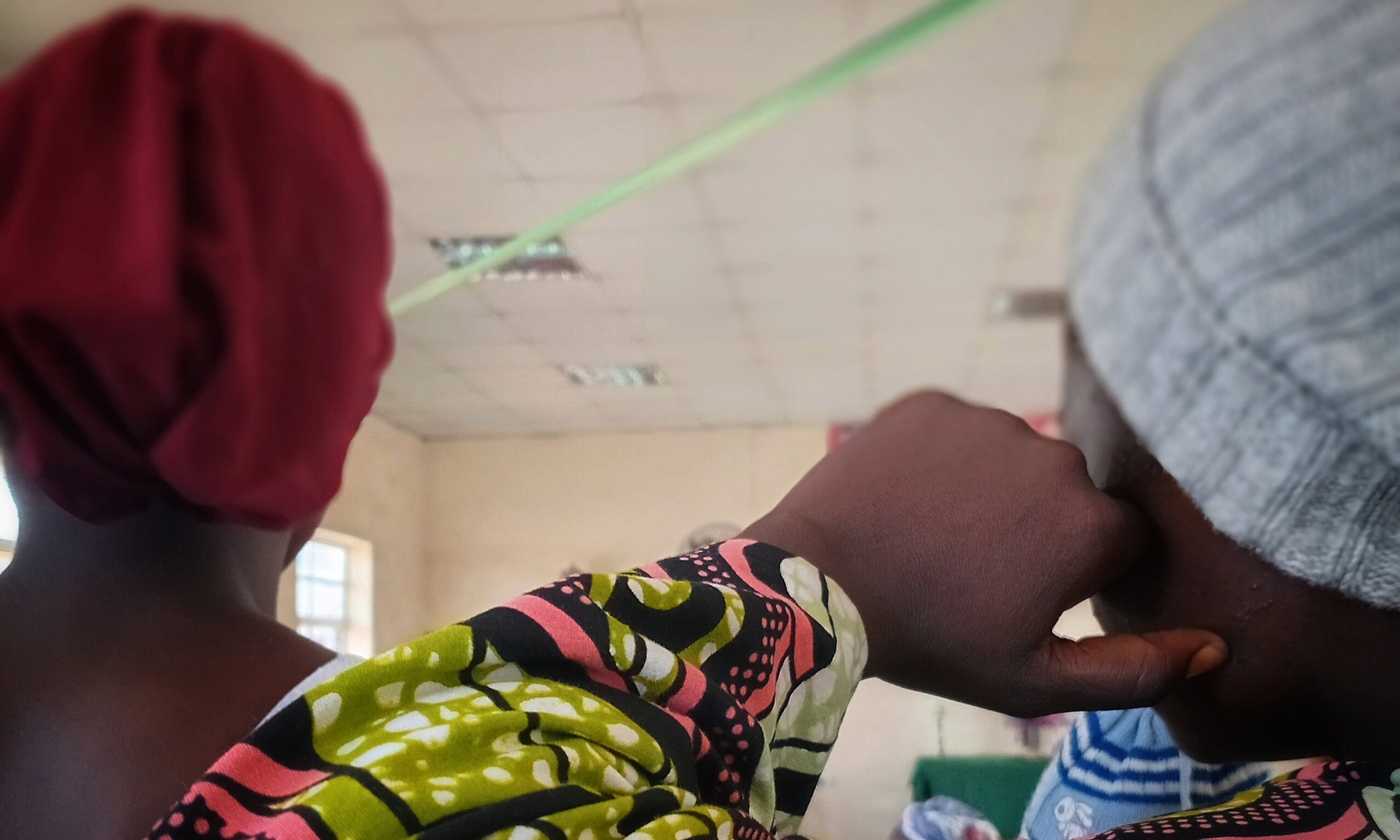
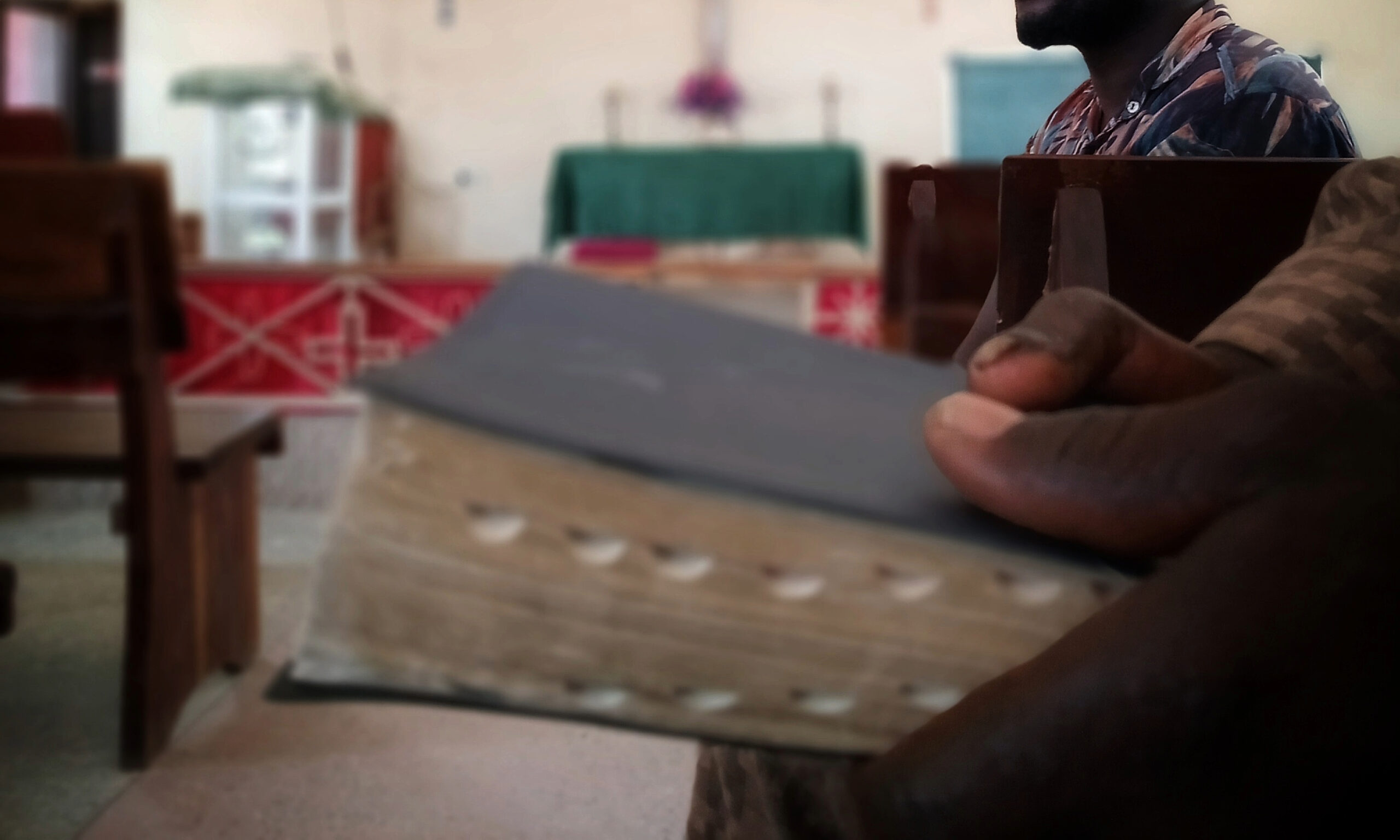
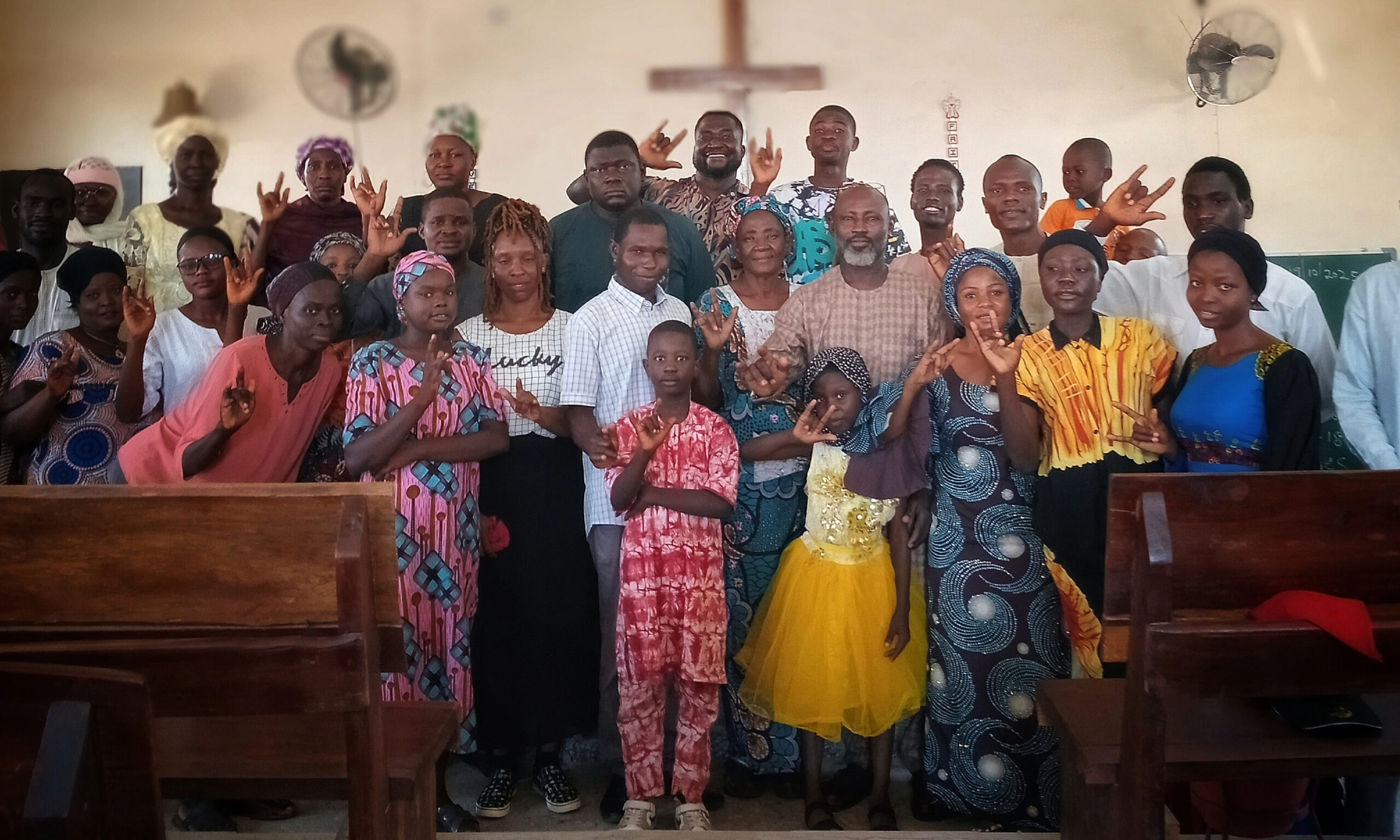
Beyond the congregation’s fierce concentration and worship, the sanctuary has transformed into a place of mutual care and a family.
Statistics bear out the need: Nigeria has about nine million people with hearing impairments, many of whom are socially marginalised. In a country where millions of people live with hearing loss and with few churches to worship in their own language, the Jimeta Lutheran Church for the Deaf is a declaration that the body of Christ is one family, and the gospel of Christ is meant for everybody. For people like Banyin and Dauda, the sanctuary has become a place they can now call home.
Banyin, a student from Gombe who became deaf in 2010, said the church taught him how to love and treat other people. “When I go to another church, I don’t feel like I belong. I can’t hear what the pastor is preaching. Here, I understand everything and learn how to love one another. I feel okay here. It feels like home,” he says.
Banyin shared that the sanctuary holds a lot of memories he will never forget. He vowed not to forget the days he spent with others like him inside the sanctuary. Those times made him feel he was not alone and made it easier for him to thrive in other places.
There’s also Dauda. He lost his hearing at the age of eight as a result of several illnesses. Dauda originally is from Gombe state but moved to Adamawa because of schooling. Similar to Banyin, he had attended other churches where he couldn’t understand the teachings, until his friends from the Federal College of Education told him about the Saint Monica Church. He describes the church as a place that helps him on his spiritual journey and says he is happy to be a part of it.


“When a deaf man died, the preacher threw the interpreter into the grave.” This is a humorous proverb reflecting the shortage of deaf interpreters in Africa. In many Nigerian public schools, there’s a lack of sign-language instructors for deaf students. This is why, opposite the chapel, the church established an LCCN Deaf Centre Academy to educate children with a hearing disability. Starting from a single crèche student when it was established in 2018, the academy now enrols over 35 deaf students in nursery, primary and junior secondary classes.
As Reverend Ruth Ulea put it, their goal is simple: showing that “every child is regarded as precious to us… because we are one.”


Pupils of LCCN Deaf Centre Academy saying “I love you” in sign language. Photo: Bankole Taiwo James
Discover more from Chronycles
Subscribe to get the latest posts sent to your email.

Published by