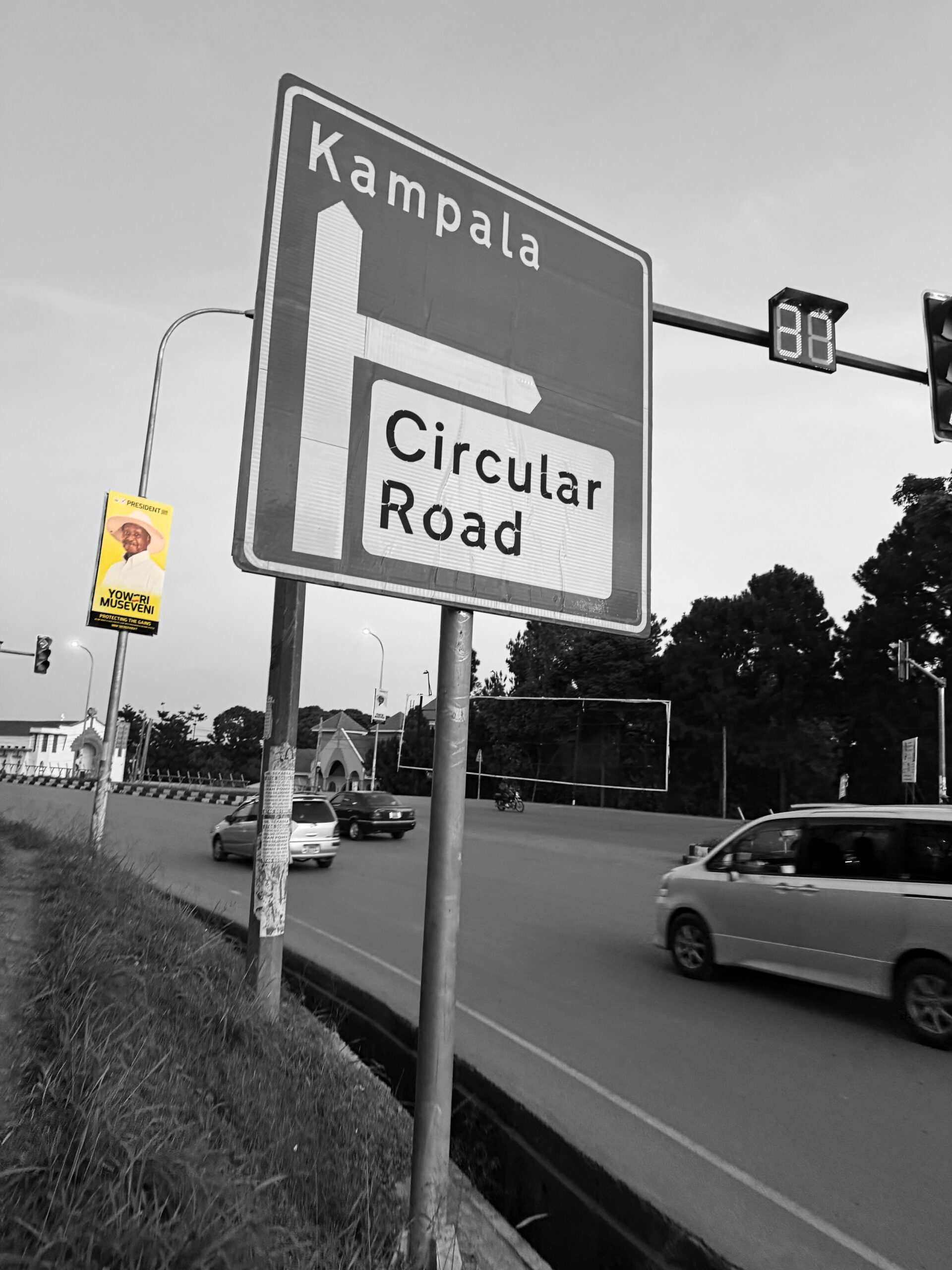
Unlike Lagos and New York City, Entebbe makes no promises to the newcomer. Nothing feverish like NYC tee-shirts declaring undying love or pompous like the widely held belief that Lagos’s dysfunction builds character. From the airport, it makes you adjust your expectations. It is nothing fancy, just a small open space where planes land. It says nothing outlandish lives here. Which is fine with me.
The unassuming air continues on the short drive into town. It is very warm, very clean, you couldn’t tell who was native or visitor. Until breakfast at Cafe Javas, where the line between currency-rich foreigners and the not-as-rich locals accompanying them suddenly becomes unmistakable.
Less than twenty minutes from the airport, one left turn down a snaky road leads to a set of apartments, most of them Airbnbs. To the right of that turn is the state house, a sprawling stretch of greenery and a white wall, with soldiers manning, walking, patrolling and possibly enforcing the ‘no photography’ signs around the perimeter.
“It is very safe here,” says Yusuf, the taxi driver who picked me up from the airport. The Airbnb listing said so as well: “The building is opposite State House and therefore very secure.” Yusuf is uninterested in conversation during the drive, a disposition I uncharacteristically appreciate. I have just flown 17 hours from New York City and have six serious nights ahead.
Safety was a consideration for my Nigerian first-time Airbnb user self. It was why I chose this option with the most reviews (35), reading each one, trying to decipher what was left unsaid, listening for tone, checking who used what emoji and how many to describe their level of satisfaction. Airbnbs, not hotels, were within my budget, so I read those reviews like they were a study guide.
I had been to Uganda twice before, each time straight to Kampala, never stopping here. My hosts and hotels both times covered everything I was now handling by myself. I won’t be here for long and am not sure what to expect.
Entebbe feels like a cross between Ogun and maybe Bauchi before everything spoiled. Places where the pace was regular, measured. You felt the politics, but it wasn’t gawking at you — at first. You could pretend and almost succeed in not noticing it.
But if you’re Nigerian, you know things. You know not to behave like a bumbling tourist and try to mess with those ‘no photography’ signs around the state house, and when a local suggests you say hi to a soldier, you don’t reply; you just look at them like they’ve lost their minds, because maybe they really have.
There are only a few government HQs left in Entebbe, which used to be Uganda’s capital until 1962. Home to fewer than 90,000 people, this city belongs to those fleeing the noise of Kampala. Those who are looking for “peace of mind.” That’s what the first person I meet on my second day says. A middle-aged white woman with an Eastern European accent who has lived here for 32 years and speaks two of the local languages.
That afternoon out, she drives me around the city. There are no belting horns, no road rage, not a single insult to anybody’s mother or father and no scorching, today-is-the-day-you-die sun. Couldn’t be Lagos.
There are also no deafening trains, no sporadic stench of urine, no horde of homeless people confounding your global south reality. Certainly not New York City.
Instead, you have Boda Bodas whizzing by, masala tea, and many nice people who yell “beautiful car!” out of theirs as we drive.
They mean the green Nissan Figaro with the top down, which the woman I met drives as she gives me a lesson about where we are. In 1991, customers who wanted the Figaro had to enter a lottery to qualify to buy the limited-edition Japanese car when it was released domestically.
“I want that car!” a Ugandan driver who’d slowed beside us to navigate a bad patch of road yells.
“Pay me 60 million for it!” she yells back.
She tells me the bad roads are a part of Ugandan politics. “Nigerians would have to come take lessons in corruption here. That is one thing we do perfectly.” When the woman says ‘we’ a lot, it feels natural because of how long she has lived here.
I don’t want to talk about politics on this trip, but I have never been anywhere on the continent where that wish came true.
She tells me there is a disconnect between young people and politics, and that’s why they love Bobi Wine, but he hasn’t won an election yet. She believes he’s running out of things to tell them as their future gets stolen. I nod.
I know what she means by the country needing a better way. It feels like everybody’s country does these days. But in particular, Uganda is surrounded by countries where young people are massively protesting against everything from corruption to election results and the cost of living crisis. To its east in Kenya, there was a heavy-handed security response to Gen Z protests in the past year. To the south, in Tanzania, at least hundreds of people were killed by security forces after post-election demonstrations. Even within Uganda this year, there were protests.
“Forty years, he has no business remaining in power,” she says, referring to 81-year-old Yoweri Museveni.
Elections will happen in January and as I move around Entebbe, I do not notice any other campaign posters apart from the ubiquitous gigantic billboards of the current president declaring an intention to “protect the gains.”

The woman drops me off at my Airbnb and leaves me a list of must-dos. Eat the fish at Goretti’s pizzeria. Eat whatever you want at Carpe Diem. The food there is great. Go for Nigerian food at a place called Akwaaba — the one suggestion I promptly discard. Go to a Ghanaian food place in Uganda for Nigerian food? God forbid.
The fish from Goretti’s costs more than everywhere else, but I get it since it was highly recommended. I think the taste lacks something, MSG maybe?
The noodles from Carpe Diem make me unhappy and I toss the vegetable soup. It tastes like a man who isn’t sure what he wants. I whip out my phone and text my Kenyan friend, Prudence, about the food.
“OMG, Ugandans make bad food, I’m sorry,” she says with four rolling-on-the-floor laughing emojis.
Prudence lives in neighboring Nairobi and previously I’d need a visa to go see her but this was replaced by a visa free policy which initially meant I needed an eTA which made it harder to go and this may or may not now be replaced by actual visa free entry but we were not sure and I wasn’t going to find out, so we text one another from across the border and I stay unhappy about the food until I have a plate of life-changing Bolognaise at Middle Eastern Restaurant.
The evening before I leave, as we drive from Kampala back to Entebbe, a man, a new friend sitting behind me, asks, “Is it true they are killing Christians in Nigeria?”
It was news in Uganda, in Lagos, in New York.
I sigh and begin, “In parts of the North and these days middle belt, yes. However, it’s complicated…”
He interrupts me, “You’re the second Nigerian to tell me it’s complicated.”
Christians are being killed. People travelling by road across the country are being kidnapped and many have been killed. School children have been taken from schools in the north and some have been killed. There are bandits and terrorists. There are new groups, splinter groups, secessionist groups, and on top of all that, the feeling that not nearly enough is being done. It was explaining all of that that felt complicated for a non-Nigerian who may have just expected to hear that just Christians are being killed.
“So it’s like my country then? Me, my wife, my children were all born in this regime. It’s not fair.”
I don’t think it’s like his country at all, but I say nothing.
The driver, a twenty-something-year-old who had not said a word since, adds rather succinctly, “That’s why he is protecting the gains.”
Everyone laughs.
The morning I leave, there is a heightened military presence in my part of Entebbe. Too many military cars swerve through traffic, carrying soldiers holding guns.
Everyone is calm as usual, warily watching the soldiers disturbing the peace.
“Maybe it’s a show of force? Maybe that’s how you show people you have power?” a friend in Lagos suggests when I text to tell him.


Discover more from Chronycles
Subscribe to get the latest posts sent to your email.

I think this was such a good piece, I genuinely enjoyed reading all of it and felt somewhat warm inside while reading. The reference to Nigeria were perfect, the characters and their conversations where perfectly written as well.. well done Olili!! Please write more often.
This read like the warmth of newness, and the fresh air of new possibilities. I loved every bit of it. From the tightness of the chest when you talk about the Christian killings in Nigeria, to rejecting Nigerian food in Uganda, made by Ghanaians. It’s the careful weaving that makes this a wonderful tapestry. Thank you Olivia.