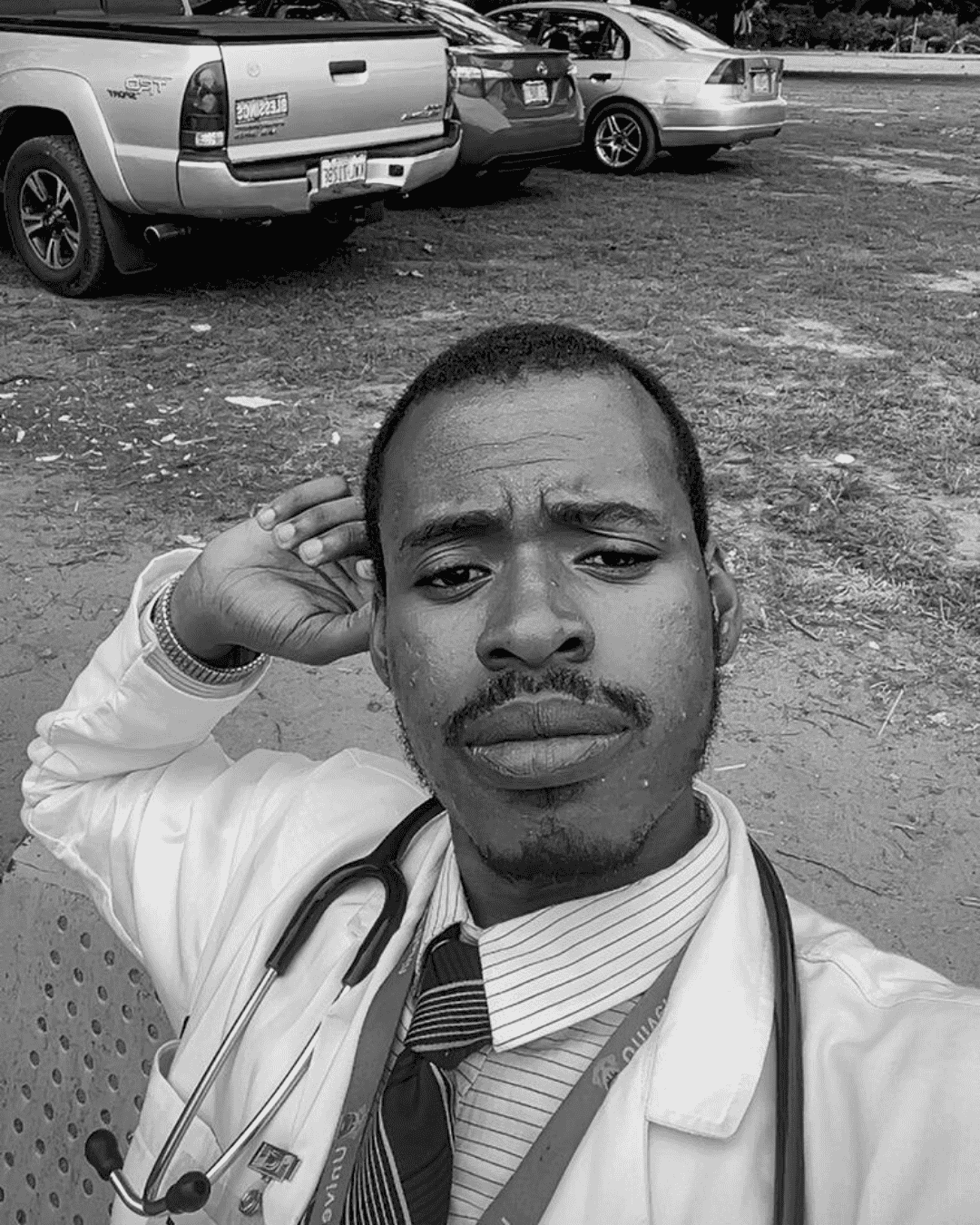
“So you never really lose your touch,” I thought as I smiled on my way out of the Female Medical Ward that night. I was thrilled to have sited a single intravenous (IV) line for a patient.
“Why should something as basic as an IV line have me over the moon like this?” You may ask. I was smiling like this was my first time successfully cannulating a patient, something I first did three years ago.
2022 was a wonderful year for me. I had just completed my 300L MB examinations and had officially been promoted to the clinicals section of our medical school. I got home and took my relaxation so far that my parents began asking why I hadn’t collected lecture materials from my seniors, so I could begin reading ahead.
Of course, I had the materials, but that wasn’t for them to know. The long holiday didn’t help matters, and soon enough, my parents were able to convince me to start some sort of “attachment” programme where I would obtain relevant medical skills. Anything to get me out of the house.
The first few hospitals my parents and I approached were reluctant to accept a 300L student, even though I offered to work pro bono. Considering how understaffed they obviously were, I was surprised by their decision but relieved by the rejection that meant I could go home and sleep without a worry.
The second day of “attachment-hunting” saw us visit the Trauma and Emergency unit at the National Hospital, Abuja. We stumbled in on the doctor-on-call suturing a deeply lacerated leg. We explained why we were there and requested an attachment with the hospital.
I expected the usual “He’s too young”, “He should focus on reading for now”, but the doctor gently asked, “Do you have your scrubs yet? Can you change and join me now?” Those were the words that began my attachment at that hospital, three times a week for the next three months. I practically learnt how to suture avulsed nails, lacerated lips, and even fractured limbs. Most importantly, I learnt how to site IV lines, a skill that proved most valuable during my stay there and even till I resumed school for 400L.
About four months into 400L, I began my Junior Medical (M1) and then the Junior Surgical (S1) postings. The focus of this posting was to build familiarity with the hospital environment and interaction with patients. No one expected me to be performing any procedures at this stage. However, I couldn’t keep my hands folded for long. I attempted siting lines and almost every time I got them; sometimes after a second attempt, but more often than not, my lines stayed. Whether it was the hungry eyes of my classmates all around me or the unsure gaze of the patient, both were hurdles that attempted to put me off and make me miss — but they never seemed to faze me. Those months in the National Hospital had actually paid off.
Fast forward to my Intermediate Surgical (S2) posting about a year later. I was so complacent when it came to siting lines because you never really lose your touch, right? Or so I thought. On this very fateful day, I attempted cannulating a young man who had a road traffic accident using a green cannula (one of the biggest sizes and so one of the easier choices when the patient has large visible veins). I fought off a couple of classmates who also wanted to attempt to site the line and they all watched begrudgingly as I began the procedure. I failed after multiple attempts. My hands quivered further after every trial. Someone else obtained another cannula and attempted the same. Of course, he got it in one trial. I put it down to fatigue, so I tried siting a line for another patient the next day, and I failed again. After one last failed attempt on another patient, I gave up and accepted I had lost my touch after all. That was how I went the whole posting without successfully siting a single intravenous line.
Fast forward all the way to today, my third week in my Intermediate Medicine Posting (M2). I was in the Female Medical Ward with my unit’s house officer on a Ward call as he scurried across the ward attending to different patients. My job was simply to assist him in any way within my power. He was halfway across the ward when a nurse called my attention to a disoriented patient who had accidentally removed her IV line in her drowsiness. She needed IV medication immediately.
I looked over to the house officer and he was trying to site a line elsewhere. I didn’t have much of a choice. I said a silent prayer as I walked up to the patient, my last cannulation attempts subconsciously replaying in my head. The patient’s only relative was a young boy. I wouldn’t put him anywhere over 15 years old. He fumbled through his bags as I asked for the required materials. I asked him for the patient’s name and I called it out in the most Yoruba way possible. She managed to open her eyes briefly in my direction. I explained what I wanted to do even though her eyes were already shut.
I placed a tourniquet some distance above her wrist, and laid out all the materials I would need. I cleaned her hand with a swab soaked with spirit and waited for the veins to reveal themselves. Short and slender, they began to appear over the back of her hand and I began a cycle of cleaning and observing the veins. If her brother didn’t know any better, he would’ve questioned if I actually knew what I was about to do from how many times I repeated my cycle of cleaning and observing.
Eventually, I got the cannula and, with my hands quivering, introduced it into her skin. She winced slightly as I looked at the flashback chamber for a rush of blood that didn’t come. I had missed it again. I slowly withdrew the cannula and there it was. The chamber went red. I withdrew the needle and on spotting the blood following it, I knew I was in. I capped it and asked for plaster to secure it to her hand. I stood up to leave and her brother walked up to me as I left and said, “Thank you very much, doctor.” I replied with a stern “It’s fine.”
If only he could see the smile behind the face mask I was wearing.
As narrated by: Omonokhua Jonathan (Ilorin, Nigeria).
This snippet is published as part of the series, Surviving Medical School.
Discover more from Chronycles
Subscribe to get the latest posts sent to your email.

Published by