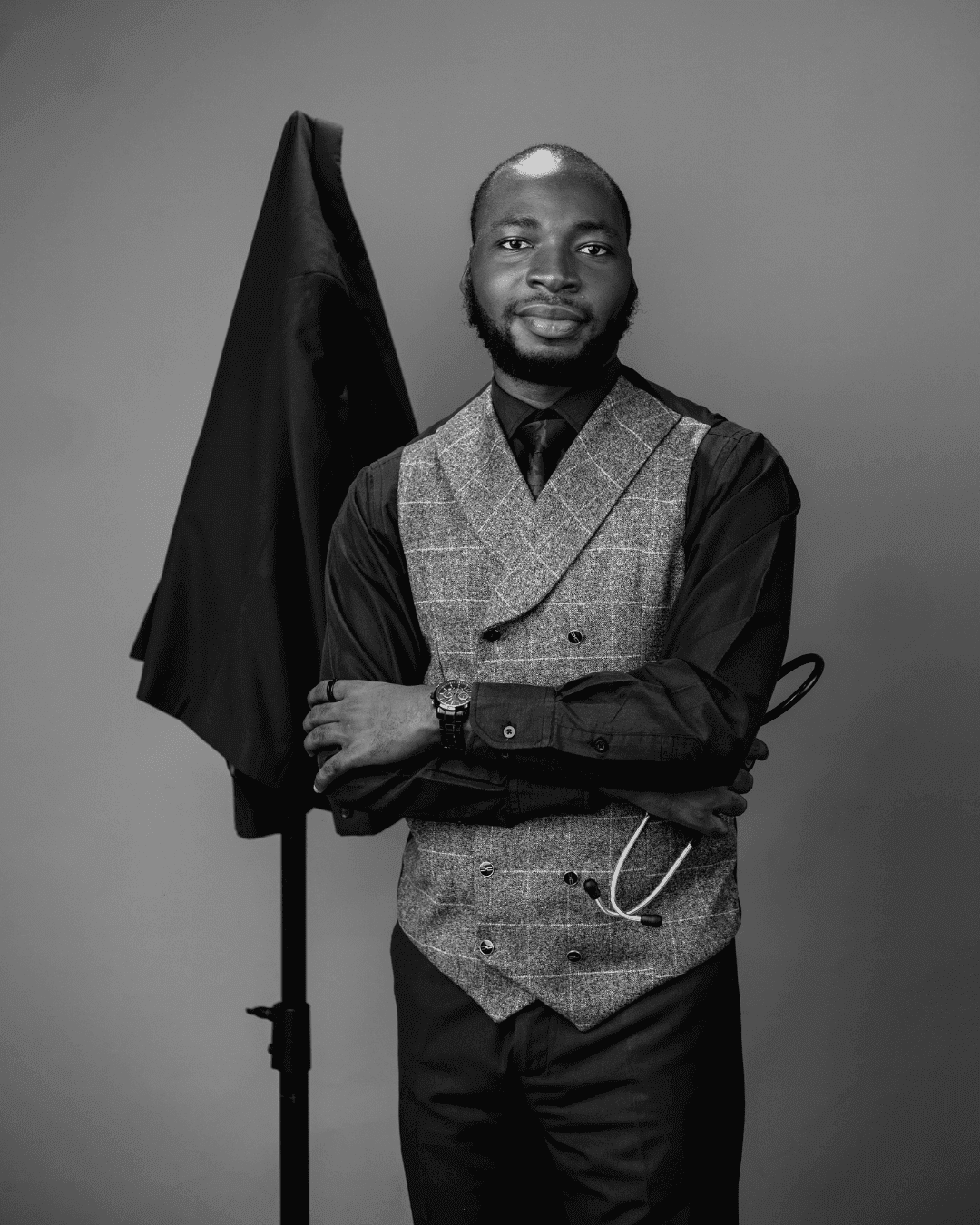
It was my final posting in medicine, and in my school, this was the posting that determined a huge percentage of your eventual result in the final professional exam that would then make you a doctor. For someone who was very informed prior to the beginning of the posting, I was prepared to go all in.
This posting alone was eighty percent of the medicine clinical progressive assessment. The mathematics behind it is a lot; just know that it’s a huge defining factor in the grand scheme of things.
I hit the ground on day one with every joule of energy I had in me. At least to the best of my ability, since hundred percent can be relative. I was as active as I could be. I attended ward rounds and clinics across all firms, and had a ritual of going for calls for most nights through the eight weeks of the posting. Above all else, I read my books once again to the best of my ability. I scanned through Oxford Handbook of Medicine and read my little TheGuide of Medicine about four times and could easily quote pages of the book at some point. These and more I did.
At a point, it felt like a lot. It was a lot actually for me, though from where I stand now, I know there could have been more, and the fact that there is little to what you can know in that time frame.
Then came the exam. The medicine exam is divided into three phases: traditionals, short case, and orals. I couldn’t believe my luck when I saw my line-up of examiners. You know those people you would not be able to prepare to be examined by even with a six-month notice, how much more just finding out a few minutes to the exam. Because how do I want to impress professors of medicine, and to cap it up, those who are easily not impressed.
In traditionals, I clerked a case of heart failure. Funny how I prepared for that diagnosis in particular, I knew everything about heart failure, at least as far as my level was concerned. I wrote out my clerking and management, etc. I had a very cooperative patient. He answered what I asked and what I didn’t ask. Everything was all set as I waited for my examiner.
My examiner eventually stepped in and I didn’t have to read a line of my clerking or discuss heart failure to begin with. Before long, we were talking about the surface anatomy of the internal jugular vein and jumping from stuff to stuff, which were mostly not core medicine that I have prepared for. I didn’t even know the surface anatomy of the internal jugular vein very well during my head and neck posting, which was five years ago. I had no excuse anyway: medicine is cumulative. My professor that did it forty years ago still remembers; how much more me.
The short case ended up being a long case. I was told to listen to heart sounds and I reported hearing the first and second heart sounds. The examiner removed his stethoscope and started describing the third heart sound. I am not sure if I even tried listening well. There was no way I could explain to a professor of medicine that I did not hear the third heart sound. I left that place speechless.
The orals happened to be my best part of the exam. The questions could be described as hard, but I had done a bit of reading prior, so it felt like my hard work was paying off. But the oral exam was just ten marks; the traditionals and short case were forty and fifty marks respectively.
I ended the exam and the eventual result was not far from my expectations. Although I had hoped for something better, I scored a 50 on the dot. At least I passed. Some other candidates in my circuit who met the same examiners failed.
The other part of this story that makes it more interesting was that some circuits had their lower limit at sixty because of the lineup of “nice” examiners. I would be lying if I said I didn’t feel bad, especially when I saw people who barely came to school scoring 60 plus. My sadness also came from a place of being disappointed in the work I put in to end up with an average score. I had better scores in postings where I didn’t work half as much.
There was also the fear of what the score would do to my progressive assessment. I am a Christian and I do believe that all things work together for good. It took a while, but I eventually saw the good in the situation. However, in that moment, having such a low score was one of the worst things to have happened to me at the time. I eventually went on to almost have a distinction in my medicine final exam because of how well I had to study to cover up for the lapse.
I think the major thing I want to point out here is how much luck, chance, or whatever you choose to call it, is involved in exams, especially clinical and traditional exams. These factors can be in your favour sometimes; other times, they are not. The examiner factor determines a lot in your ultimate results. So, even right now, I do not have a foolproof piece of advice on how to avoid eventualities. It is actually the way to life in general. Life happens.
All the same, regardless of life happening, keep preparing, keep putting in the work so as to be ready on your lucky day, and you will definitely not be unlucky forever. Just keep showing up.
As narrated by: Dr Adejoh Israel (Ilorin, Nigeria).
This snippet is published as part of the series, Surviving Medical School.
Discover more from Chronycles
Subscribe to get the latest posts sent to your email.
Published by