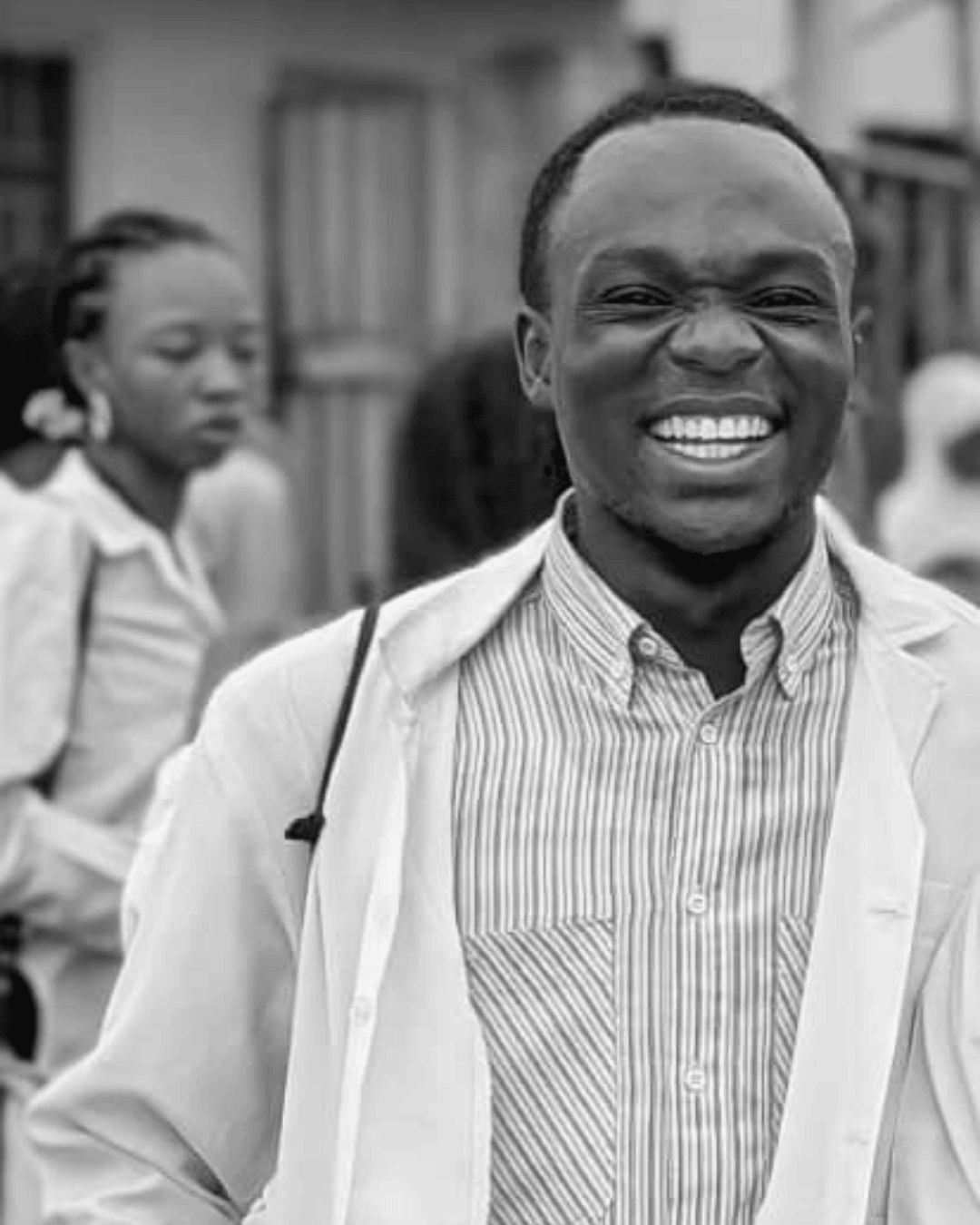
When my class’s yearbook team asked me to describe my medical school journey in three words. I didn’t hesitate to answer: novelty, perseverance, growth. It felt right, raw and unfiltered like the late-night cram sessions that left me questioning everything. It’s been running in my mind ever since the social media team asked that same question. Medical school wasn’t a straight path; it was a series of jolts that forced me to rebuild myself, over and over. Here’s how these three words captured the highs, the grinds and the quiet transformations that made me who I am.
Novelty
You can’t truly understand how things are until you’ve lived them, and med school hammered that home at every level. Each phase demanded a full wipe: unlearn, adapt, repeat. Frustrating, especially for someone like me, a total force of habit who hates change. Why revamp what works when you could just double down? When I first heard about physiology’s “outlines,” I was baffled. What even is an outline? I’d always memorised everything, page by page, and it carried me well, so far.
Coming from secondary school, where I ended as the second-best student overall, my confidence was sky-high. WAEC was a triumph: six As, including Further Maths, which I enjoyed the most. But English’s B3 stung. I binged Dad’s Sidney Sheldon stash, dictionary in hand—not only because of WAEC, but also JAMB, where I scored 273 (dragged down by English too). I poured that anger into post-JAMB prep rage and pulled a 92, second-highest in Unilorin that year. Even my 100 level was stellar: a 4.85 GPA, but that was because I didn’t do the physics practical exams or tests. I can’t remember which one.
Having made it this far, what do I need an outline for? I was unreceptive to change. Add in my shyness, and I convinced myself I could do it on my own. Then came the gut punch: I failed my CBD/IBS biochemistry in my second year. 48/100. It was the true start of my medical school journey. Cramming cannot work here. I need an outline, a different way of preparing for my exams. Novelty as a brutal teacher. I had to learn the lessons.
Perseverance
I’ve never bought into the idea of talent. Maybe it’s because my dad taught me the value of working hard. To me, what looks like talent from the outside is just an innate spark, fanned by a supportive environment and endless hours devoted to it as a kid. It compounds and people slap a label on it. Perseverance got me through everything in life, even though I figured things out late, but it doesn’t bother me as long as I know I am not running someone else’s race.
Medical school tested that philosophy hard. I had zero orientation on how the system worked here. No mentors pulling me aside telling me what to do, it was just me assuming I could puzzle it out like before. I couldn’t. You’d barely settle into one rhythm before the next wave hit—new modules, new demands, no mercy. That constant upheaval became my normal, and perseverance was the glue holding me together.
Take 400-level MB exams. I read 12 hours a day for two straight weeks. Awake at 6 a.m., pray, then bury myself in notes until 12:30 p.m. I took a quick break, watching episodes of Boku no Hero Academia to recharge, napped, then resumed reading from 6 p.m. to midnight. Rinse and repeat. Exhaustion crept in like fog. By exam week, my brain rebelled. I couldn’t sleep for over two days. A vicious headache pounding like a drum. Paracetamol barely touched it, but I dragged myself to each paper, pen shaking, answers blurring on the page. I couldn’t do more that week—too fried—but the upfront grind paid off. I passed. Clean.
Growth
Through all the novelties that shattered me and the perseverance that pieced me back, growth emerged—slow, uneven, but undeniable. By 400 and 500 levels, I wasn’t the wide-eyed, reclusive first-year med student anymore. I started bridging the gaps. Layered with the life skills I’d already picked up—discipline from dad, emotional honesty from those cry-it-out moments with mum, sheer stubbornness from failures—I unlocked doors I didn’t know existed. Suddenly, ward rounds felt less like interrogations and more like collaborations.
COVID lockdown was a surprising pivot point, a forced pause that cracked me open and for the first time, I had bandwidth beyond survival mode. I channelled it into writing. I entered a prestigious national essay competition on our educational system. I almost won. Top six, actually, which stunned me. The feedback lit a fire: “Your voice cuts through the jargon—keep writing.” Sure, it got stifled when school reopened—the grind swallowed hobbies whole—but I’m grateful for that glimpse. It reminded me that writing could be my outlet, a way to process the weight of it all.I’m not a complex person at heart. I thrive on the simple stuff that keeps the sanity intact: belting out Real Madrid chants after a win (Hala Madrid forever!), bingeing movies that whisk me away, lacing up for a pickup football game where wins don’t come with GPAs, or rabbit-holing into random learnings. Medical school stole so much: lazy Sundays, unhurried friendships, the freedom to breathe without a syllabus looming. But in the theft, it gifted lifelong tools—resilience for the unknowns, empathy forged in patient rooms, the wisdom to embrace change instead of fighting it.
As narrated by: Dr Ibrahim Saheed Bolaji (Ilorin, Nigeria).
This memoir is published as part of the series, Surviving Medical School.
Discover more from Chronycles
Subscribe to get the latest posts sent to your email.
Published by