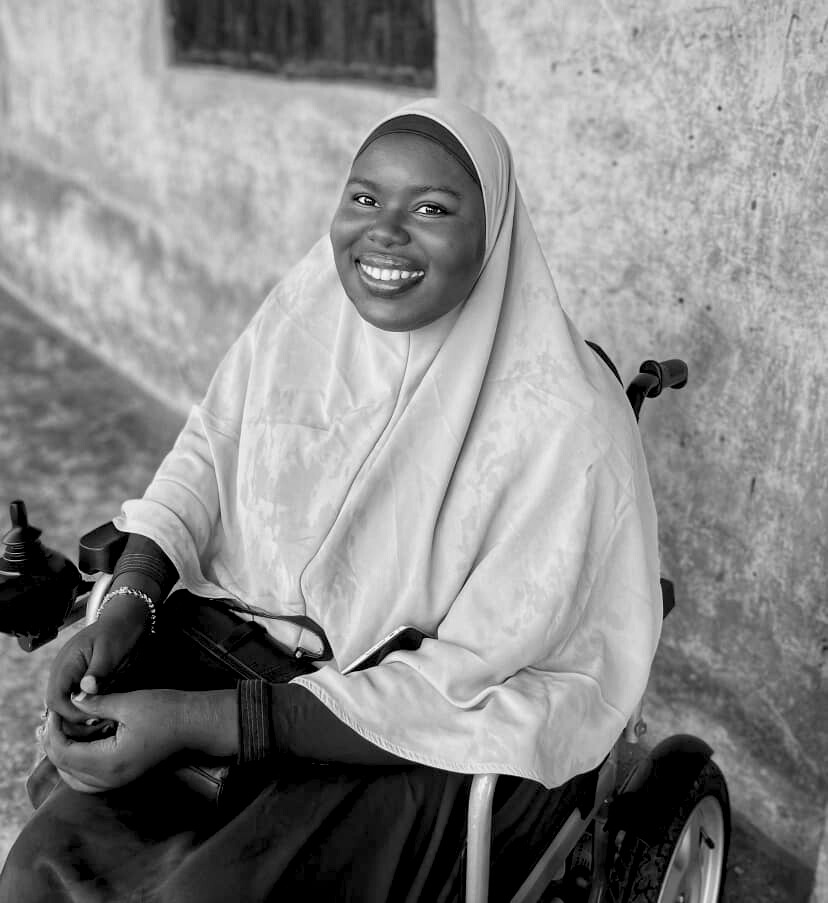
SO, I’M DOING SOMETHING ABOUT IT.
For the past eight years as a wheelchair user, there were countless times I stayed home, not because I didn’t want to go out, but because I didn’t know if the world outside would welcome me. You can’t go out and have fun. There are times I feel left out of hangouts and family occasions. It hurts so much.
I’ve visited places only to find stairs instead of ramps, narrow doors, or restrooms I couldn’t access. I’ve been to places where I became a gatekeeper at the entrance because my wheelchair couldn’t go in. I couldn’t even go to the higher institution of my choice. Sometimes, I’d search online for information, only to find random photos that don’t reflect the reality of the space. It hurts to dress up and attend an event only to get there and be dejected.
Imagine going on a date with your spouse, friend, or family, and upon arrival, the security there tells you, “We’re going to have to carry you inside.” What?! In front of everyone? Wouldn’t that ruin your evening and the happy moment you’d anticipated? Imagine looking forward to a lovely night, only to have it spoiled by something that should have been addressed from the start.
If I need to have myself or my chair carried at any point to gain access into a building, then it’s definitely not inclusive or safe. No, I don’t want to be carried inside a building with my wheelchair like a carriage in the House on Dynasty. It’s embarrassing! And it’s not okay at all.
Inaccessibility can ruin a day and scenarios like that can affect a person’s mental health. I know the feeling because I have been there. I’ve missed out on important moments in life because of it, too. And it’s not just my story. I’ve spoken to so many people with disabilities who face the same uncertainty, the same fear of exclusion. These shared experiences make it clear that this isn’t just an individual problem; it’s systemic. And it’s one we can start fixing together.
That is why I launched My Freeability, a community-driven solution dedicated to making accessibility visible, practical, and reliable for everyone with a disability. It allows people who visit places to document accessibility through photos, videos, descriptions, and ratings. It will cater to various forms of disabilities, including physical, visual, hearing, cognitive, and invisible. Ultimately, I hope to empower people with disabilities to move freely and confidently, reduce uncertainty, and give society a clear picture of where improvements are needed. It’s about building a culture where accessibility is expected, not optional.
Most existing review apps focus on general opinions like quality of food, service, or aesthetics. They rarely provide real information about accessibility. I’ve asked most of these location reviewers on Instagram about the accessibility of places, only to be told they didn’t notice. That’s how people with disabilities are treated.
Even when accessibility is mentioned, it’s often incomplete or inaccurate. A place might be listed as accessible, but that could mean nothing more than a single step at the entrance, or a narrow door that blocks a wheelchair. I’ve been in such a situation before. Despite confirming multiple times that it was accessible, I would get there and be disappointed. So there’s no depth, no perspective from people with disabilities who actually navigate these spaces. That gap is what My Freeability seeks to fill.
What inspired me to start this project was the painful realisation that freedom isn’t the same for everyone. You see, for people with disabilities in Nigeria, especially wheelchair users like me, everyday activities like visiting a restaurant, attending an event, or even going to a friend’s home can be full of uncertainty. Honestly.
I kept asking myself: Why should something as basic as entering a building or moving freely be a daily question? Why are people okay with building a world that leaves some people behind? A world that stops people from participating.
So over time, I realised I could either wait for things to change or start creating the change I wanted to see.
To make My Freeability sustainable and impactful, I will need volunteers to contribute information and share their experiences; partnerships with businesses, organisations, and government agencies for accurate data; sponsorship to develop the app and maintain the platform; and advocates who can help raise awareness about the importance of accessible spaces. Most importantly, I need people to believe in the vision that accessibility is not charity or favour, but the right of every citizen of Nigeria with a disability. Even small actions such as submitting a photo, sharing an observation, or reporting a space can make a huge difference in someone’s life.
This is deeply personal for me. It’s borne from lived experience, from frustration, from hope, and from a determination that no one should have to wonder if the world will welcome them.

As narrated by: Fatimah Aderohunmu (Sango-Otta, Nigeria).
Discover more from Chronycles
Subscribe to get the latest posts sent to your email.

Published by