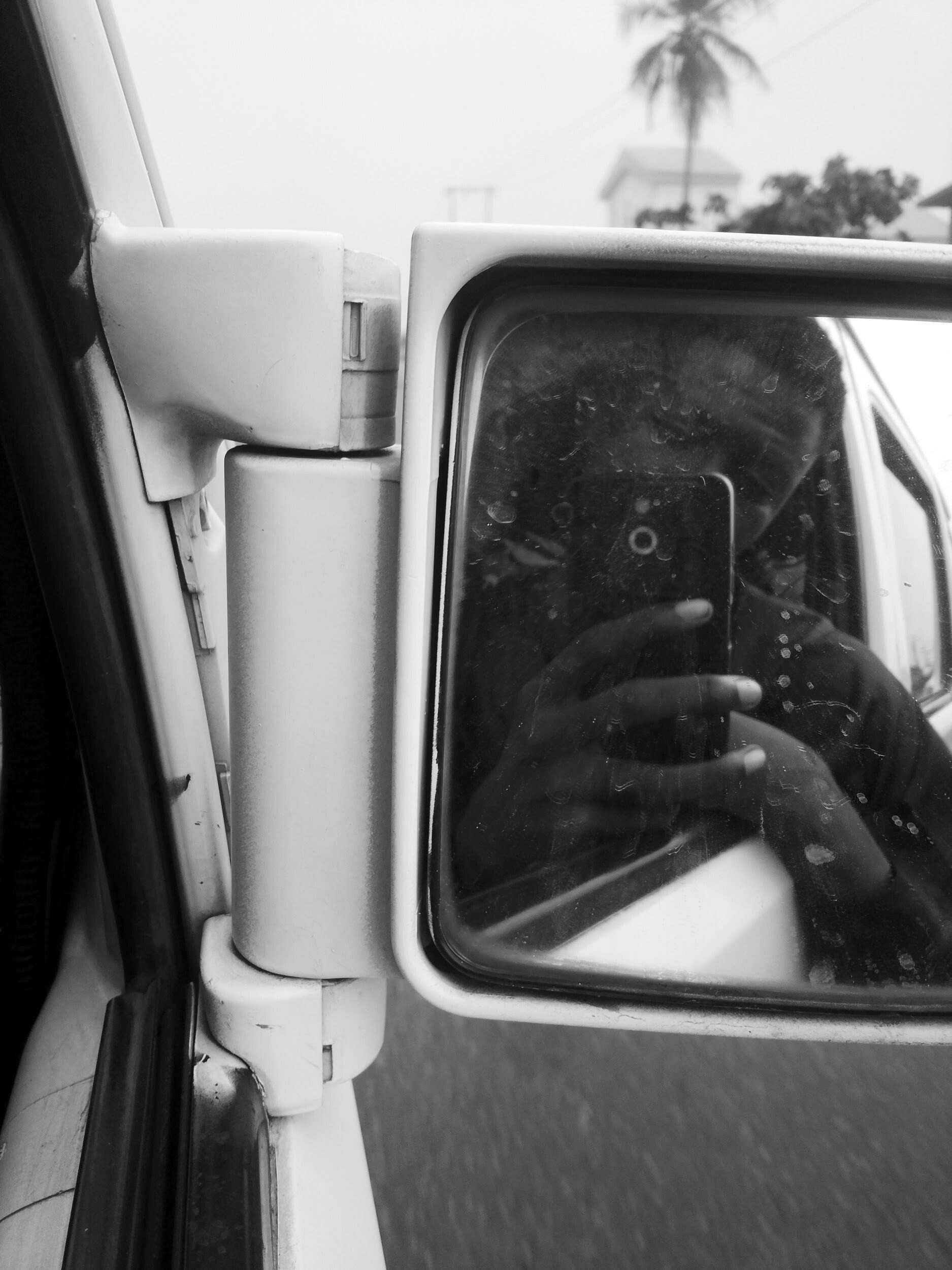
We had barely covered ten miles when the bike carrying me from Shagbe to Babanla — both rural communities in the Ifelodun area of Kwara state — started jerking and abruptly stopped. I didn’t know when I started reciting Ayatu-l-Kurisiyu (a verse from the Qur’an that my mom recommended for protection).
That Sunday morning, I had woken up with a resolve to travel from Ilorin to Babanla, a terror-ravaged community in Kwara, to conduct interviews for a story I was working on. After saying my morning prayer, I recited Suratul Yasin, begging God to protect me from the security situation rocking the country.
For sure, I knew I was going on a risky voyage. If things went south, I could lose my life or get abducted. Pictures of how kidnap victims are tied to trees inside thick forests flashed in my head, but I was optimistic that I’d return safely.
By 7:30 am, I took a bike that drove me to Offa Garage, Ilorin. Where I met a driver, who told me I couldn’t get a direct vehicle to Babanla, but I would get one to Oke Ode, another terror-ripped community. “You will get a bike that will take you to Babanla from Oke Ode,” he assured.
By 10 am, our car, a supposed six-passenger Ford, forced to carry nine, had set out of the garage and was en route to Babanla. Three passengers managed to sit in the back seat meant for two people. Three other passengers and I sat in the seat behind the driver, and two other passengers squeezed themselves into the only seat beside the driver. For the first few minutes, two passengers behind us discussed the insecurity in Kwara South (our destination) and how the management of Alhikmah University, Igbaja campus, fortified the premises by bringing soldiers in to secure the school from bandit attacks.
By 11 am, the vehicle had gone silent.

Oke Ode
When the vehicle reached its final bus stop at Oke Ode, one fair guy (let’s call him Tunde) and I were the only passengers from Ilorin left in the car. When we alighted, I quickly approached him and told him my intention.
“I’m a student conducting research on the security situation in Babanla, Kwara South,” I lied, intending not to unsettle him by the revelation of being a journalist.
“I’m also a student, but I’m heading to Shagbe, my hometown. All I can say is that you should be careful,” he replied.
Less than a minute later, Tunde waved and stopped a bike man, a familiar face to Tunde, whom I would later learn to be Abdulqadir Usman. Usman, being a Fulani man, used to be a herder, but a series of attacks on his community in Shagbe had him transfer all cattle to his friend in Shaare for safekeeping. He went into the transport business to survive and feed his family. (The conversation with Usman is another story published elsewhere.)
“I can drop both of you at Shagbe. I believe your friend can get a bike to Babanla from there,” he told Tunde.
As we moved, it occurred to me that I had only told Aminu, my friend, that I was leaving for Babanla. So I dropped a message for my brother, Abdulwasiu Olokooba. I didn’t tell my mom, because doing so would be like telling her you wanted to die.

Shagbe
“You should get a bike there,” Usman said, pointing at an okada spot at Shagbe, when he dropped Tunde and me off.
As Usman went his way, Tunde left for his home too. I was left all alone.
“Babanla? That place is a no-go area for us,” said a bike man when I told him where I was headed.
“They kidnapped two of our members yesterday,” added another biker.
“You have two options: Go to that side (pointing to the other side of the road), call them to come and carry you, or go back to where you are coming from,” chipped in a third person.
For the first time, I noticed my phone had no network. Like I was told, I crossed to the other side of the road and dialled my fixer Adam Abdulfattah’s number, but it didn’t ring. I dialled again and again, but it wouldn’t connect.
Of the options I was given, the first one was futile. The second was also unacceptable for me as I’d come too far to quit.
After spending over thirty minutes hanging around, one of the bikemen whistled and waved at me, inviting me to approach.
“Can you pay five thousand naira for Babanla?” he asked.
Considering the amount I spent on transport from Ilorin to Oke Ode (₦3,500), paying ₦5,000 would normally be too much. But the only other option was to return home empty-handed.
As a Naija boy, I asked if I could pay ₦3,000, but the man didn’t budge. After a little bit of back and forth, he offered to collect ₦4,000.
A closer look at the man’s Bajaj revealed that it had seen better days. The seat, if at all it could be so called, had been torn in many places and was disembowelled. The engine was old and the lower part of the bike was dirty. As we embarked on the journey, the bike jerked and stopped from time to time. I continued reciting my Kurisiyu till I lost count.
“Seems like the plug is the problem,” the man said as he tried fixing it.
Although we had not moved far from our take-off point, our surroundings had an unsettling vibe. Except for the bad road that led to Babanla, all that surrounded us were bushes. After spending up to five minutes there, a man who appeared to be in his late 20s met us with his own bike. He asked what the problem was and my biker told him what happened. His presence made me relax a bit.
“Where are you going, please?” I asked the man in Yoruba.
“Babanla!” he replied. I wanted to ask him to take me with him, but at that point, my biker ignited his vehicle and asked me to hop on.
The stranger trailed us as we moved, till we got to Babanla. My biker told me about how banditry had emptied some of the villages we passed through, showing me bullet holes from some of the buildings.
The presence of soldiers in different parts of the village confirmed for me that we were in Babanla. My bikeman dropped me off at the market square, where Adam was waiting.
When I was done with the interviews, Adam connected me with another bikeman who took me from Babanla straight to Oke Ode. It was around 4 pm.

Trapped
After the long journey on a bike from Babanla to Oke Ode, a man in his late 60s approached to tell us that the last motor had just left.
“If you are fast enough, you will meet him at the filling station,” he added.
Unfortunately, when we got to the filling station, it was a little bit too late. The vehicle already left and my biker said he couldn’t go further. With my backpack clung to my back, I just sat there staring at nothingness.
For a moment, my mind was filled with the thought of what my fate would be for the night; What if they kidnap me? What if I sleep here and bandits attack overnight? What if they rob me?
Then I remembered Shehu!
Abdulrahman Sulaiman (aka Shehu) is my childhood friend. He was born in Oke Ode but went to Ilorin for Islamic education. I had lost contact with him, but I had friends who could connect us.
I texted him on WhatsApp after I got his contact and he replied. He then linked me up with his brother, John. John gave me an address about 15 minutes away. There, I had my first bath and prayed. I was about to sleep when John called me to confirm what I would love to eat.
“Should I bring you noodles or bread and eggs?” he asked through the crackling waves of the call that bridged the distance between us. “Noodles is good,” I replied.
When he dropped the call. I texted Abdulwasiu, my brother, to cover for me in case my mom called.
“I will tell her you are sleeping at my place,” he texted back.
Habeeb Olokooba is a freelance journalist from Kwara State. He is interested in covering stories about conflict, accountability, procurement, and solutions.
Discover more from Chronycles
Subscribe to get the latest posts sent to your email.

Good morning Mr habeeb,this is a brave decision May Almighty Allah save Kwara State at large with peace, unity, protection,
Firstly I’m also a content creator talking about kwara history ,culture and traditions
Which traveling to each of the local government would have been a good idea but due to the insecurity we could not which really hurt
Thank you for this information