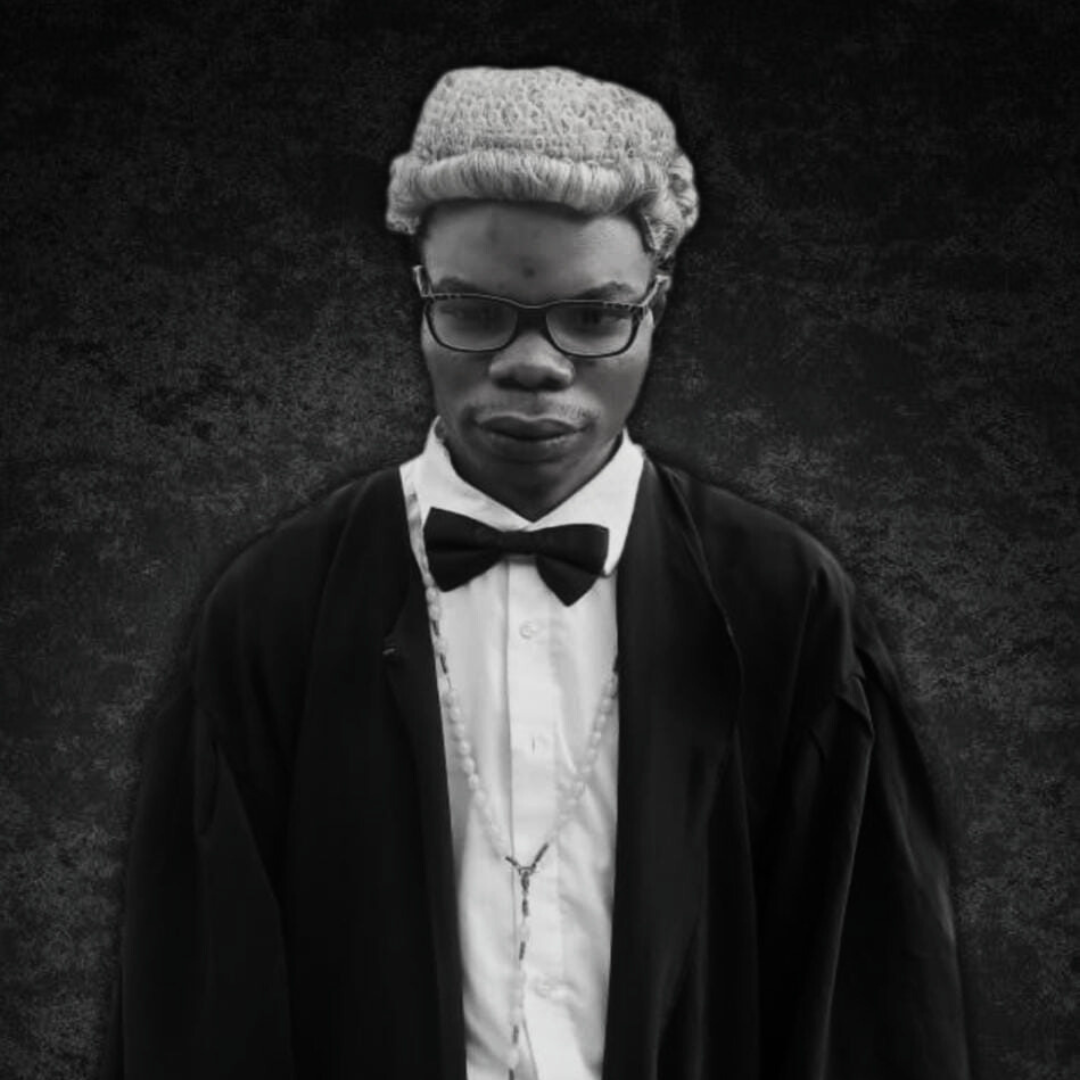
Between 11:30 am and 12:00 pm on August 6, 2014, my world changed as everything went blurry and it never got clear again. I was diagnosed with glaucoma, an eye disease that damages the optic nerve and causes vision loss. Living with glaucoma has been a challenging experience, especially as it has affected my vision and limited my ability to engage in certain physical or outdoor activities. However, I have chosen not to let it define or limit me.
I am currently a final-year student of English Language and Political Science at the Federal College of Education, Abeokuta. Though I can’t participate in sports because of my health, I didn’t allow that to affect my social engagement and personal development. Instead, I chose to channel my energy into politics. I currently serve as the Chief Justice of the Students’ Union Government.
Navigating the Federal College of Education has been a manageable experience for me. Because I do not use a mobility aid, I often need the help of my friends and colleagues to find my way on campus. Most of the lecture halls, library, and hostels are fairly accessible, but not fully convenient for someone with a visual impairment. However, I have also adapted well to the environment, so I can move independently to some extent.
With my visual condition, I had to pay the price of determination and discipline to avoid missing any class, test or exam. For instance, if I have a class scheduled for 9 a.m., I often leave my hostel as early as 7 a.m. to ensure I arrive on time. Although it has not always been easy, my effort has helped me maintain a good academic record and a strong CGPA despite the challenges.
The college has provided some level of support to make my academic journey easier. The Provost, Dr Rafiu Adekola Soyele, has been particularly supportive and understanding of my situation. Since the passing of my parents, life has not been easy, and I have had to face many challenges on my own. However, the college has shown concern and made efforts to assist me whenever possible. Though the support may not cover every need, their assistance has helped me keep moving forward.
The reactions of my peers and lecturers to my condition have been mixed. Many of my lecturers have shown genuine empathy and support. In fact, several of them have become my friends and mentors who constantly encourage me. Some even use me as an example in class discussions, especially when talking about leadership and determination.
However, among some of my peers, I occasionally experience subtle forms of discrimination. At times, the way they relate or interact with me is not the same as how they treat others without disabilities. While such moments can be discouraging, I have learned to rise above them with confidence. The positive support I receive from many others keeps me strong and motivated.
The college has a structure that supports students with disabilities. Last year, the Centre for Inclusive Education was introduced into the college’s programme to promote equal learning opportunities for all students. At the initial stage, tricycles were provided to help convey students with disabilities to their lecture halls. However, in recent times, the structure and policy have not been as active or effective as they were when first introduced.
If I could redesign my college with inclusivity in mind, I would change the accessibility structure and support system for students with disabilities. I would ensure that inclusive education provides practical support such as mobility assistance, learning aids, and constant supervision for students with special needs. I would also strengthen the Centre for Inclusive Education. My goal would be to create an environment where no student feels limited or left out, but rather inspired and empowered to reach their full potential.
As narrated by: Oluwashegun Victor (Abeokuta, Nigeria).
This snippet is published as part of the series, Beyond What You See.
Discover more from Chronycles
Subscribe to get the latest posts sent to your email.

Published by